
Goal of the analysis:
The goal of a Vendor-Managed Inventory (VMI) Program Evaluation is to assess the effectiveness and efficiency of a VMI system, where the supplier (vendor) takes responsibility for managing the inventory levels of materials or products at the customer’s location. The analysis evaluates how well the VMI program aligns with business objectives such as reducing inventory costs, improving supply chain responsiveness, and enhancing vendor collaboration. This evaluation helps determine if the VMI program is delivering expected benefits and identifies areas for improvement.
Data required:
- Inventory Levels: Data on inventory levels before and after the implementation of the VMI program, including average stock levels and stockouts.
- Order Fulfillment Rates: The percentage of customer orders fulfilled on time and in full by the vendor under the VMI program.
- Lead Times: The time taken by the vendor to replenish stock and ensure inventory availability.
- Carrying Costs: Costs associated with holding inventory, including storage, insurance, and capital costs.
- Stockout Data: Frequency and duration of stockouts before and after the VMI program was implemented.
- Vendor Performance Metrics: Key performance indicators (KPIs) for vendor performance, such as delivery reliability, responsiveness to changes in demand, and order accuracy.
- Inventory Turnover Rates: The frequency at which inventory is replenished and sold within a specific period, indicating inventory efficiency.
- Vendor Agreements and Terms: Details of the contractual agreements with vendors, including inventory replenishment rules, minimum stock levels, and penalties for underperformance.
- Communication and Collaboration Data: Information on how well the vendor and customer collaborate and communicate to manage inventory effectively.
Detailed step-by-step instruction on how to conduct the analysis:
- Collect Baseline Inventory Data:
- Gather data on inventory levels, stockouts, and lead times prior to the implementation of the VMI program. This will serve as the baseline for comparison. Include data on historical inventory carrying costs and stockout frequencies.
- Analyze Vendor Performance:
- Evaluate how well the vendor manages inventory levels under the VMI program. Assess the order fulfillment rate (percentage of orders delivered on time and complete), vendor lead times, and responsiveness to demand fluctuations. High performance in these areas ensures reliable supply and minimizes stockouts.
- Assess Inventory Levels and Stockouts:
- Compare inventory levels before and after the implementation of VMI. A well-functioning VMI system should reduce overall inventory levels while maintaining a buffer to avoid stockouts. Check if stockouts have been reduced and if inventory levels are optimized to meet demand.
- Evaluate Inventory Turnover Rates:
- Measure how frequently inventory is replenished and sold. A higher inventory turnover rate indicates more efficient inventory management and less capital tied up in stock. VMI should improve turnover by optimizing stock levels based on actual consumption.
- Calculate Cost Savings:
- Determine the cost savings achieved through the VMI program, including reduced inventory carrying costs (storage, insurance, capital) and improved cash flow due to optimized stock levels. Compare these costs to pre-VMI levels to assess the financial benefits of the program.
- Review Lead Time Reductions:
- Analyze the vendor’s replenishment lead times before and after VMI implementation. Reduced lead times allow for more frequent inventory replenishment, minimizing the need for excess inventory and reducing stockouts. If lead times remain high, identify the root causes and explore areas for improvement.
- Examine Vendor-Customer Collaboration:
- Evaluate how effectively the vendor and customer collaborate in managing inventory. Effective VMI programs rely on transparent communication, demand forecasting, and data sharing between both parties. Poor collaboration can result in inventory misalignment or delayed replenishment.
- Track Program Compliance and Contract Adherence:
- Check if the vendor is meeting the agreed-upon terms and performance metrics outlined in the VMI contract. This includes maintaining minimum stock levels, meeting delivery schedules, and adhering to penalties for underperformance. Ensure both parties comply with the VMI agreement.
- Analyze Customer Satisfaction:
- Assess the impact of the VMI program on customer satisfaction. Has product availability improved? Are deliveries more reliable? Positive outcomes in these areas indicate that the VMI program is benefiting the overall customer experience.
- Identify Areas for Improvement:
- Based on the evaluation, identify areas where the VMI program could be improved. This could include optimizing inventory levels further, improving lead times, enhancing communication, or revising the contractual terms to better align with business objectives.
Format of the output of analysis:
- VMI Performance Scorecard: A summary of key performance indicators such as inventory levels, stockouts, lead times, order fulfillment rates, and cost savings, with a comparison to pre-VMI performance.
- Cost Savings Analysis: A breakdown of the financial savings resulting from reduced carrying costs, improved cash flow, and optimized inventory levels.
- Vendor Performance Report: A detailed report on vendor performance, including delivery reliability, lead times, order accuracy, and responsiveness to demand changes.
- Inventory Turnover and Stockout Report: A table or chart showing inventory turnover rates and the frequency of stockouts before and after the VMI program.
- Collaboration and Communication Assessment: A qualitative analysis of the effectiveness of communication and collaboration between the customer and vendor under the VMI program.
How to interpret results:
- Improved Inventory Efficiency: If inventory levels have been reduced and turnover rates have improved without increasing stockouts, the VMI program is functioning effectively in optimizing inventory management.
- Reduced Lead Times: Shorter lead times indicate that the vendor is more responsive to changes in demand, allowing for more frequent replenishment and reducing the need for large buffer stocks.
- High Vendor Performance: High order fulfillment rates and low defect rates indicate that the vendor is managing the inventory effectively, minimizing disruptions in supply and ensuring that stock levels are aligned with customer demand.
- Cost Savings: Significant cost savings in carrying costs and improved cash flow suggest that the VMI program is financially beneficial. Conversely, if cost savings are minimal or negative, it may indicate inefficiencies in the VMI program or misaligned inventory levels.
- Poor Communication or Collaboration: If communication and collaboration between the vendor and customer are weak, inventory may not align with actual demand, leading to stockouts or overstocking. This requires better coordination and data sharing.
Steps a company can take to improve on this measure:
- Enhance Vendor Communication:
- Strengthen communication channels with the vendor to ensure real-time visibility into demand and inventory levels. Use technology such as shared dashboards, electronic data interchange (EDI), or cloud-based platforms to facilitate data sharing and transparency.
- Optimize Inventory Levels:
- Continuously review and adjust inventory levels based on changing demand patterns. Regularly update demand forecasts and collaborate with the vendor to optimize replenishment cycles and minimize excess inventory.
- Improve Vendor Lead Times:
- Work with the vendor to identify areas where lead times can be reduced. This may involve improving internal processes, streamlining logistics, or working with alternative transportation providers to speed up delivery times.
- Review and Update Vendor Contracts:
- Ensure that the VMI contract includes clear performance metrics, stock level requirements, and penalties for non-compliance. Regularly review and update the agreement to reflect changing business needs, especially if demand patterns shift or new products are added to the inventory.
- Invest in Technology for Inventory Management:
- Implement advanced inventory management systems that provide real-time data and predictive analytics. These tools can help the vendor anticipate demand fluctuations and optimize inventory levels accordingly, reducing the likelihood of stockouts or overstocking.
- Expand VMI to Other Vendors or Product Categories:
- If the VMI program has proven successful with one vendor or product line, consider expanding it to other suppliers or product categories to achieve broader cost savings and efficiency gains across the supply chain.
- Implement Continuous Improvement Initiatives:
- Regularly assess the VMI program’s performance through periodic reviews and audits. Use insights from these reviews to implement process improvements, reduce inefficiencies, and enhance vendor collaboration.
- Monitor Customer Satisfaction:
- Track customer feedback and satisfaction metrics to assess how the VMI program is impacting product availability, order fulfillment, and overall service levels. Make adjustments as needed to improve the customer experience.
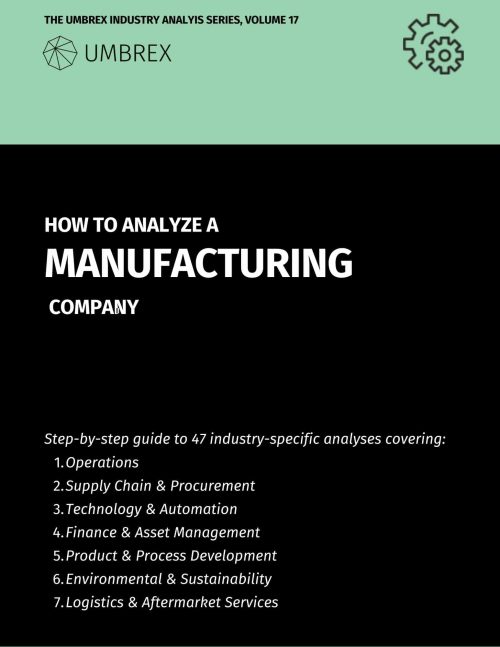
Request the PDF Download of How to Analyze a Manufacturing Company
Menu of the 47 analyses:
Table of Contents
A. OPERATIONS
- Capacity Utilization Analysis
- Operational Efficiency (OEE) Analysis
- Supply Chain and Logistics Optimization
- Production Lead Time Analysis
- Lean Manufacturing and Waste Reduction Assessment
- Inventory Turnover and Management Efficiency
- Quality Control and Defect Rate Analysis
- Capacity Expansion and Flexibility Assessment
- Maintenance Strategy and Downtime Analysis
- Factory Layout and Process Flow Optimization
- Throughput and Bottleneck Identification
- Production Scheduling and Demand Alignment
- Process Standardization and Replication Across Plants
- Work-in-Progress (WIP) Inventory Management
- Material Handling and Internal Logistics Efficiency
- Finished Goods Storage and Warehousing Optimization
- Capacity Buffers and Flexibility in Response to Demand Fluctuations
B. SUPPLY CHAIN & PROCUREMENT
- Bill of Materials (BOM) and Cost Structure Analysis
- Supplier Risk and Dependency Analysis
- Supplier Quality Management
- Raw Material Sourcing and Procurement Efficiency
- Vendor-Managed Inventory (VMI) Program Evaluation
- In-house Production vs. Outsourcing Feasibility
C. TECHNOLOGY & AUTOMATION
- Automation and Technology Integration Analysis
- Factory Automation Level and Robotics Utilization
- Tooling and Machine Setup Time Optimization
- Equipment Downtime Tracking and Root Cause Analysis
- Spare Parts Management and Predictive Maintenance Systems
- Manufacturing Cycle Time Reduction
- Energy Consumption and Efficiency Analysis
D. FINANCE & ASSET MANAGEMENT
- Capital Expenditure (CapEx) Effectiveness in Equipment and Technology
- Cost of Goods Sold (COGS) Breakdown and Margins Analysis
- Asset Utilization and Lifecycle Management
- Return on Invested Capital (ROIC) for Manufacturing Assets
- Working Capital Management in Manufacturing
E. PRODUCT & PROCESS DEVELOPMENT
- Product Customization and Modularity Assessment
- New Product Introduction (NPI) and Time-to-Market Evaluation
- Custom Manufacturing vs. Mass Production Analysis
- Product Yield and Scrap Rate Analysis
- Make-to-Stock vs. Make-to-Order Strategy Evaluation
F. ENVIRONMENTAL & SUSTAINABILITY
- Sustainability and Environmental Impact Analysis
- Heat, Water, and Waste Management in Production
- Environmental Compliance and Emissions Reduction Strategies
- Reverse Logistics and Product Lifecycle Management
G. LOGISTICS & AFTERMARKET SERVICES
- Aftermarket Services and Spare Parts Logistics
- Multi-Site Manufacturing Network Optimization
- Safety and Compliance Audit