
Goal of the analysis:
The goal of a Manufacturing Cycle Time Reduction analysis is to decrease the total time taken to produce a product from start to finish. This includes minimizing delays, bottlenecks, and inefficiencies in the production process to improve overall throughput, reduce lead times, and enhance customer responsiveness. Reducing cycle time leads to higher production efficiency, lower inventory levels, and increased profitability.
Data required:
- Current Cycle Time Data: Detailed information on the time it takes for each step in the production process, from raw material input to finished goods output.
- Bottleneck Identification: Data on production bottlenecks or stages where delays frequently occur, causing slowdowns in the manufacturing process.
- Work-in-Progress (WIP) Levels: Information on the amount of WIP inventory at each stage of production, including storage times and movement between production phases.
- Labor Utilization Data: Data on how labor is used across production steps, including idle time, task delays, and labor shortages.
- Machine and Equipment Utilization: Information on the performance of machinery and equipment, including uptime, downtime, maintenance schedules, and breakdown frequencies.
- Setup and Changeover Times: Data on the time it takes to set up machinery and change tooling for different production runs.
- Supplier and Material Lead Times: Information on how long it takes for raw materials to be delivered and made available for production.
- Production Scheduling Data: Current production schedules and order sequencing, including lead times for customer orders.
- Quality Control Metrics: Defect rates, rework times, and scrap levels, which may contribute to longer cycle times.
Detailed step-by-step instruction on how to conduct the analysis:
- Map the Current Production Process:
- Create a detailed map of the entire manufacturing process, breaking it down into each step or stage. Document the time taken for each stage, including preparation, processing, and waiting times between steps.
- Identify and Measure Bottlenecks:
- Analyze each step in the process to identify bottlenecks or stages where work gets delayed or queued. These bottlenecks can slow down the entire production process and significantly increase cycle time. Focus on areas with the longest waiting times or the most frequent slowdowns.
- Analyze Work-in-Progress (WIP) Levels:
- Review WIP inventory data to determine if excessive WIP is accumulating at certain stages of production. High WIP levels indicate inefficiencies in workflow and can prolong cycle times. Reducing WIP by balancing production flow can improve overall throughput.
- Evaluate Machine and Equipment Utilization:
- Assess how efficiently machines and equipment are used during production. Frequent downtime, long setup times, or low utilization rates contribute to increased cycle times. Ensure that preventive maintenance is performed regularly to avoid unplanned breakdowns.
- Review Labor Utilization and Workflow:
- Analyze how labor is allocated and used throughout the production process. Identify any areas where workers are underutilized, waiting for tasks, or performing non-value-added activities. Improving labor efficiency through better task allocation or cross-training can reduce cycle times.
- Reduce Setup and Changeover Times:
- Examine the time it takes to set up machinery and perform tooling changes between production runs. Implement Single-Minute Exchange of Die (SMED) principles to streamline setup procedures, reduce changeover times, and keep production flowing smoothly.
- Implement Lean Manufacturing Practices:
- Apply lean manufacturing principles such as just-in-time (JIT) production, 5S workplace organization, and value stream mapping to eliminate waste and improve production flow. These practices can significantly reduce non-value-added activities and minimize cycle times.
- Optimize Production Scheduling:
- Review and adjust production scheduling to better align production with demand and reduce idle time. Avoid scheduling bottleneck workstations with back-to-back tasks that could lead to delays. Balance the workload across production lines to improve overall flow.
- Reduce Waiting and Transit Times:
- Analyze how long materials and products wait between production stages. Reduce the time spent waiting for upstream processes, transportation between workstations, or manual handling activities. Consider optimizing factory layout to reduce transit times.
- Monitor and Improve Quality Control:
- Ensure that quality control processes are efficient and don’t unnecessarily delay production. High defect rates and rework times add to cycle time. By improving first-pass yield and reducing defects, cycle times can be shortened.
- Leverage Technology and Automation:
- Consider automating repetitive or manual tasks that are time-consuming or prone to errors. Automation can help speed up processes such as material handling, inspection, or assembly, resulting in shorter cycle times.
- Measure and Track Improvements:
- Continuously measure and track cycle times after implementing changes. Use key performance indicators (KPIs) such as overall cycle time, throughput, and lead time to monitor progress. Make adjustments as needed to sustain and further reduce cycle times.
Format of the output of analysis:
- Cycle Time Analysis Report: A comprehensive report detailing the current cycle times for each stage of production, including bottleneck identification and WIP levels.
- Bottleneck and Delay Analysis: A summary of the bottlenecks that are slowing down production, including specific processes or equipment that are causing delays.
- Setup Time Reduction Report: A breakdown of setup and changeover times, with recommendations for reducing these times using SMED principles or other techniques.
- Production Flow Optimization Plan: A detailed plan for optimizing the production process, reducing WIP levels, and improving flow between production stages to minimize waiting times.
- Cycle Time Improvement Metrics: A summary of key performance indicators (KPIs) tracking cycle time reductions, throughput improvements, and lead time reductions after implementing changes.
How to interpret results:
- Shorter Cycle Times: If the analysis shows reduced cycle times, it indicates that production is becoming more efficient. Shorter cycle times lead to increased throughput, reduced lead times, and improved responsiveness to customer demand.
- Reduced WIP Levels: Lower WIP levels indicate that production is flowing more smoothly with fewer bottlenecks and delays. This reduces the risk of inventory pile-up and ensures faster movement of products through the production line.
- Higher Machine Utilization: Increased machine utilization rates suggest that equipment is being used more effectively, with less downtime and fewer setup delays. This contributes to shorter cycle times and better overall productivity.
- Improved Labor Efficiency: Better use of labor, with fewer idle times and optimized task allocation, results in shorter cycle times. Cross-training workers to handle multiple tasks can further improve labor utilization.
- Fewer Quality Issues: Reducing defects and rework lowers the overall cycle time by eliminating the need to repeat production steps. Improved quality control leads to faster throughput and less time spent correcting errors.
Steps a company can take to improve on this measure:
- Focus on Bottleneck Elimination:
- Target bottleneck processes first, as they have the most significant impact on cycle time. Streamline these stages by increasing capacity, improving equipment, or reassigning labor to speed up the flow through these critical areas.
- Reduce Non-Value-Added Activities:
- Eliminate non-value-added activities, such as unnecessary transportation, excessive handling, or waiting for upstream processes. Use lean manufacturing tools like value stream mapping to identify and eliminate waste in the production process.
- Implement Just-in-Time (JIT) Production:
- Use JIT principles to reduce excess inventory and WIP levels, ensuring that materials are delivered exactly when needed. JIT production minimizes the time that materials and products spend waiting between production stages.
- Use SMED to Reduce Setup Times:
- Implement Single-Minute Exchange of Die (SMED) techniques to reduce setup and changeover times. This allows for faster transitions between production runs and minimizes machine downtime, keeping production flowing smoothly.
- Enhance Cross-Training for Workers:
- Cross-train workers to perform multiple tasks, allowing them to step in and assist in different production stages as needed. This flexibility reduces labor shortages and ensures that production keeps moving during worker absences or bottlenecks.
- Automate High-Cycle-Time Processes:
- Automate processes that are particularly time-consuming or error-prone. For example, using automated assembly or material handling systems can significantly reduce cycle times for repetitive tasks.
- Balance Production Lines:
- Ensure that production is balanced across lines, so that no workstation or machine is overloaded while others are underutilized. Proper balancing reduces idle times and smooths the flow of products through the production process.
- Regularly Review and Update Processes:
- Continuously review cycle times and make incremental improvements to production processes. Regular audits and process reviews help identify new bottlenecks or inefficiencies as production volumes or product lines change.
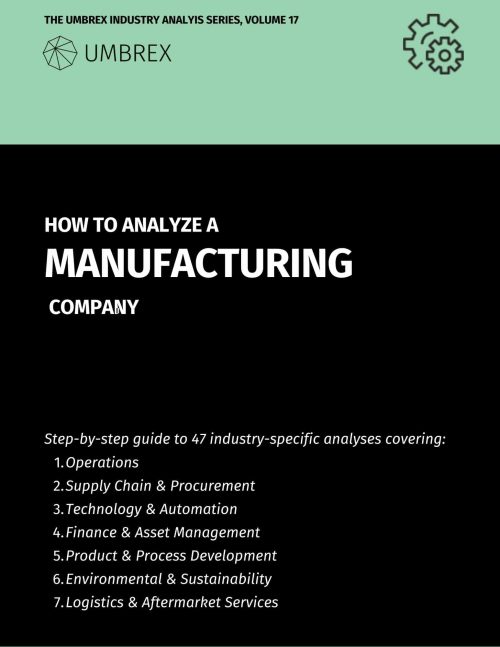
Request the PDF Download of How to Analyze a Manufacturing Company
Menu of the 47 analyses:
Table of Contents
A. OPERATIONS
- Capacity Utilization Analysis
- Operational Efficiency (OEE) Analysis
- Supply Chain and Logistics Optimization
- Production Lead Time Analysis
- Lean Manufacturing and Waste Reduction Assessment
- Inventory Turnover and Management Efficiency
- Quality Control and Defect Rate Analysis
- Capacity Expansion and Flexibility Assessment
- Maintenance Strategy and Downtime Analysis
- Factory Layout and Process Flow Optimization
- Throughput and Bottleneck Identification
- Production Scheduling and Demand Alignment
- Process Standardization and Replication Across Plants
- Work-in-Progress (WIP) Inventory Management
- Material Handling and Internal Logistics Efficiency
- Finished Goods Storage and Warehousing Optimization
- Capacity Buffers and Flexibility in Response to Demand Fluctuations
B. SUPPLY CHAIN & PROCUREMENT
- Bill of Materials (BOM) and Cost Structure Analysis
- Supplier Risk and Dependency Analysis
- Supplier Quality Management
- Raw Material Sourcing and Procurement Efficiency
- Vendor-Managed Inventory (VMI) Program Evaluation
- In-house Production vs. Outsourcing Feasibility
C. TECHNOLOGY & AUTOMATION
- Automation and Technology Integration Analysis
- Factory Automation Level and Robotics Utilization
- Tooling and Machine Setup Time Optimization
- Equipment Downtime Tracking and Root Cause Analysis
- Spare Parts Management and Predictive Maintenance Systems
- Manufacturing Cycle Time Reduction
- Energy Consumption and Efficiency Analysis
D. FINANCE & ASSET MANAGEMENT
- Capital Expenditure (CapEx) Effectiveness in Equipment and Technology
- Cost of Goods Sold (COGS) Breakdown and Margins Analysis
- Asset Utilization and Lifecycle Management
- Return on Invested Capital (ROIC) for Manufacturing Assets
- Working Capital Management in Manufacturing
E. PRODUCT & PROCESS DEVELOPMENT
- Product Customization and Modularity Assessment
- New Product Introduction (NPI) and Time-to-Market Evaluation
- Custom Manufacturing vs. Mass Production Analysis
- Product Yield and Scrap Rate Analysis
- Make-to-Stock vs. Make-to-Order Strategy Evaluation
F. ENVIRONMENTAL & SUSTAINABILITY
- Sustainability and Environmental Impact Analysis
- Heat, Water, and Waste Management in Production
- Environmental Compliance and Emissions Reduction Strategies
- Reverse Logistics and Product Lifecycle Management
G. LOGISTICS & AFTERMARKET SERVICES
- Aftermarket Services and Spare Parts Logistics
- Multi-Site Manufacturing Network Optimization
- Safety and Compliance Audit