
Goal of the analysis:
The goal of a Bill of Materials (BOM) and Cost Structure Analysis is to assess the components, raw materials, sub-assemblies, and processes required to manufacture a product, along with their associated costs. This analysis helps identify cost-saving opportunities, optimize material sourcing, streamline production, and improve pricing strategies. By breaking down the BOM and analyzing the cost structure, companies can better understand how production costs impact profitability and make data-driven decisions to enhance cost efficiency.
Data required:
- Bill of Materials (BOM): A comprehensive list of all materials, components, sub-assemblies, and quantities required to manufacture the product.
- Material Costs: The unit cost for each material and component listed in the BOM.
- Labor Costs: The labor required for assembly or production, including hourly wages and the total labor time for each production step.
- Overhead Costs: Indirect costs related to manufacturing, such as facility expenses, utilities, and machine depreciation.
- Supplier Information: Data on suppliers for each material or component, including pricing, delivery times, and any volume discounts.
- Inventory Levels: Current inventory data on raw materials and components.
- Waste and Scrap Rates: The amount of material lost due to production inefficiencies or defects.
- Production Process Data: Information on the production steps involved in assembling the final product, including cycle times and machine usage.
Detailed step-by-step instruction on how to conduct the analysis:
- Create a Detailed BOM:
- Compile a detailed BOM that lists all materials, components, sub-assemblies, and quantities required to produce one unit of the final product. The BOM should include part numbers, descriptions, quantities, and material specifications.
- Assign Material Costs:
- Gather cost data for each material and component in the BOM. If multiple suppliers are used for certain components, use the most accurate or average cost figures. Include any bulk purchase discounts, shipping fees, or taxes in the material cost calculations.
- Calculate Labor Costs:
- Determine the total labor required for each production step, including setup, assembly, quality checks, and packaging. Multiply the total labor time by the hourly wage rate to calculate labor costs for each production stage.
- Incorporate Overhead Costs:
- Add indirect manufacturing costs (overhead) such as utilities, rent, machine depreciation, and administrative expenses. These costs should be allocated based on the percentage of production time or space used for the specific product.
- Analyze Waste and Scrap Rates:
- Account for material waste or scrap that occurs during production. For example, if 5% of raw material is lost during cutting or machining, factor this into the total material cost. Minimizing scrap can lead to significant cost savings.
- Summarize the Total Cost Structure:
- Sum the material, labor, and overhead costs to calculate the total cost per unit for producing the product. Break down the cost structure by category (e.g., materials, labor, overhead) to provide a clear picture of the major cost drivers.
- Total Cost per Unit = (Total Material Costs + Total Labor Costs + Allocated Overhead Costs)
- Perform Supplier Cost Analysis:
- Analyze supplier pricing for key materials and components. Compare the cost, lead time, and reliability of different suppliers to identify potential cost savings through better sourcing strategies, volume discounts, or alternative materials.
- Assess Inventory Costs:
- Evaluate the cost of holding inventory for raw materials and components. High inventory levels can tie up working capital and lead to increased storage costs, so optimizing inventory management is essential for controlling costs.
- Identify Cost-Saving Opportunities:
- Review the BOM and cost structure to identify areas where costs can be reduced, such as switching to lower-cost materials, negotiating better supplier terms, improving production efficiency, or reducing scrap and waste.
- Compare Cost Structure to Pricing Strategy:
- Compare the total production costs to the product’s selling price to assess profitability. Ensure that the cost structure allows for sufficient profit margins after accounting for sales, marketing, and distribution expenses.
Format of the output of analysis:
- BOM Report: A detailed list of all materials, components, and quantities required for the product, along with their associated costs.
- Cost Breakdown: A table showing the breakdown of total costs by category (e.g., materials, labor, overhead) and the percentage of each cost relative to the total production cost.
- Supplier Cost Comparison: A report comparing the costs, lead times, and terms offered by different suppliers for key materials and components.
- Inventory Cost Analysis: A summary of inventory holding costs and recommendations for optimizing inventory levels to reduce carrying costs.
- Cost-Saving Opportunities: A list of potential cost-saving measures, including alternative sourcing, process improvements, or waste reduction strategies.
How to interpret results:
- High Material Costs: If material costs make up a large portion of the total production cost, this may indicate opportunities to negotiate better supplier terms, explore alternative materials, or switch to bulk purchasing strategies.
- High Labor Costs: High labor costs may suggest that certain production processes are inefficient or overly manual. Automating or streamlining production steps can reduce labor costs and improve throughput.
- High Overhead Costs: If overhead costs are disproportionately high, this may indicate inefficiencies in the use of facilities or equipment. Improving resource allocation or reducing energy consumption can help lower these costs.
- Waste and Scrap: Excessive waste or scrap indicates inefficiencies in the production process. Reducing scrap through better material utilization, improved machine calibration, or quality control can lead to significant cost savings.
Steps a company can take to improve on this measure:
- Optimize Material Sourcing:
- Negotiate with suppliers to secure better pricing or volume discounts for high-cost materials. Consider sourcing materials from alternative suppliers or regions where costs are lower. Also, explore opportunities for material substitution to reduce expenses without compromising quality.
- Reduce Waste and Scrap:
- Implement lean manufacturing principles to minimize waste and scrap in the production process. This can include improving machine settings, reducing overproduction, and training employees on better material handling techniques.
- Automate Production Processes:
- Invest in automation to reduce labor costs and improve efficiency. Automating repetitive tasks, such as assembly or quality checks, can lead to faster production times, reduced errors, and lower labor expenses.
- Improve Inventory Management:
- Use just-in-time (JIT) inventory management to reduce the cost of holding excess inventory. By ordering materials only when they are needed, companies can free up working capital and reduce storage costs.
- Conduct Regular BOM Audits:
- Periodically review and update the BOM to ensure that it reflects the most current materials, costs, and production processes. Audits can help identify outdated components, incorrect quantities, or opportunities for cost optimization.
- Implement Continuous Improvement Initiatives:
- Foster a culture of continuous improvement (Kaizen) to identify incremental cost-saving opportunities across the production process. Encourage employees to suggest process improvements, reduce waste, and optimize resource utilization.
- Analyze Make-or-Buy Decisions:
- Evaluate whether certain components or sub-assemblies should be produced in-house or outsourced to external suppliers. Outsourcing can reduce production costs if external suppliers can provide the component more efficiently than in-house production.
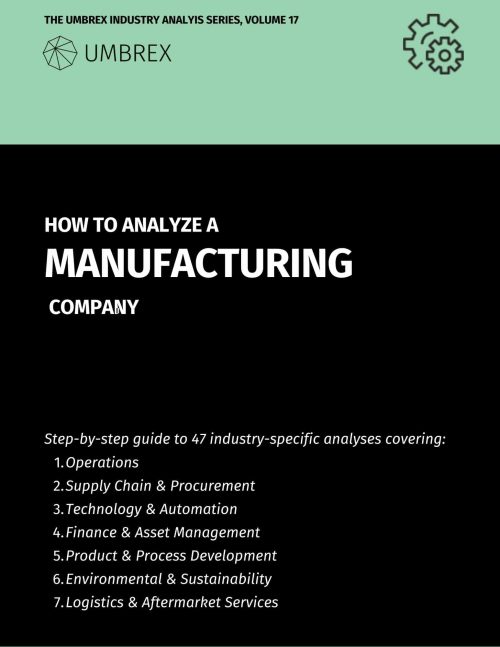
Request the PDF Download of How to Analyze a Manufacturing Company
Menu of the 47 analyses:
Table of Contents
A. OPERATIONS
- Capacity Utilization Analysis
- Operational Efficiency (OEE) Analysis
- Supply Chain and Logistics Optimization
- Production Lead Time Analysis
- Lean Manufacturing and Waste Reduction Assessment
- Inventory Turnover and Management Efficiency
- Quality Control and Defect Rate Analysis
- Capacity Expansion and Flexibility Assessment
- Maintenance Strategy and Downtime Analysis
- Factory Layout and Process Flow Optimization
- Throughput and Bottleneck Identification
- Production Scheduling and Demand Alignment
- Process Standardization and Replication Across Plants
- Work-in-Progress (WIP) Inventory Management
- Material Handling and Internal Logistics Efficiency
- Finished Goods Storage and Warehousing Optimization
- Capacity Buffers and Flexibility in Response to Demand Fluctuations
B. SUPPLY CHAIN & PROCUREMENT
- Bill of Materials (BOM) and Cost Structure Analysis
- Supplier Risk and Dependency Analysis
- Supplier Quality Management
- Raw Material Sourcing and Procurement Efficiency
- Vendor-Managed Inventory (VMI) Program Evaluation
- In-house Production vs. Outsourcing Feasibility
C. TECHNOLOGY & AUTOMATION
- Automation and Technology Integration Analysis
- Factory Automation Level and Robotics Utilization
- Tooling and Machine Setup Time Optimization
- Equipment Downtime Tracking and Root Cause Analysis
- Spare Parts Management and Predictive Maintenance Systems
- Manufacturing Cycle Time Reduction
- Energy Consumption and Efficiency Analysis
D. FINANCE & ASSET MANAGEMENT
- Capital Expenditure (CapEx) Effectiveness in Equipment and Technology
- Cost of Goods Sold (COGS) Breakdown and Margins Analysis
- Asset Utilization and Lifecycle Management
- Return on Invested Capital (ROIC) for Manufacturing Assets
- Working Capital Management in Manufacturing
E. PRODUCT & PROCESS DEVELOPMENT
- Product Customization and Modularity Assessment
- New Product Introduction (NPI) and Time-to-Market Evaluation
- Custom Manufacturing vs. Mass Production Analysis
- Product Yield and Scrap Rate Analysis
- Make-to-Stock vs. Make-to-Order Strategy Evaluation
F. ENVIRONMENTAL & SUSTAINABILITY
- Sustainability and Environmental Impact Analysis
- Heat, Water, and Waste Management in Production
- Environmental Compliance and Emissions Reduction Strategies
- Reverse Logistics and Product Lifecycle Management
G. LOGISTICS & AFTERMARKET SERVICES
- Aftermarket Services and Spare Parts Logistics
- Multi-Site Manufacturing Network Optimization
- Safety and Compliance Audit