
Goal of the analysis:
The goal of a Safety and Compliance Audit is to evaluate and ensure that a company’s operations adhere to legal regulations, industry standards, and internal policies related to health, safety, and environmental compliance. This audit aims to identify potential hazards, non-compliance risks, and areas for improvement in the workplace to safeguard employee well-being, minimize environmental impact, and reduce the risk of fines, legal actions, or operational disruptions.
Data required:
- Workplace Safety Records: Data on past workplace incidents, accidents, near misses, and occupational health issues.
- Compliance Documentation: Information on permits, licenses, certifications, and compliance documentation required for regulatory adherence.
- Safety Procedures and Policies: Copies of the company’s safety procedures, training programs, and emergency response plans.
- Inspection and Maintenance Records: Data on equipment inspections, maintenance schedules, and any corrective actions taken to address equipment or facility-related hazards.
- Training Logs: Records of safety training programs, employee attendance, and certifications, including training on fire safety, hazardous materials handling, and emergency response.
- Personal Protective Equipment (PPE) Records: Information on the availability, use, and maintenance of PPE, including usage logs and compliance with PPE requirements.
- Environmental Compliance Data: Data on environmental policies, emissions, waste management, water usage, and energy consumption to ensure compliance with environmental regulations.
- Emergency Response Plans: Documentation of emergency preparedness, evacuation plans, and first-aid procedures.
- Audit Findings and Previous Non-Compliance Issues: Results from previous audits or inspections, including any fines, violations, or corrective actions taken.
Detailed step-by-step instruction on how to conduct the analysis:
- Review Safety Policies and Procedures:
- Examine the company’s safety policies, procedures, and emergency response plans to ensure they align with industry standards and regulatory requirements. Verify that all necessary safety protocols are in place and clearly communicated to employees.
- Inspect Workplace Conditions:
- Conduct a thorough inspection of the workplace, including equipment, tools, and facilities. Look for potential safety hazards such as faulty equipment, slippery surfaces, blocked emergency exits, improper storage of hazardous materials, and fire hazards.
- Verify Regulatory Compliance:
- Review compliance documentation to ensure the company holds all required permits, licenses, and certifications related to safety and environmental regulations. Confirm that the company is adhering to local, national, and industry-specific safety standards.
- Assess Employee Training Programs:
- Evaluate the effectiveness of safety training programs. Ensure that all employees receive the necessary safety training for their roles, including proper use of PPE, hazardous material handling, fire safety, and emergency procedures. Verify that training logs are up to date.
- Check PPE Usage and Availability:
- Inspect the availability and condition of personal protective equipment (PPE) for employees working in hazardous environments. Ensure that PPE is properly used, regularly maintained, and in compliance with relevant safety standards.
- Review Equipment Inspection and Maintenance Records:
- Review the maintenance schedules and inspection records for all machinery, tools, and safety equipment. Ensure that regular inspections are conducted and any hazards or malfunctions are promptly addressed through corrective actions.
- Analyze Workplace Incident Records:
- Review past records of workplace accidents, injuries, and near misses. Identify patterns or recurring issues that indicate areas where safety procedures may need to be improved. Ensure that all incidents have been properly reported and investigated.
- Evaluate Environmental Compliance:
- Assess the company’s environmental practices to ensure compliance with environmental regulations. Review data on emissions, waste management, water usage, and energy consumption, and verify that all environmental standards are met.
- Check Emergency Response Preparedness:
- Evaluate the company’s emergency response and evacuation plans. Ensure that emergency exits are clearly marked, first-aid stations are adequately supplied, and fire alarms and extinguishers are in proper working condition. Conduct emergency drills to test preparedness.
- Document Non-Compliance Issues and Recommendations:
- Identify any areas of non-compliance or safety hazards found during the audit. Document these issues and provide specific recommendations for corrective actions to mitigate risks and bring the company into compliance with safety and regulatory standards.
Format of the output of analysis:
- Safety Policies and Procedures Report: A review of the company’s safety policies and procedures, identifying any gaps or improvements needed to align with regulatory requirements.
- Workplace Inspection Findings: A detailed report of workplace conditions, highlighting potential hazards, areas of concern, and recommendations for hazard mitigation.
- Compliance Documentation Audit: A summary of the company’s compliance with required permits, licenses, certifications, and safety regulations, with recommendations for addressing any missing or expired documentation.
- Employee Training Audit: An evaluation of the effectiveness and comprehensiveness of safety training programs, including training records, attendance, and certifications.
- PPE Usage and Availability Report: A review of PPE compliance, availability, and condition, with recommendations for improvements or replacements where necessary.
- Incident Records Analysis: A summary of workplace incident records, including patterns of accidents or near misses, with recommendations for improving safety in high-risk areas.
- Environmental Compliance Report: An assessment of the company’s adherence to environmental regulations, focusing on waste management, emissions, and resource usage.
- Emergency Preparedness Report: An evaluation of emergency response plans, first-aid preparedness, and evacuation procedures, with recommendations for enhancing safety measures.
How to interpret results:
- Non-Compliance Issues: Any non-compliance with regulatory requirements or safety standards must be addressed immediately to avoid legal penalties, fines, or operational shutdowns. Prioritize corrective actions for critical safety hazards.
- Outdated or Incomplete Safety Policies: If safety policies are outdated or incomplete, update them to align with current regulations and industry best practices. Ensure that policies are effectively communicated to all employees.
- Recurring Incidents: If certain types of incidents or near misses are recurring, review and improve safety protocols, employee training, or equipment maintenance in those areas to reduce risks.
- PPE Gaps or Improper Use: If PPE is missing, improperly used, or not well-maintained, address these issues to ensure employee safety. Provide additional training on proper PPE use if necessary.
- Environmental Non-Compliance: If the company is not meeting environmental standards, develop corrective actions to reduce emissions, improve waste management, or lower resource consumption.
Steps a company can take to improve on this measure:
- Address Non-Compliance Immediately:
- Implement corrective actions to address any non-compliance issues found during the audit. This may involve updating safety policies, applying for missing permits, or fixing unsafe conditions in the workplace.
- Update Safety Policies and Procedures:
- Regularly review and update safety procedures to reflect new regulations, changes in operations, or advances in safety technology. Ensure that policies are clearly communicated to all employees.
- Enhance Employee Training Programs:
- Improve the effectiveness of safety training by ensuring all employees receive regular training tailored to their roles. Incorporate hands-on training, refreshers, and drills for emergency situations.
- Improve PPE Compliance and Maintenance:
- Ensure that PPE is available, properly maintained, and regularly inspected. Provide employees with the necessary training to ensure proper use, storage, and maintenance of PPE.
- Increase Equipment Inspections and Maintenance:
- Establish a strict schedule for equipment inspections and preventive maintenance. This helps reduce the risk of equipment failure, which can lead to safety hazards or non-compliance.
- Implement Hazard Reporting Systems:
- Encourage employees to report potential hazards or safety concerns through anonymous reporting systems or safety committees. Address reported hazards promptly to prevent accidents.
- Conduct Regular Environmental Audits:
- Perform environmental compliance audits regularly to ensure that the company is meeting all required regulations related to emissions, waste management, and resource usage. Implement sustainability initiatives to reduce environmental impact.
- Improve Emergency Preparedness:
- Conduct regular emergency drills, ensure emergency exits and equipment are accessible, and keep first-aid stations well-stocked. Update emergency response plans as needed and ensure all employees are familiar with procedures.
- Monitor KPIs for Safety and Compliance:
- Track key performance indicators (KPIs) such as incident rates, safety training completion, PPE compliance, and audit findings to monitor ongoing safety performance and regulatory compliance.
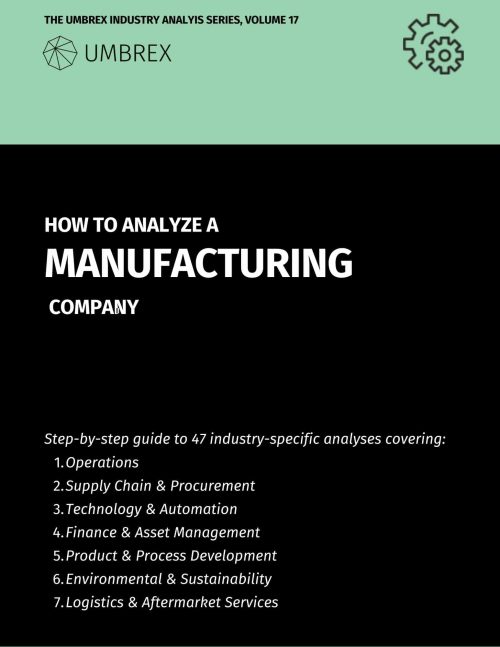
Request the PDF Download of How to Analyze a Manufacturing Company
Menu of the 47 analyses:
Table of Contents
A. OPERATIONS
- Capacity Utilization Analysis
- Operational Efficiency (OEE) Analysis
- Supply Chain and Logistics Optimization
- Production Lead Time Analysis
- Lean Manufacturing and Waste Reduction Assessment
- Inventory Turnover and Management Efficiency
- Quality Control and Defect Rate Analysis
- Capacity Expansion and Flexibility Assessment
- Maintenance Strategy and Downtime Analysis
- Factory Layout and Process Flow Optimization
- Throughput and Bottleneck Identification
- Production Scheduling and Demand Alignment
- Process Standardization and Replication Across Plants
- Work-in-Progress (WIP) Inventory Management
- Material Handling and Internal Logistics Efficiency
- Finished Goods Storage and Warehousing Optimization
- Capacity Buffers and Flexibility in Response to Demand Fluctuations
B. SUPPLY CHAIN & PROCUREMENT
- Bill of Materials (BOM) and Cost Structure Analysis
- Supplier Risk and Dependency Analysis
- Supplier Quality Management
- Raw Material Sourcing and Procurement Efficiency
- Vendor-Managed Inventory (VMI) Program Evaluation
- In-house Production vs. Outsourcing Feasibility
C. TECHNOLOGY & AUTOMATION
- Automation and Technology Integration Analysis
- Factory Automation Level and Robotics Utilization
- Tooling and Machine Setup Time Optimization
- Equipment Downtime Tracking and Root Cause Analysis
- Spare Parts Management and Predictive Maintenance Systems
- Manufacturing Cycle Time Reduction
- Energy Consumption and Efficiency Analysis
D. FINANCE & ASSET MANAGEMENT
- Capital Expenditure (CapEx) Effectiveness in Equipment and Technology
- Cost of Goods Sold (COGS) Breakdown and Margins Analysis
- Asset Utilization and Lifecycle Management
- Return on Invested Capital (ROIC) for Manufacturing Assets
- Working Capital Management in Manufacturing
E. PRODUCT & PROCESS DEVELOPMENT
- Product Customization and Modularity Assessment
- New Product Introduction (NPI) and Time-to-Market Evaluation
- Custom Manufacturing vs. Mass Production Analysis
- Product Yield and Scrap Rate Analysis
- Make-to-Stock vs. Make-to-Order Strategy Evaluation
F. ENVIRONMENTAL & SUSTAINABILITY
- Sustainability and Environmental Impact Analysis
- Heat, Water, and Waste Management in Production
- Environmental Compliance and Emissions Reduction Strategies
- Reverse Logistics and Product Lifecycle Management
G. LOGISTICS & AFTERMARKET SERVICES
- Aftermarket Services and Spare Parts Logistics
- Multi-Site Manufacturing Network Optimization
- Safety and Compliance Audit