
Goal of the analysis:
The goal of Reverse Logistics and Product Lifecycle Management (PLM) analysis is to evaluate the processes for handling product returns, recycling, refurbishment, and disposal, as well as optimizing the product lifecycle from design to end-of-life. This analysis helps companies improve resource efficiency, reduce waste, recover value from returned products, and enhance sustainability. It also ensures that products are managed efficiently throughout their lifecycle, aligning with circular economy principles.
Data required:
- Return Rates and Reasons: Data on product return rates, including reasons for returns (e.g., defects, end-of-life, customer dissatisfaction).
- Returned Product Volume: Information on the quantity of returned products, including items for refurbishment, recycling, or disposal.
- Logistics Costs: Costs associated with reverse logistics, including transportation, labor, processing, and storage of returned products.
- Waste and Recycling Data: Information on waste generated from returned products, including recycling rates, landfill use, and disposal methods.
- Product Lifecycles: Data on the lifecycle of each product type, from design and production through usage, maintenance, and end-of-life disposal.
- Refurbishment and Remanufacturing Data: Data on refurbishment and remanufacturing processes, including costs, timeframes, and the percentage of products that can be refurbished or remanufactured.
- Customer Feedback on Returns: Insights from customer feedback regarding the return process, product quality, and overall satisfaction with reverse logistics services.
- Sustainability and Circular Economy Goals: The company’s sustainability targets, such as waste reduction, recycling rates, or product recovery goals, and how these align with circular economy principles.
Detailed step-by-step instruction on how to conduct the analysis:
- Analyze Return Rates and Reasons:
- Review product return rates and categorize returns based on reasons, such as defects, customer dissatisfaction, or end-of-life. Understanding why products are returned helps prioritize improvements in design, production quality, or customer service.
- Evaluate Reverse Logistics Costs:
- Analyze the costs associated with reverse logistics, including transportation, labor, warehousing, and processing of returned goods. This helps identify inefficiencies in the reverse supply chain and opportunities to reduce costs.
- Total Reverse Logistics Cost = Transportation Costs + Processing Costs + Storage Costs + Labor Costs
- Assess Refurbishment and Remanufacturing Processes:
- Evaluate the effectiveness of refurbishment and remanufacturing programs by reviewing the percentage of returned products that are refurbished, remanufactured, or disposed of. Analyze the costs and timeframes associated with these processes to determine their financial viability.
- Improve Product Lifecycle Management (PLM):
- Review the entire lifecycle of each product, from design to end-of-life. Assess how effectively products are designed for durability, easy maintenance, recyclability, or refurbishment. Identify opportunities to extend product lifecycles by improving design or materials.
- Maximize Product Recovery and Recycling:
- Analyze the percentage of returned products that can be recycled, reused, or repurposed. Implement recycling programs or work with third-party recyclers to recover valuable materials and minimize landfill waste. Consider using more recyclable or biodegradable materials in product design.
- Optimize Reverse Logistics Operations:
- Evaluate the efficiency of the reverse logistics process, including how quickly returned products are processed, sorted, and either refurbished or recycled. Streamline reverse logistics by improving routing, consolidating shipments, and using technology for real-time tracking of returns.
- Implement Circular Economy Principles:
- Align reverse logistics and PLM with circular economy principles by designing products for reuse, remanufacture, or recycling. Focus on minimizing waste at the product’s end-of-life and recovering as much value as possible through refurbishment, resale, or material recovery.
- Monitor Customer Satisfaction with Reverse Logistics:
- Use customer feedback to evaluate satisfaction with the return process, product quality, and overall customer service related to reverse logistics. Improving customer experiences with returns can lead to greater brand loyalty and better handling of returned products.
- Set Product Lifecycle and Reverse Logistics KPIs:
- Establish key performance indicators (KPIs) to track performance in reverse logistics and product lifecycle management. Common KPIs may include return rate, refurbishment success rate, time to process returns, recycling rate, and reverse logistics costs.
- Ensure Compliance with Environmental Regulations:
- Review regulatory requirements related to product returns, waste disposal, and recycling. Ensure that reverse logistics processes comply with environmental regulations and align with sustainability goals. Non-compliance could result in fines or reputational damage.
Format of the output of analysis:
- Return Rate and Reverse Logistics Report: A report summarizing return rates, reasons for returns, and the total cost of reverse logistics, with recommendations for improving efficiency and reducing costs.
- Refurbishment and Recycling Analysis: A breakdown of the percentage of returned products that are refurbished, recycled, or disposed of, including an analysis of the costs and benefits of refurbishment and recycling programs.
- Product Lifecycle Assessment: A detailed assessment of the product lifecycle, including recommendations for extending product lifecycles through better design, material choices, and maintenance strategies.
- Sustainability and Circular Economy Goals Report: A report evaluating the alignment of reverse logistics and PLM processes with the company’s sustainability and circular economy goals.
- Customer Satisfaction Feedback: A summary of customer feedback related to reverse logistics, return processes, and product quality, with recommendations for improving the customer experience.
How to interpret results:
- High Return Rates for Defective Products: High return rates due to defects may indicate quality control issues that need to be addressed at the manufacturing stage. Focus on improving product quality to reduce returns.
- High Reverse Logistics Costs: If reverse logistics costs are high, optimize the return process by reducing transportation distances, automating sorting and processing, or outsourcing logistics to specialized providers.
- Low Refurbishment and Recycling Rates: Low refurbishment or recycling rates may suggest inefficiencies in the product recovery process. Consider improving design for easier refurbishment or working with recycling partners to recover more value from returned products.
- Short Product Lifecycles: Short product lifecycles can lead to higher waste and more frequent returns. Focus on designing products that are durable, repairable, and recyclable to extend their lifecycle and reduce waste.
- Customer Dissatisfaction with Returns Process: If customer feedback indicates dissatisfaction with the returns process, streamline and improve customer service, including faster return processing times and clearer return policies.
Steps a company can take to improve on this measure:
- Improve Product Design for Circularity:
- Design products that are easier to disassemble, repair, and recycle. Use durable materials that extend the product’s lifecycle and enable future refurbishment or recycling.
- Enhance Refurbishment and Remanufacturing Programs:
- Invest in refurbishment and remanufacturing processes to extend the value of returned products. Implement efficient systems for sorting, testing, and repairing returned items to resell as refurbished products.
- Reduce Reverse Logistics Costs:
- Optimize reverse logistics by improving the efficiency of product returns, using real-time tracking, consolidating shipments, and reducing transportation costs. Consider partnering with third-party logistics providers that specialize in reverse logistics.
- Implement a Take-Back Program:
- Establish a take-back program to incentivize customers to return used products for recycling or refurbishment. This helps recover valuable materials and ensures proper disposal at the product’s end-of-life.
- Increase Recycling and Material Recovery:
- Work with recycling partners or invest in internal recycling systems to recover valuable materials from returned products. Focus on maximizing recycling rates and minimizing the use of non-recyclable materials.
- Train Staff on Reverse Logistics and PLM Best Practices:
- Provide training for employees involved in reverse logistics and product lifecycle management. Equip teams with the knowledge and tools needed to efficiently handle returned products, extend product lifecycles, and meet sustainability goals.
- Leverage Digital Tools for Lifecycle and Reverse Logistics Tracking:
- Use digital tools, such as enterprise resource planning (ERP) systems or product lifecycle management (PLM) software, to track products throughout their lifecycle and manage reverse logistics more effectively.
- Adopt Circular Economy Business Models:
- Explore new business models that align with circular economy principles, such as product-as-a-service (leasing instead of selling), take-back programs, and repair or refurbishment services.
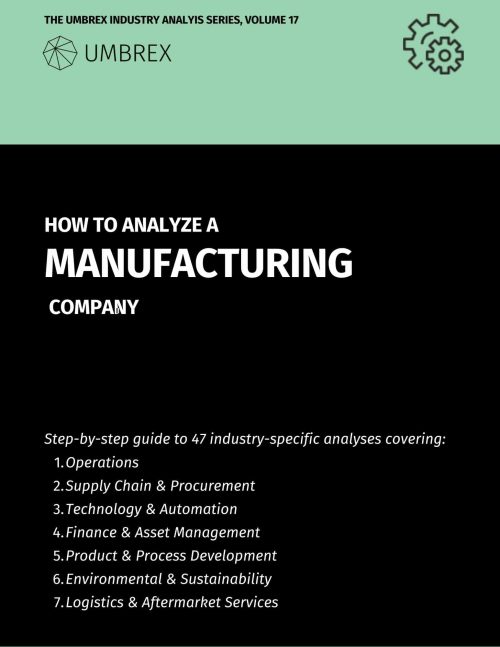
Request the PDF Download of How to Analyze a Manufacturing Company
Menu of the 47 analyses:
Table of Contents
A. OPERATIONS
- Capacity Utilization Analysis
- Operational Efficiency (OEE) Analysis
- Supply Chain and Logistics Optimization
- Production Lead Time Analysis
- Lean Manufacturing and Waste Reduction Assessment
- Inventory Turnover and Management Efficiency
- Quality Control and Defect Rate Analysis
- Capacity Expansion and Flexibility Assessment
- Maintenance Strategy and Downtime Analysis
- Factory Layout and Process Flow Optimization
- Throughput and Bottleneck Identification
- Production Scheduling and Demand Alignment
- Process Standardization and Replication Across Plants
- Work-in-Progress (WIP) Inventory Management
- Material Handling and Internal Logistics Efficiency
- Finished Goods Storage and Warehousing Optimization
- Capacity Buffers and Flexibility in Response to Demand Fluctuations
B. SUPPLY CHAIN & PROCUREMENT
- Bill of Materials (BOM) and Cost Structure Analysis
- Supplier Risk and Dependency Analysis
- Supplier Quality Management
- Raw Material Sourcing and Procurement Efficiency
- Vendor-Managed Inventory (VMI) Program Evaluation
- In-house Production vs. Outsourcing Feasibility
C. TECHNOLOGY & AUTOMATION
- Automation and Technology Integration Analysis
- Factory Automation Level and Robotics Utilization
- Tooling and Machine Setup Time Optimization
- Equipment Downtime Tracking and Root Cause Analysis
- Spare Parts Management and Predictive Maintenance Systems
- Manufacturing Cycle Time Reduction
- Energy Consumption and Efficiency Analysis
D. FINANCE & ASSET MANAGEMENT
- Capital Expenditure (CapEx) Effectiveness in Equipment and Technology
- Cost of Goods Sold (COGS) Breakdown and Margins Analysis
- Asset Utilization and Lifecycle Management
- Return on Invested Capital (ROIC) for Manufacturing Assets
- Working Capital Management in Manufacturing
E. PRODUCT & PROCESS DEVELOPMENT
- Product Customization and Modularity Assessment
- New Product Introduction (NPI) and Time-to-Market Evaluation
- Custom Manufacturing vs. Mass Production Analysis
- Product Yield and Scrap Rate Analysis
- Make-to-Stock vs. Make-to-Order Strategy Evaluation
F. ENVIRONMENTAL & SUSTAINABILITY
- Sustainability and Environmental Impact Analysis
- Heat, Water, and Waste Management in Production
- Environmental Compliance and Emissions Reduction Strategies
- Reverse Logistics and Product Lifecycle Management
G. LOGISTICS & AFTERMARKET SERVICES
- Aftermarket Services and Spare Parts Logistics
- Multi-Site Manufacturing Network Optimization
- Safety and Compliance Audit