
Goal of the analysis:
The goal of a Raw Material Sourcing and Procurement Efficiency analysis is to optimize the process of acquiring raw materials to ensure cost-effectiveness, reliable supply, and alignment with production requirements. This analysis helps identify opportunities for reducing procurement costs, improving supplier relationships, minimizing lead times, and ensuring the quality of materials. Efficient raw material sourcing and procurement are critical for maintaining smooth production, controlling costs, and managing supply chain risks.
Data required:
- Material Requirements: The total amount and type of raw materials needed for production, based on the Bill of Materials (BOM) and production forecasts.
- Supplier Portfolio: A list of suppliers for each raw material, including supplier performance data (e.g., on-time delivery, quality, and pricing).
- Lead Times: The time it takes for suppliers to deliver raw materials once an order is placed.
- Procurement Costs: The total cost of acquiring raw materials, including unit prices, transportation, taxes, and import duties.
- Inventory Levels: Current stock levels of raw materials, including safety stock and reorder points.
- Order Quantities: Data on typical order quantities and frequencies for raw material purchases.
- Supplier Payment Terms: Terms negotiated with suppliers, including payment schedules, discounts for early payments, and credit terms.
- Supplier Risk Factors: Information on the risk associated with sourcing from specific suppliers, such as geopolitical risks, financial stability, and environmental regulations.
- Alternative Supplier Availability: Information on backup or secondary suppliers for critical raw materials.
Detailed step-by-step instruction on how to conduct the analysis:
- Assess Current Raw Material Requirements:
- Start by gathering detailed data on raw material needs, based on the BOM and production schedules. This should include quantities, quality specifications, and any special requirements for materials.
- Analyze Supplier Performance:
- Evaluate the performance of current suppliers in terms of pricing, delivery reliability, quality, and lead times. High-performing suppliers ensure a stable, cost-effective supply of materials. For low-performing suppliers, consider alternatives or opportunities for improvement.
- Calculate Procurement Costs:
- Sum the total cost of raw materials, including unit prices, transportation, handling, and any taxes or duties. This will help identify cost-saving opportunities, such as negotiating better terms with suppliers or consolidating shipments to reduce transportation costs.
- Evaluate Lead Times and Inventory Requirements:
- Analyze the lead times for each material to ensure that they align with production schedules. Materials with long lead times may require higher inventory levels, while shorter lead times allow for more flexible, just-in-time (JIT) inventory management. Identify any materials that frequently cause production delays due to long lead times.
- Optimize Order Quantities and Frequency:
- Review procurement patterns to ensure that order quantities and frequencies are optimized. Larger orders may offer bulk discounts but increase carrying costs, while smaller orders reduce inventory costs but may lead to higher per-unit costs and more frequent ordering. Use Economic Order Quantity (EOQ) calculations to determine the most cost-effective order size.
- EOQ = √((2DS)/H)
Where:- D = Demand (units per period)
- S = Ordering cost per order
- H = Holding cost per unit, per period
- Identify Supplier Risk and Diversification Needs:
- Assess the risks associated with sourcing from key suppliers, including geopolitical, environmental, and financial risks. For critical materials, ensure that multiple suppliers are available to mitigate the risk of disruption. If a single supplier dominates the supply chain, explore alternative suppliers to reduce dependency.
- Evaluate Supplier Payment Terms and Cost Negotiation:
- Review the payment terms negotiated with suppliers. Longer payment terms can improve cash flow, while early payment discounts may reduce procurement costs. Negotiating better terms with suppliers, such as bulk discounts or long-term contracts, can lead to cost savings.
- Implement Supplier Relationship Management (SRM):
- Build and maintain strong relationships with key suppliers to improve collaboration and procurement efficiency. Establish regular communication with suppliers to discuss performance, negotiate better terms, and identify opportunities for joint process improvements or innovations.
- Leverage Technology and Automation:
- Use procurement software or enterprise resource planning (ERP) systems to streamline the sourcing process, automate order placement, and track supplier performance. These tools can provide real-time visibility into material availability, pricing, and lead times, enabling more informed procurement decisions.
- Monitor and Optimize Inventory Levels:
- Regularly monitor raw material inventory levels to ensure that they align with production needs. Implement JIT inventory management where appropriate to reduce carrying costs and free up working capital. Avoid overstocking, which ties up resources, or understocking, which risks production delays.
Format of the output of analysis:
- Supplier Performance Report: A table summarizing the performance of each supplier based on metrics such as pricing, quality, lead times, and on-time delivery.
- Procurement Cost Breakdown: A detailed breakdown of procurement costs for each raw material, including transportation, taxes, and handling fees.
- Lead Time and Inventory Alignment: A report showing the alignment of supplier lead times with production needs, highlighting areas where adjustments to inventory levels or order quantities may be necessary.
- Order Quantity Optimization Analysis: A summary of recommended order quantities and frequencies based on EOQ calculations, highlighting potential savings in procurement and inventory costs.
- Supplier Risk Analysis: A risk matrix evaluating the risk factors associated with key suppliers, including geopolitical, financial, and operational risks.
How to interpret results:
- High Procurement Costs: If procurement costs are high, this may indicate opportunities for negotiating better pricing, consolidating orders, or exploring alternative suppliers. High costs may also result from inefficient transportation or customs processes.
- Long Lead Times: Long lead times may indicate a need to adjust inventory levels or explore alternative suppliers with faster delivery. Long lead times can disrupt production and increase the need for holding extra inventory.
- Single Supplier Dependency: High dependency on a single supplier for critical raw materials introduces significant risk. If a supplier fails or experiences disruption, production may halt. Diversifying the supplier base reduces this risk.
- Inefficient Order Quantities: If order quantities are too small, frequent reordering can increase procurement costs and disrupt production. If order quantities are too large, carrying costs rise. Optimizing order quantities balances these factors.
Steps a company can take to improve on this measure:
- Negotiate Better Supplier Terms:
- Regularly review and renegotiate contracts with suppliers to achieve lower prices, better payment terms, and volume discounts. Building long-term partnerships with suppliers can provide more favorable pricing and terms.
- Diversify the Supplier Base:
- Reduce dependency on a single supplier by adding alternative or backup suppliers for critical raw materials. This diversification can help mitigate risks related to supply disruptions and improve pricing leverage.
- Optimize Inventory Management:
- Implement JIT inventory management practices to reduce inventory holding costs while ensuring materials are available when needed. Maintaining optimal inventory levels prevents overstocking or understocking.
- Automate the Procurement Process:
- Use procurement and supply chain management software to automate the sourcing process, track supplier performance, and manage orders more efficiently. Automation reduces human error and streamlines procurement operations.
- Implement Strategic Sourcing:
- Conduct a strategic sourcing review to identify materials that could be sourced from lower-cost regions or suppliers. Focus on reducing the total cost of ownership (TCO) by considering factors like quality, transportation, and long-term supply reliability.
- Develop Supplier Collaboration:
- Build strong relationships with key suppliers to foster collaboration. This may include joint product development, quality improvement initiatives, or co-investing in process improvements to reduce costs and improve lead times.
- Monitor and Adjust Procurement Practices Regularly:
- Continuously track supplier performance and adjust procurement practices to adapt to changing market conditions, material availability, and production needs. Regular reviews ensure procurement processes remain efficient and cost-effective.
- Enhance Forecast Accuracy:
- Improve demand forecasting accuracy to better align raw material procurement with production needs. Accurate forecasts prevent over-purchasing or running into shortages, both of which can disrupt production and increase costs.
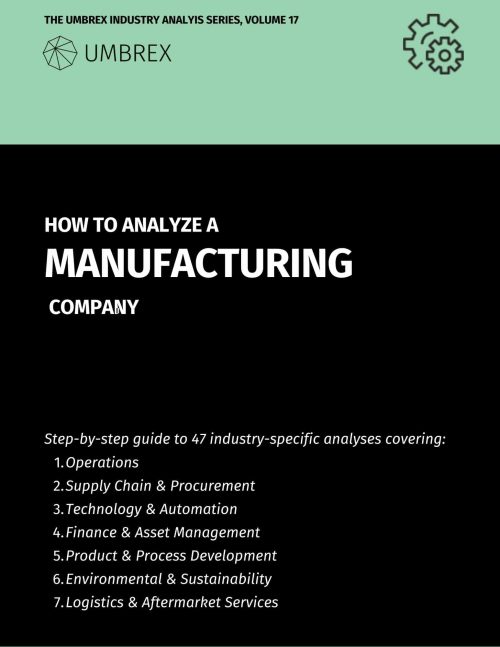
Request the PDF Download of How to Analyze a Manufacturing Company
Menu of the 47 analyses:
Table of Contents
A. OPERATIONS
- Capacity Utilization Analysis
- Operational Efficiency (OEE) Analysis
- Supply Chain and Logistics Optimization
- Production Lead Time Analysis
- Lean Manufacturing and Waste Reduction Assessment
- Inventory Turnover and Management Efficiency
- Quality Control and Defect Rate Analysis
- Capacity Expansion and Flexibility Assessment
- Maintenance Strategy and Downtime Analysis
- Factory Layout and Process Flow Optimization
- Throughput and Bottleneck Identification
- Production Scheduling and Demand Alignment
- Process Standardization and Replication Across Plants
- Work-in-Progress (WIP) Inventory Management
- Material Handling and Internal Logistics Efficiency
- Finished Goods Storage and Warehousing Optimization
- Capacity Buffers and Flexibility in Response to Demand Fluctuations
B. SUPPLY CHAIN & PROCUREMENT
- Bill of Materials (BOM) and Cost Structure Analysis
- Supplier Risk and Dependency Analysis
- Supplier Quality Management
- Raw Material Sourcing and Procurement Efficiency
- Vendor-Managed Inventory (VMI) Program Evaluation
- In-house Production vs. Outsourcing Feasibility
C. TECHNOLOGY & AUTOMATION
- Automation and Technology Integration Analysis
- Factory Automation Level and Robotics Utilization
- Tooling and Machine Setup Time Optimization
- Equipment Downtime Tracking and Root Cause Analysis
- Spare Parts Management and Predictive Maintenance Systems
- Manufacturing Cycle Time Reduction
- Energy Consumption and Efficiency Analysis
D. FINANCE & ASSET MANAGEMENT
- Capital Expenditure (CapEx) Effectiveness in Equipment and Technology
- Cost of Goods Sold (COGS) Breakdown and Margins Analysis
- Asset Utilization and Lifecycle Management
- Return on Invested Capital (ROIC) for Manufacturing Assets
- Working Capital Management in Manufacturing
E. PRODUCT & PROCESS DEVELOPMENT
- Product Customization and Modularity Assessment
- New Product Introduction (NPI) and Time-to-Market Evaluation
- Custom Manufacturing vs. Mass Production Analysis
- Product Yield and Scrap Rate Analysis
- Make-to-Stock vs. Make-to-Order Strategy Evaluation
F. ENVIRONMENTAL & SUSTAINABILITY
- Sustainability and Environmental Impact Analysis
- Heat, Water, and Waste Management in Production
- Environmental Compliance and Emissions Reduction Strategies
- Reverse Logistics and Product Lifecycle Management
G. LOGISTICS & AFTERMARKET SERVICES
- Aftermarket Services and Spare Parts Logistics
- Multi-Site Manufacturing Network Optimization
- Safety and Compliance Audit