
Goal of the analysis:
The goal of a Capacity Utilization Analysis is to measure how effectively a manufacturing company is using its production capacity. It helps determine whether the company is operating efficiently, underutilizing resources, or overutilizing capacity, which could lead to potential inefficiencies.
Data required:
- Actual Production Output: The number of units produced in a given period (e.g., day, week, month).
- Maximum Production Capacity: The maximum number of units that could be produced with current equipment and resources in the same period.
- Time Period: The specific time frame for the analysis (e.g., monthly, quarterly).
- Shift Schedules: Total available work hours in a period based on labor and machine availability.
Detailed step-by-step instruction on how to conduct the analysis:
- Gather Data:
- Collect actual production output for the period under review (e.g., daily or monthly).
- Determine the maximum production capacity for the same period, based on machine throughput and available labor.
- Calculate Capacity Utilization: Capacity Utilization (%) = (Actual Production Output / Maximum Production Capacity) x 100
For example, if a factory produced 8,000 units in a month and its maximum capacity is 10,000 units: Capacity Utilization = (8,000 / 10,000) x 100 = 80% - Optional: Break Down by Machine or Line:
- If applicable, repeat this analysis for individual production lines or machines to identify differences in utilization across the facility.
- Track Over Time:
- Conduct this analysis regularly (e.g., monthly or quarterly) to identify trends in capacity utilization.
Format of the output of analysis:
- A table that includes actual output, maximum capacity, and capacity utilization percentage for each production line or machine.
- A graph (line chart or bar chart) showing capacity utilization over time.
- A summary of overall capacity utilization for the entire facility.
How to interpret results:
- 85% to 95% Capacity Utilization: This range is typically considered optimal. It indicates that resources are being used efficiently while allowing some flexibility for demand changes or maintenance.
- Below 80% Capacity Utilization: Indicates underutilization, where resources are not being fully leveraged. This could be a sign of inefficiencies, low demand, or excess capacity.
- Above 95% Capacity Utilization: This may suggest overutilization, which can lead to equipment wear, increased downtime, and limited ability to respond to changes in demand or emergencies.
Steps a company can take to improve on this measure:
- Increase Demand or Production Volume:
- Boost sales and marketing efforts to increase product demand, leading to higher production volumes.
- Explore new market opportunities or diversify product offerings to drive up production.
- Optimize Shift Schedules:
- Adjust labor or shift patterns to better align production with available capacity.
- Improve Operational Efficiency:
- Implement lean manufacturing principles to eliminate waste and streamline processes.
- Reduce machine downtime by enhancing maintenance practices or adopting predictive maintenance technology.
- Upgrade Equipment:
- If equipment limitations cause low utilization, invest in equipment upgrades or replacements to increase capacity.
- Balance Workloads Across Production Lines:
- Redistribute work to ensure more even utilization of production lines, preventing bottlenecks or underuse.
- Reduce Downtime:
- Analyze the root causes of downtime and take corrective actions, such as optimizing maintenance schedules or speeding up changeovers.
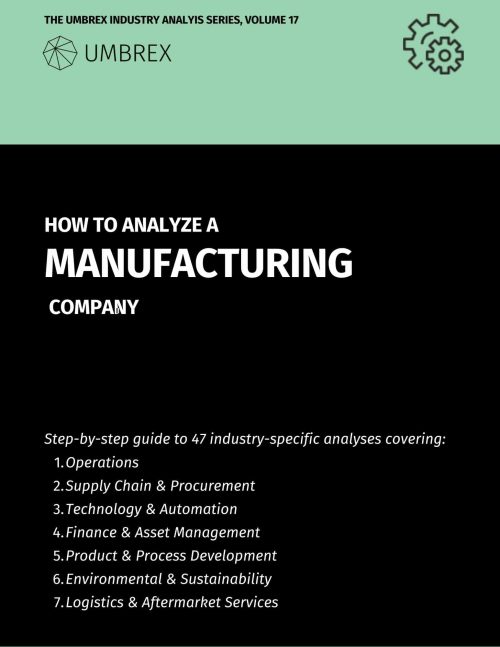
Request the PDF Download of How to Analyze a Manufacturing Company
Menu of the 47 analyses:
Table of Contents
A. OPERATIONS
- Capacity Utilization Analysis
- Operational Efficiency (OEE) Analysis
- Supply Chain and Logistics Optimization
- Production Lead Time Analysis
- Lean Manufacturing and Waste Reduction Assessment
- Inventory Turnover and Management Efficiency
- Quality Control and Defect Rate Analysis
- Capacity Expansion and Flexibility Assessment
- Maintenance Strategy and Downtime Analysis
- Factory Layout and Process Flow Optimization
- Throughput and Bottleneck Identification
- Production Scheduling and Demand Alignment
- Process Standardization and Replication Across Plants
- Work-in-Progress (WIP) Inventory Management
- Material Handling and Internal Logistics Efficiency
- Finished Goods Storage and Warehousing Optimization
- Capacity Buffers and Flexibility in Response to Demand Fluctuations
B. SUPPLY CHAIN & PROCUREMENT
- Bill of Materials (BOM) and Cost Structure Analysis
- Supplier Risk and Dependency Analysis
- Supplier Quality Management
- Raw Material Sourcing and Procurement Efficiency
- Vendor-Managed Inventory (VMI) Program Evaluation
- In-house Production vs. Outsourcing Feasibility
C. TECHNOLOGY & AUTOMATION
- Automation and Technology Integration Analysis
- Factory Automation Level and Robotics Utilization
- Tooling and Machine Setup Time Optimization
- Equipment Downtime Tracking and Root Cause Analysis
- Spare Parts Management and Predictive Maintenance Systems
- Manufacturing Cycle Time Reduction
- Energy Consumption and Efficiency Analysis
D. FINANCE & ASSET MANAGEMENT
- Capital Expenditure (CapEx) Effectiveness in Equipment and Technology
- Cost of Goods Sold (COGS) Breakdown and Margins Analysis
- Asset Utilization and Lifecycle Management
- Return on Invested Capital (ROIC) for Manufacturing Assets
- Working Capital Management in Manufacturing
E. PRODUCT & PROCESS DEVELOPMENT
- Product Customization and Modularity Assessment
- New Product Introduction (NPI) and Time-to-Market Evaluation
- Custom Manufacturing vs. Mass Production Analysis
- Product Yield and Scrap Rate Analysis
- Make-to-Stock vs. Make-to-Order Strategy Evaluation
F. ENVIRONMENTAL & SUSTAINABILITY
- Sustainability and Environmental Impact Analysis
- Heat, Water, and Waste Management in Production
- Environmental Compliance and Emissions Reduction Strategies
- Reverse Logistics and Product Lifecycle Management
G. LOGISTICS & AFTERMARKET SERVICES
- Aftermarket Services and Spare Parts Logistics
- Multi-Site Manufacturing Network Optimization
- Safety and Compliance Audit