
Goal of the analysis:
The goal of a Factory Automation Level and Robotics Utilization analysis is to assess the current state of automation and the use of robotics in manufacturing operations. This analysis evaluates how effectively automation and robotics are being used to improve productivity, reduce labor costs, enhance product quality, and ensure consistency. It helps determine whether further investments in automation and robotics are needed to remain competitive, or if existing systems can be optimized for better performance.
Data required:
- Current Automation Level: Data on the extent of automation within the factory, including processes currently automated, types of robotics used, and manual tasks remaining.
- Robotics Types and Applications: Information on the types of robots deployed (e.g., industrial robots, collaborative robots), their applications, and how they contribute to production efficiency.
- Production Metrics: Key performance indicators (KPIs) such as cycle times, production throughput, labor hours, and error rates for both manual and automated processes.
- Downtime and Maintenance Records: Data on the frequency and causes of downtime for automated equipment and robotics, as well as maintenance costs and reliability.
- Automation and Robotics Costs: Capital and operational costs associated with purchasing, installing, and maintaining automation systems and robotics, including labor for maintenance and training.
- Labor Costs: Current labor costs for tasks that could potentially be automated or further optimized through robotics.
- Quality Metrics: Quality control data, including defect rates, rework, and scrap, to assess how automation and robotics impact product quality.
- Safety and Ergonomics Data: Data on workplace safety, ergonomic risks, and accident rates related to manual processes that could be automated for improved safety.
- Scalability and Flexibility: Information on how scalable and flexible the current automation and robotics systems are in response to changing demand, production requirements, or product variations.
- Energy Consumption: Data on the energy consumption of robotics and automated systems compared to manual processes.
Detailed step-by-step instruction on how to conduct the analysis:
- Assess Current Automation Level:
- Review the current state of automation in the factory by identifying which processes are automated and which are still manual. Classify the level of automation across different production stages (e.g., material handling, assembly, inspection, packaging).
- Evaluate Robotics Utilization:
- Identify the types of robots in use, such as industrial robots (for heavy lifting, welding, etc.) or collaborative robots (for tasks shared with human workers). Assess their applications and how effectively they contribute to production goals.
- Analyze Production Efficiency:
- Compare the productivity of manual versus automated processes. Use production metrics such as cycle times, throughput, and labor hours to determine how much automation and robotics have improved efficiency. Identify any processes where automation or robotics could further reduce labor or speed up production.
- Evaluate Maintenance and Downtime:
- Assess the reliability and maintenance needs of automated equipment and robotics. Frequent downtime or high maintenance costs could indicate inefficiencies or areas for improvement. Track how often robots are offline and the root causes of breakdowns.
- Calculate Cost Savings:
- Compare the total costs of automation and robotics (capital investment, maintenance, training) with the labor costs saved by automation. Estimate labor cost reductions from tasks that robots or automated systems now handle, and identify potential future cost savings by automating more tasks.
- Assess Quality Improvements:
- Measure the impact of automation and robotics on product quality. Robots often improve precision and consistency, leading to fewer defects, rework, and scrap. Compare current quality metrics against pre-automation data to quantify improvements.
- Review Safety and Ergonomics:
- Evaluate how automation and robotics have improved workplace safety by reducing the need for humans to perform dangerous, repetitive, or physically demanding tasks. Compare accident rates, ergonomic risks, and overall safety conditions before and after automation.
- Analyze Scalability and Flexibility:
- Determine how flexible the current automation and robotics systems are in handling changes in production volume or product variations. If demand spikes or product designs change, assess how easily the systems can be adapted to meet new requirements.
- Evaluate Energy Consumption:
- Compare the energy consumption of automated systems and robotics with manual labor. Identify whether automation has led to higher or lower energy use and assess its impact on operational costs.
- Identify Areas for Further Automation:
- Based on the data, identify areas where further automation or robotics could enhance productivity, reduce labor costs, or improve quality. Develop a roadmap for expanding automation and robotics use, including potential ROI from future investments.
Format of the output of analysis:
- Automation Level Report: A summary of the current level of automation across all production processes, including tasks automated and manual processes that remain.
- Robotics Utilization Assessment: A report detailing the types of robots used, their applications, and how they impact production metrics.
- Cost-Benefit Analysis: A financial breakdown comparing the costs of automation and robotics to the labor cost savings and productivity improvements realized. This includes initial investment, operational costs, and long-term savings.
- Maintenance and Downtime Report: A summary of downtime incidents, maintenance costs, and the reliability of automated systems and robotics.
- Quality Improvement Analysis: A report comparing defect rates, rework, and scrap before and after automation, showing how robotics have impacted product quality.
- Safety Impact Assessment: A report evaluating the effect of automation on workplace safety and ergonomic risks, with comparisons to pre-automation conditions.
How to interpret results:
- High Automation and Robotics Utilization: If the analysis shows that most processes are automated and robotics are effectively used, the company is likely benefiting from higher efficiency, lower labor costs, and improved product quality. Further automation may be needed in areas where manual tasks still dominate.
- Frequent Downtime and Maintenance Costs: If automated systems and robotics experience frequent breakdowns or high maintenance costs, it may indicate aging equipment, poor maintenance practices, or the need for upgrades. Addressing these issues can improve productivity and reduce costs.
- Significant Cost Savings: If automation and robotics have led to substantial labor cost savings and improved throughput, further investments in automation may be justified. However, cost savings should be weighed against maintenance, energy use, and the cost of expanding automation.
- Quality Improvements: Significant reductions in defects and rework indicate that robotics and automation have improved precision and consistency. If there are still quality issues, consider optimizing or upgrading existing systems.
- Scalability Issues: If automation systems are not easily scalable or flexible, the factory may struggle to respond to market changes or demand fluctuations. Investing in more flexible, modular systems could enhance adaptability.
Steps a company can take to improve on this measure:
- Upgrade or Expand Automation:
- Identify processes where additional automation or robotic systems could reduce manual labor, improve quality, or increase throughput. Upgrading aging systems or expanding the use of robotics in under-automated areas can further optimize production.
- Enhance Predictive Maintenance:
- Implement predictive maintenance systems for robotics and automated equipment to reduce downtime and prevent breakdowns. Using sensors and data analytics, predictive maintenance can anticipate equipment failures and schedule repairs before they occur.
- Improve Workforce Integration with Robotics:
- Provide training for employees to work alongside collaborative robots (cobots) and manage automated systems effectively. This can increase efficiency and reduce resistance to automation while maximizing the potential of the existing workforce.
- Increase Flexibility with Modular Robotics:
- Invest in modular robotic systems that can be easily reconfigured for different tasks or product lines. Flexible automation allows the factory to adapt to changing production needs and market demands without large-scale retooling.
- Monitor and Optimize Energy Consumption:
- Use energy monitoring tools to track the energy consumption of robotics and automated systems. Implement energy-saving practices such as automated power-down modes during idle times, or invest in more energy-efficient equipment to reduce operational costs.
- Focus on Continuous Improvement:
- Regularly evaluate the performance of automation and robotics, seeking opportunities for incremental improvements. Conduct regular audits to identify underperforming areas, bottlenecks, or opportunities for further automation.
- Adopt Industry 4.0 and IoT Solutions:
- Integrate Industry 4.0 technologies such as the Internet of Things (IoT), advanced sensors, and real-time data analytics to monitor and optimize robotics performance. These technologies can provide real-time insights into machine health, production rates, and potential issues.
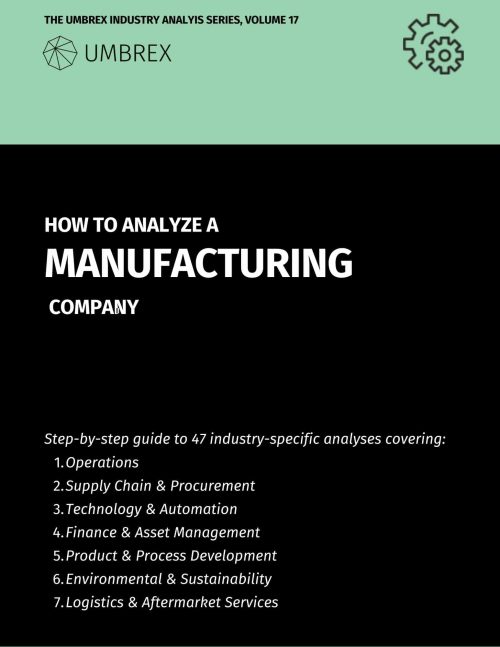
Request the PDF Download of How to Analyze a Manufacturing Company
Menu of the 47 analyses:
Table of Contents
A. OPERATIONS
- Capacity Utilization Analysis
- Operational Efficiency (OEE) Analysis
- Supply Chain and Logistics Optimization
- Production Lead Time Analysis
- Lean Manufacturing and Waste Reduction Assessment
- Inventory Turnover and Management Efficiency
- Quality Control and Defect Rate Analysis
- Capacity Expansion and Flexibility Assessment
- Maintenance Strategy and Downtime Analysis
- Factory Layout and Process Flow Optimization
- Throughput and Bottleneck Identification
- Production Scheduling and Demand Alignment
- Process Standardization and Replication Across Plants
- Work-in-Progress (WIP) Inventory Management
- Material Handling and Internal Logistics Efficiency
- Finished Goods Storage and Warehousing Optimization
- Capacity Buffers and Flexibility in Response to Demand Fluctuations
B. SUPPLY CHAIN & PROCUREMENT
- Bill of Materials (BOM) and Cost Structure Analysis
- Supplier Risk and Dependency Analysis
- Supplier Quality Management
- Raw Material Sourcing and Procurement Efficiency
- Vendor-Managed Inventory (VMI) Program Evaluation
- In-house Production vs. Outsourcing Feasibility
C. TECHNOLOGY & AUTOMATION
- Automation and Technology Integration Analysis
- Factory Automation Level and Robotics Utilization
- Tooling and Machine Setup Time Optimization
- Equipment Downtime Tracking and Root Cause Analysis
- Spare Parts Management and Predictive Maintenance Systems
- Manufacturing Cycle Time Reduction
- Energy Consumption and Efficiency Analysis
D. FINANCE & ASSET MANAGEMENT
- Capital Expenditure (CapEx) Effectiveness in Equipment and Technology
- Cost of Goods Sold (COGS) Breakdown and Margins Analysis
- Asset Utilization and Lifecycle Management
- Return on Invested Capital (ROIC) for Manufacturing Assets
- Working Capital Management in Manufacturing
E. PRODUCT & PROCESS DEVELOPMENT
- Product Customization and Modularity Assessment
- New Product Introduction (NPI) and Time-to-Market Evaluation
- Custom Manufacturing vs. Mass Production Analysis
- Product Yield and Scrap Rate Analysis
- Make-to-Stock vs. Make-to-Order Strategy Evaluation
F. ENVIRONMENTAL & SUSTAINABILITY
- Sustainability and Environmental Impact Analysis
- Heat, Water, and Waste Management in Production
- Environmental Compliance and Emissions Reduction Strategies
- Reverse Logistics and Product Lifecycle Management
G. LOGISTICS & AFTERMARKET SERVICES
- Aftermarket Services and Spare Parts Logistics
- Multi-Site Manufacturing Network Optimization
- Safety and Compliance Audit