
Goal of the analysis:
The goal of an Automation and Technology Integration Analysis is to evaluate the potential benefits, costs, and risks of integrating automation and advanced technologies into a company’s operations. This analysis assesses how automation can improve productivity, reduce labor costs, enhance quality, and streamline processes, while also considering the challenges and risks involved in implementing new technology. It helps determine the feasibility and return on investment (ROI) of automating key processes and guides decision-making on technology adoption.
Data required:
- Current Process Efficiency: Baseline data on existing processes, including cycle times, labor hours, throughput, and error rates.
- Automation Costs: Initial investment and ongoing costs associated with purchasing, installing, and maintaining automation technologies (e.g., robotics, software, sensors).
- Labor Costs: Current labor costs, including wages, benefits, and overtime, for tasks that could potentially be automated.
- Potential Productivity Gains: Estimated improvements in speed, accuracy, and throughput from implementing automation.
- Technology Compatibility: Data on the compatibility of proposed automation technologies with existing systems, including IT infrastructure and machinery.
- Quality Metrics: Current quality control data, including defect rates, rework, and scrap, to assess how automation might impact product quality.
- Training and Workforce Impact: Information on workforce skills, potential training needs, and the impact of automation on employment levels and labor allocation.
- Maintenance and Downtime Data: Expected maintenance costs and potential downtime related to automation equipment, compared with the reliability of current processes.
- Change Management Factors: The organization’s readiness for technology adoption, including cultural, procedural, and leadership considerations.
- ROI and Payback Period: Calculations to estimate the financial returns from automation, including cost savings, productivity improvements, and the payback period.
Detailed step-by-step instruction on how to conduct the analysis:
- Analyze Current Process Efficiency:
- Evaluate existing workflows and processes that could benefit from automation. Gather data on cycle times, production throughput, manual labor hours, and error rates. Identify bottlenecks, repetitive tasks, and areas where human error is common.
- Identify Automation Opportunities:
- List processes that are ideal candidates for automation, such as repetitive tasks, labor-intensive activities, or processes with high error rates. Prioritize tasks where automation could significantly improve efficiency or quality.
- Calculate Automation Costs:
- Estimate the initial investment for automation technologies, including the purchase of equipment (e.g., robots, automated machinery, software), installation costs, and training expenses. Consider ongoing maintenance and operational costs as well.
- Assess Potential Productivity Gains:
- Estimate the productivity improvements from automation, including increased throughput, faster cycle times, and reduced labor costs. Compare automated processes with the baseline data to quantify time savings, increased output, and potential error reductions.
- Evaluate Technology Compatibility:
- Review the compatibility of the new automation systems with your current machinery, IT infrastructure, and software. Ensure that the technology integrates smoothly with existing workflows and data systems to avoid operational disruptions.
- Assess Impact on Quality:
- Evaluate how automation can impact product quality. Automated processes often improve consistency and reduce human error, leading to fewer defects and rework. Compare current quality metrics with expected improvements through automation.
- Analyze Workforce Implications:
- Consider the impact of automation on the workforce. Determine whether automation will reduce labor needs, or if workers can be redeployed to higher-value tasks. Assess the training requirements for employees to manage and maintain new technologies.
- Estimate Downtime and Maintenance Costs:
- Project the potential downtime for installing and maintaining automation equipment. Evaluate how often maintenance will be required, how complex it will be, and how it compares to current equipment reliability. Consider whether maintenance can be handled in-house or will require external expertise.
- Calculate ROI and Payback Period:
- Estimate the financial benefits of automation, including labor cost savings, increased output, and quality improvements. Compare these benefits to the total cost of implementing automation to calculate the return on investment (ROI) and the payback period.
- ROI = (Net Benefits / Total Costs) x 100
For example, if automation leads to $500,000 in annual savings, and the total cost is $1,000,000:
ROI = ($500,000 / $1,000,000) x 100 = 50% - Develop a Change Management Plan:
- Prepare the organization for automation by creating a change management plan. Address potential resistance to technology adoption, train employees on new systems, and ensure that leadership is aligned on the goals and benefits of automation.
Format of the output of analysis:
- Automation Opportunity Report: A list of processes identified as suitable for automation, ranked by their potential impact on efficiency, cost savings, and quality improvement.
- Cost-Benefit Analysis: A detailed breakdown of automation costs (initial and ongoing) compared to projected productivity gains, labor savings, and quality improvements.
- ROI and Payback Period Calculation: A financial analysis showing the expected return on investment (ROI) and payback period for each automation initiative.
- Technology Compatibility Assessment: A report analyzing how well the proposed automation technologies will integrate with existing systems and identifying any necessary upgrades or changes.
- Workforce Impact Assessment: A report detailing the impact of automation on the workforce, including required training, potential job displacement, and opportunities for redeployment to higher-value tasks.
How to interpret results:
- High ROI and Short Payback Period: If the analysis shows a high ROI and a short payback period, automation is likely a worthwhile investment, especially if it leads to substantial cost savings and efficiency gains without significant risks.
- Quality Improvements: If automation significantly reduces defect rates, rework, and scrap, it will not only improve cost efficiency but also enhance customer satisfaction and product consistency.
- Technology Integration Challenges: If there are significant compatibility issues with existing systems, it may be necessary to upgrade IT infrastructure or modify workflows before proceeding with automation. Integration challenges can increase costs and implementation time.
- Labor Reduction or Redeployment: If automation reduces the need for manual labor, consider how to manage the workforce transition. Upskilling and redeploying employees to more strategic tasks can maximize the value of automation and minimize disruption.
Steps a company can take to improve on this measure:
- Start with Pilot Projects:
- Begin by automating a small, low-risk process to test the effectiveness and ROI of the technology. Pilot projects provide valuable insights and help refine implementation strategies for larger-scale automation.
- Optimize Current Processes Before Automation:
- Before automating, optimize the current manual processes to remove inefficiencies. Automating a broken process will only magnify inefficiencies, so streamlining workflows first ensures better results post-automation.
- Collaborate with Technology Providers:
- Work closely with automation technology providers to ensure smooth implementation and integration. Vendors often offer training, support, and customization to suit specific business needs, making it easier to achieve the desired outcomes.
- Develop Workforce Upskilling Programs:
- Provide training for employees to manage, maintain, and operate automated systems. Upskilling helps employees transition to more strategic roles, improves job satisfaction, and maximizes the benefits of automation.
- Implement Real-Time Monitoring Systems:
- Use real-time monitoring systems to track the performance of automated equipment. This allows for immediate identification of issues, minimizes downtime, and ensures that productivity and quality targets are met.
- Regularly Review and Optimize Automation:
- After implementing automation, continuously evaluate its performance and look for opportunities to optimize processes further. Automation technology evolves rapidly, and regular reviews ensure that the company remains competitive.
- Ensure Cybersecurity and Data Protection:
- Automation systems often integrate with IT infrastructure and can expose companies to cybersecurity risks. Implement strong cybersecurity measures to protect sensitive data and prevent disruptions caused by cyber threats.
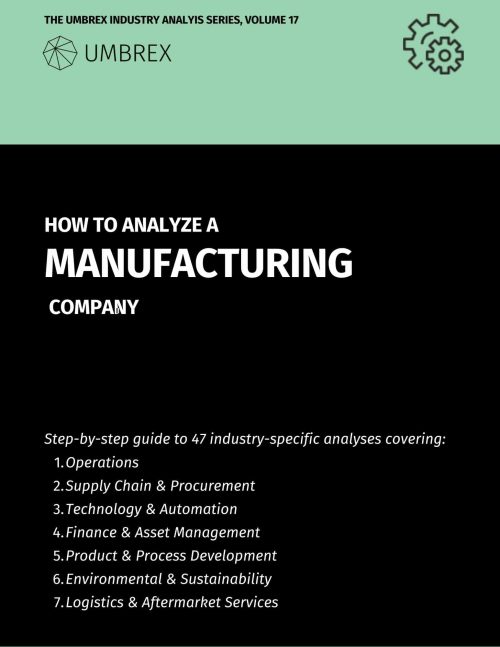
Request the PDF Download of How to Analyze a Manufacturing Company
Menu of the 47 analyses:
Table of Contents
A. OPERATIONS
- Capacity Utilization Analysis
- Operational Efficiency (OEE) Analysis
- Supply Chain and Logistics Optimization
- Production Lead Time Analysis
- Lean Manufacturing and Waste Reduction Assessment
- Inventory Turnover and Management Efficiency
- Quality Control and Defect Rate Analysis
- Capacity Expansion and Flexibility Assessment
- Maintenance Strategy and Downtime Analysis
- Factory Layout and Process Flow Optimization
- Throughput and Bottleneck Identification
- Production Scheduling and Demand Alignment
- Process Standardization and Replication Across Plants
- Work-in-Progress (WIP) Inventory Management
- Material Handling and Internal Logistics Efficiency
- Finished Goods Storage and Warehousing Optimization
- Capacity Buffers and Flexibility in Response to Demand Fluctuations
B. SUPPLY CHAIN & PROCUREMENT
- Bill of Materials (BOM) and Cost Structure Analysis
- Supplier Risk and Dependency Analysis
- Supplier Quality Management
- Raw Material Sourcing and Procurement Efficiency
- Vendor-Managed Inventory (VMI) Program Evaluation
- In-house Production vs. Outsourcing Feasibility
C. TECHNOLOGY & AUTOMATION
- Automation and Technology Integration Analysis
- Factory Automation Level and Robotics Utilization
- Tooling and Machine Setup Time Optimization
- Equipment Downtime Tracking and Root Cause Analysis
- Spare Parts Management and Predictive Maintenance Systems
- Manufacturing Cycle Time Reduction
- Energy Consumption and Efficiency Analysis
D. FINANCE & ASSET MANAGEMENT
- Capital Expenditure (CapEx) Effectiveness in Equipment and Technology
- Cost of Goods Sold (COGS) Breakdown and Margins Analysis
- Asset Utilization and Lifecycle Management
- Return on Invested Capital (ROIC) for Manufacturing Assets
- Working Capital Management in Manufacturing
E. PRODUCT & PROCESS DEVELOPMENT
- Product Customization and Modularity Assessment
- New Product Introduction (NPI) and Time-to-Market Evaluation
- Custom Manufacturing vs. Mass Production Analysis
- Product Yield and Scrap Rate Analysis
- Make-to-Stock vs. Make-to-Order Strategy Evaluation
F. ENVIRONMENTAL & SUSTAINABILITY
- Sustainability and Environmental Impact Analysis
- Heat, Water, and Waste Management in Production
- Environmental Compliance and Emissions Reduction Strategies
- Reverse Logistics and Product Lifecycle Management
G. LOGISTICS & AFTERMARKET SERVICES
- Aftermarket Services and Spare Parts Logistics
- Multi-Site Manufacturing Network Optimization
- Safety and Compliance Audit