
Goal of the analysis:
The goal of a Sustainability and Environmental Impact Analysis is to evaluate a company’s environmental footprint across its operations, supply chain, and product lifecycle. This analysis identifies opportunities to reduce emissions, conserve resources, minimize waste, and improve overall sustainability. It helps companies meet regulatory requirements, align with customer expectations for environmentally responsible practices, and improve long-term profitability by reducing resource usage and waste.
Data required:
- Carbon Emissions Data: Information on direct and indirect greenhouse gas (GHG) emissions from the company’s operations, including Scope 1 (direct emissions), Scope 2 (indirect emissions from purchased energy), and Scope 3 (emissions from the supply chain and product lifecycle).
- Energy Consumption Data: Details on energy usage across all facilities, including types of energy used (e.g., electricity, natural gas, renewable sources) and total consumption.
- Water Usage Data: Information on water consumption across all operations, including production, cooling, and cleaning processes, and data on water recycling or reuse.
- Waste Generation and Management: Data on waste produced during manufacturing or operations, including solid waste, hazardous waste, recycling rates, and disposal methods.
- Raw Material Sourcing: Information on the environmental impact of sourcing raw materials, including deforestation, mining, and other extraction processes.
- Product Lifecycle Data: Environmental impact of the entire product lifecycle, from raw material extraction and production to transportation, usage, and end-of-life disposal or recycling.
- Supply Chain Data: Information on the environmental practices of suppliers, including their carbon emissions, energy use, water use, and waste management.
- Regulatory Compliance Data: Information on environmental regulations that the company must comply with, including local, national, and international environmental standards.
- Sustainability Goals and Benchmarks: The company’s internal sustainability targets, industry benchmarks, and global sustainability initiatives (e.g., Science-Based Targets, UN Sustainable Development Goals).
Detailed step-by-step instruction on how to conduct the analysis:
- Measure Carbon Emissions:
- Calculate the company’s total carbon emissions across Scope 1, Scope 2, and Scope 3 categories. This includes direct emissions from owned facilities and vehicles (Scope 1), emissions from purchased electricity or energy (Scope 2), and indirect emissions from the supply chain, business travel, and product usage (Scope 3).
- Total Carbon Emissions = Scope 1 + Scope 2 + Scope 3 Emissions
- Analyze Energy Consumption and Efficiency:
- Review energy consumption across all facilities and operations. Evaluate the energy mix (renewable vs. non-renewable sources) and identify opportunities for improving energy efficiency, such as upgrading to energy-efficient equipment, using renewable energy sources, or optimizing facility operations.
- Evaluate Water Usage and Conservation:
- Assess water usage across the company’s operations, including production, cleaning, and cooling processes. Identify opportunities for water conservation through water-efficient technologies, recycling, or reuse. Consider implementing closed-loop water systems to minimize water consumption.
- Examine Waste Generation and Disposal:
- Track the amount and type of waste generated by the company’s operations. Analyze current waste management practices, including recycling rates, hazardous waste handling, and landfill usage. Identify opportunities for waste reduction, recycling improvements, or waste-to-energy initiatives.
- Assess Raw Material Sourcing:
- Evaluate the environmental impact of sourcing raw materials, including the carbon footprint of extraction, deforestation, or habitat destruction. Consider sourcing materials from sustainable or certified suppliers (e.g., FSC-certified wood, recycled metals, or low-impact alternatives).
- Analyze Product Lifecycle Impacts:
- Assess the environmental impact of the company’s products throughout their lifecycle. This includes the environmental effects of raw material extraction, production, transportation, product use, and end-of-life disposal or recycling. Implement strategies to minimize lifecycle impacts, such as designing products for recyclability or reducing packaging waste.
- Review Supply Chain Environmental Practices:
- Assess the environmental practices of the company’s suppliers, focusing on their carbon emissions, resource use, and waste management. Work with suppliers to reduce their environmental impact or consider switching to suppliers with more sustainable practices.
- Ensure Regulatory Compliance:
- Review local, national, and international environmental regulations to ensure compliance with emission limits, waste disposal rules, water usage guidelines, and other environmental standards. Address any non-compliance issues by implementing corrective actions.
- Set Sustainability Goals:
- Based on the analysis, set measurable sustainability goals that align with industry benchmarks and global sustainability initiatives. These goals may include reducing carbon emissions, transitioning to 100% renewable energy, achieving zero waste, or improving water efficiency.
- Monitor Progress and Continuous Improvement:
- Implement tracking systems to continuously monitor environmental performance. Use key performance indicators (KPIs) to measure progress toward sustainability goals. Regularly review and adjust sustainability strategies based on performance data and evolving industry standards.
Format of the output of analysis:
- Carbon Emissions Report: A breakdown of the company’s total carbon emissions by Scope 1, Scope 2, and Scope 3 categories, along with recommendations for reducing emissions.
- Energy Consumption and Efficiency Report: A detailed analysis of energy consumption, identifying energy-saving opportunities, renewable energy potential, and efficiency improvements.
- Water Usage and Conservation Report: A summary of water consumption, water-saving measures, and potential for water recycling or reuse in production processes.
- Waste Management and Reduction Report: A report on waste generation, recycling rates, and opportunities for waste reduction, recycling, or alternative disposal methods (e.g., waste-to-energy).
- Raw Material Sourcing Analysis: A review of the environmental impact of sourcing raw materials, including recommendations for more sustainable sourcing or material alternatives.
- Product Lifecycle Impact Analysis: An assessment of the environmental impacts across the product lifecycle, with recommendations for reducing lifecycle emissions, waste, and resource use.
- Supply Chain Environmental Review: An analysis of the environmental practices of suppliers, with suggestions for working with suppliers to reduce their environmental footprint.
- Sustainability Goals and Benchmarking: A set of specific sustainability goals, aligned with industry benchmarks and global sustainability initiatives, to guide future improvements.
How to interpret results:
- High Carbon Emissions: If carbon emissions are high, prioritize efforts to reduce emissions by improving energy efficiency, switching to renewable energy sources, optimizing transportation logistics, or working with suppliers to reduce their carbon footprint.
- Inefficient Energy Use: If energy consumption is high and efficiency is low, invest in energy-efficient equipment, implement energy-saving measures, and explore options for generating or purchasing renewable energy.
- Excessive Water Use: High water consumption may indicate inefficiencies in water use. Focus on water conservation, recycling, or reuse strategies to reduce water usage and minimize wastewater discharge.
- High Waste Generation: If waste levels are high, prioritize waste reduction strategies, improve recycling rates, and explore waste-to-energy or composting options to divert waste from landfills.
- Environmental Impact of Raw Material Sourcing: If sourcing raw materials has a significant environmental impact, explore alternative materials or work with suppliers to ensure sustainable sourcing practices.
Steps a company can take to improve on this measure:
- Transition to Renewable Energy:
- Invest in or purchase renewable energy (e.g., solar, wind, geothermal) to reduce Scope 2 carbon emissions. This also helps mitigate the impact of energy price fluctuations and regulatory changes related to fossil fuel use.
- Improve Energy Efficiency:
- Implement energy-efficient technologies and practices, such as upgrading to LED lighting, improving insulation, using energy-efficient machinery, and optimizing heating and cooling systems.
- Adopt Water-Saving Technologies:
- Install water-efficient fixtures and equipment, and implement water recycling or reuse systems in production processes. Consider adopting closed-loop water systems that minimize water consumption.
- Enhance Waste Reduction and Recycling:
- Reduce waste at the source by optimizing production processes, implementing lean manufacturing techniques, and designing products with fewer materials. Improve recycling practices and work with local waste management companies to reduce landfill use.
- Source Materials Sustainably:
- Work with suppliers to source sustainable, certified materials. Consider using recycled materials or lower-impact alternatives in product design and manufacturing.
- Optimize Product Design for Sustainability:
- Design products for longevity, recyclability, and resource efficiency. Reduce packaging waste by using eco-friendly materials or minimizing packaging altogether. Implement circular economy principles by designing for reuse or refurbishment.
- Engage with Suppliers on Sustainability:
- Collaborate with suppliers to improve their environmental practices. Encourage them to adopt energy-efficient processes, reduce waste, and minimize water consumption. Consider creating a supplier sustainability code of conduct.
- Implement Environmental Monitoring Systems:
- Use environmental monitoring tools to track carbon emissions, energy use, water consumption, and waste generation in real time. This allows for quicker adjustments and continuous improvement in sustainability performance.
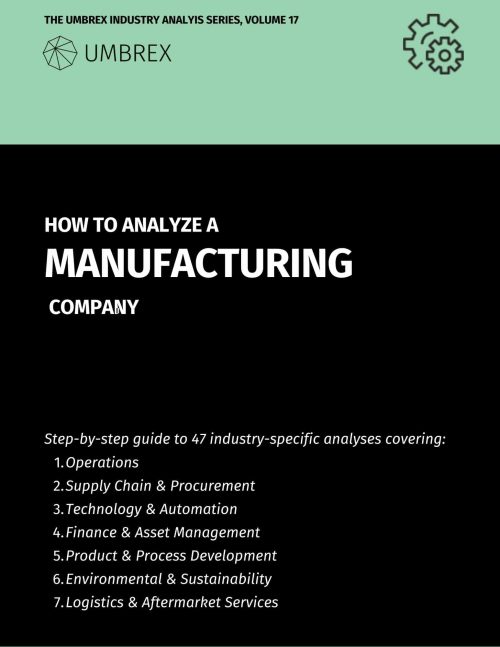
Request the PDF Download of How to Analyze a Manufacturing Company
Menu of the 47 analyses:
Table of Contents
A. OPERATIONS
- Capacity Utilization Analysis
- Operational Efficiency (OEE) Analysis
- Supply Chain and Logistics Optimization
- Production Lead Time Analysis
- Lean Manufacturing and Waste Reduction Assessment
- Inventory Turnover and Management Efficiency
- Quality Control and Defect Rate Analysis
- Capacity Expansion and Flexibility Assessment
- Maintenance Strategy and Downtime Analysis
- Factory Layout and Process Flow Optimization
- Throughput and Bottleneck Identification
- Production Scheduling and Demand Alignment
- Process Standardization and Replication Across Plants
- Work-in-Progress (WIP) Inventory Management
- Material Handling and Internal Logistics Efficiency
- Finished Goods Storage and Warehousing Optimization
- Capacity Buffers and Flexibility in Response to Demand Fluctuations
B. SUPPLY CHAIN & PROCUREMENT
- Bill of Materials (BOM) and Cost Structure Analysis
- Supplier Risk and Dependency Analysis
- Supplier Quality Management
- Raw Material Sourcing and Procurement Efficiency
- Vendor-Managed Inventory (VMI) Program Evaluation
- In-house Production vs. Outsourcing Feasibility
C. TECHNOLOGY & AUTOMATION
- Automation and Technology Integration Analysis
- Factory Automation Level and Robotics Utilization
- Tooling and Machine Setup Time Optimization
- Equipment Downtime Tracking and Root Cause Analysis
- Spare Parts Management and Predictive Maintenance Systems
- Manufacturing Cycle Time Reduction
- Energy Consumption and Efficiency Analysis
D. FINANCE & ASSET MANAGEMENT
- Capital Expenditure (CapEx) Effectiveness in Equipment and Technology
- Cost of Goods Sold (COGS) Breakdown and Margins Analysis
- Asset Utilization and Lifecycle Management
- Return on Invested Capital (ROIC) for Manufacturing Assets
- Working Capital Management in Manufacturing
E. PRODUCT & PROCESS DEVELOPMENT
- Product Customization and Modularity Assessment
- New Product Introduction (NPI) and Time-to-Market Evaluation
- Custom Manufacturing vs. Mass Production Analysis
- Product Yield and Scrap Rate Analysis
- Make-to-Stock vs. Make-to-Order Strategy Evaluation
F. ENVIRONMENTAL & SUSTAINABILITY
- Sustainability and Environmental Impact Analysis
- Heat, Water, and Waste Management in Production
- Environmental Compliance and Emissions Reduction Strategies
- Reverse Logistics and Product Lifecycle Management
G. LOGISTICS & AFTERMARKET SERVICES
- Aftermarket Services and Spare Parts Logistics
- Multi-Site Manufacturing Network Optimization
- Safety and Compliance Audit