
Goal of the analysis:
The goal of Tooling and Machine Setup Time Optimization is to minimize the time and costs associated with changing tools and setting up machinery for different production runs. Reducing setup time improves overall equipment efficiency (OEE), increases production capacity, reduces downtime, and lowers labor costs. This analysis identifies opportunities to streamline the setup process and implement best practices such as Single-Minute Exchange of Die (SMED) to enhance productivity.
Data required:
- Current Setup Time Data: Records of how long it takes to complete machine setups and tool changes for various production runs.
- Production Downtime Data: Information on how often and for how long machines are idle due to tooling and setup activities.
- Tooling and Equipment Data: Details on the types of tooling and machinery in use, including the complexity of the setup process.
- Labor Costs: The costs associated with labor during setup time, including the number of workers involved and their hourly wages.
- Production Schedules: Data on how frequently setup changes occur and how they impact production flow.
- OEE Metrics: Current metrics on overall equipment efficiency, including availability, performance, and quality. OEE measures how effectively equipment is utilized, accounting for downtime due to setup.
- Defect and Scrap Rates: Data on product quality during and after setup changes, including scrap rates, rework, and first-pass yield.
- Changeover Procedures: Documentation of existing procedures for tooling changes and machine setups, including setup steps, tools required, and workers involved.
- Operator Feedback: Input from machine operators on pain points, delays, and inefficiencies during the setup process.
Detailed step-by-step instruction on how to conduct the analysis:
- Collect Setup Time Data:
- Measure the time required to complete tooling and machine setups across various production lines. Break down the setup time into individual tasks (e.g., removing old tools, installing new tools, calibrating equipment) to identify bottlenecks.
- Analyze Setup Time Variability:
- Assess how setup times vary between different machines, tools, and production runs. Identify the most time-consuming setups and the factors contributing to setup variability, such as machine complexity, operator skill level, or tool availability.
- Assess Production Downtime:
- Evaluate how setup times impact overall production downtime. Identify how often machines are idle during changeovers and calculate the impact on production schedules and output. Quantify how setup time affects machine availability in OEE calculations.
- Examine Tooling and Equipment Complexity:
- Analyze the complexity of the tooling and machine setup process. Machines that require frequent adjustments, multiple tools, or specialized operators may have longer setup times. Determine if setup complexity can be reduced through standardized tooling or automated systems.
- Review Changeover Procedures:
- Review current setup and changeover procedures to identify inefficiencies. Consider whether unnecessary steps are being performed or if setups could be streamlined with better organization, training, or equipment layout.
- Implement SMED Principles:
- Apply Single-Minute Exchange of Die (SMED) techniques to reduce setup times. SMED focuses on converting internal setup tasks (those performed while the machine is offline) into external tasks (those performed while the machine is running), and streamlining both internal and external tasks. Identify setup tasks that can be prepped in advance to minimize downtime.
- Optimize Tooling Management:
- Implement better tooling management practices, such as organized storage systems and standardized toolkits, to reduce the time spent searching for tools or equipment. Ensure that tools are prepped and available before a setup begins.
- Train Operators on Efficient Setup Practices:
- Provide training for machine operators on best practices for reducing setup time. Emphasize the importance of preparation, communication, and organization during the setup process. Encourage operators to suggest improvements based on their hands-on experience.
- Introduce Quick-Change Tooling:
- Invest in quick-change tooling systems, which allow for faster tool swaps without the need for extensive recalibration or adjustment. Quick-change systems can significantly reduce setup times, especially for machines that require frequent tool changes.
- Monitor Setup Time Reductions:
- After implementing setup time optimization measures, continuously monitor setup times and track improvements. Use OEE metrics to measure how reduced setup times impact overall machine efficiency and production output.
Format of the output of analysis:
- Setup Time Reduction Report: A detailed report showing the time required for setups before and after optimization efforts, including a breakdown of time spent on each task.
- OEE Improvement Report: A summary of how setup time reductions have impacted overall equipment efficiency (OEE), including availability, performance, and quality metrics.
- SMED Implementation Plan: A step-by-step guide for implementing SMED principles, with specific recommendations for converting internal tasks to external tasks and streamlining setup activities.
- Cost-Benefit Analysis: A financial analysis showing the cost savings from reduced setup times, including labor cost reductions, increased production capacity, and potential savings from reduced downtime.
- Operator Feedback Summary: A summary of operator input on setup challenges and improvements made, along with any further suggestions for optimizing setup processes.
How to interpret results:
- Reduced Setup Times: Significant reductions in setup times indicate that the optimization measures, such as SMED or quick-change tooling, are effective. Shorter setup times mean less downtime, higher productivity, and greater flexibility in responding to production changes.
- Improved OEE: If OEE metrics improve after setup time optimization, it indicates better equipment availability, performance, and product quality. Reduced downtime due to faster setups leads to more efficient use of machinery.
- Lower Labor Costs: If fewer workers or less time is required to perform setups, labor costs decrease. Optimizing setup time also allows workers to focus on more value-added tasks, improving overall labor efficiency.
- Fewer Quality Issues: Reducing setup times without sacrificing quality indicates that the changes are well-implemented and that machine calibration and tooling are precise. However, if setup reductions lead to more defects or rework, further refinement of the process may be needed.
- Consistent Setup Times: Consistency in setup times across machines and production runs shows that standardized procedures are working and that variability has been minimized. Inconsistent times may indicate a need for more training or further process optimization.
Steps a company can take to improve on this measure:
- Standardize Setup Procedures:
- Create standardized setup procedures for all machines and tools. Ensure that operators follow the same steps to reduce variability in setup times. Use visual aids, checklists, and training materials to reinforce best practices.
- Invest in Quick-Change Tooling:
- Implement quick-change tooling systems to reduce the time required for tool changes. These systems allow operators to swap tools without extensive recalibration, reducing downtime and improving flexibility in production.
- Implement SMED Techniques:
- Train operators in Single-Minute Exchange of Die (SMED) techniques to streamline setups. Focus on converting internal tasks to external tasks, so that setup work can be done while the machine is still running, reducing overall downtime.
- Use Pre-Staging for Setup Tasks:
- Pre-stage tools, materials, and equipment needed for setup in advance to minimize time spent gathering supplies. Ensure that everything required for the next setup is ready and available before the current production run ends.
- Automate Setup Processes:
- Where possible, automate parts of the setup process, such as tool adjustments, material handling, and calibration. Automation reduces human error and speeds up repetitive setup tasks.
- Organize Tools and Equipment:
- Implement a 5S workplace organization strategy to ensure that tools and equipment are stored in an organized manner, making them easy to find and use. This eliminates wasted time searching for tools during setup.
- Conduct Regular Setup Audits:
- Perform regular audits of setup times and procedures to identify areas for further improvement. Involve machine operators in the audit process to gain insights into challenges and opportunities for optimization.
- Monitor OEE Continuously:
- Continuously monitor OEE metrics to ensure that setup time reductions are contributing to overall improvements in machine performance, availability, and quality. Use real-time data to make ongoing adjustments to setup procedures.
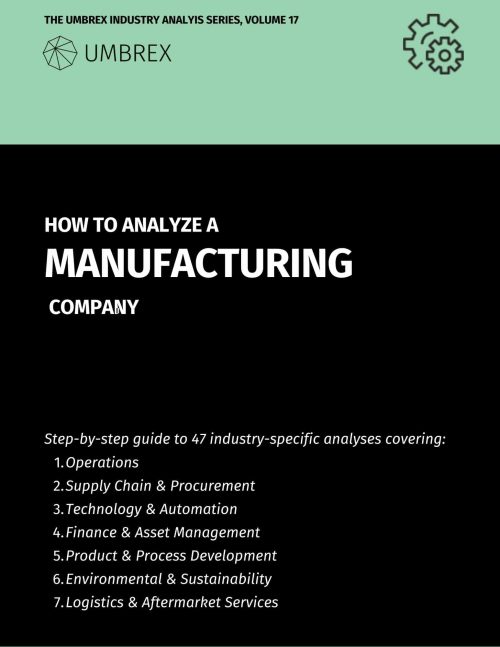
Request the PDF Download of How to Analyze a Manufacturing Company
Menu of the 47 analyses:
Table of Contents
A. OPERATIONS
- Capacity Utilization Analysis
- Operational Efficiency (OEE) Analysis
- Supply Chain and Logistics Optimization
- Production Lead Time Analysis
- Lean Manufacturing and Waste Reduction Assessment
- Inventory Turnover and Management Efficiency
- Quality Control and Defect Rate Analysis
- Capacity Expansion and Flexibility Assessment
- Maintenance Strategy and Downtime Analysis
- Factory Layout and Process Flow Optimization
- Throughput and Bottleneck Identification
- Production Scheduling and Demand Alignment
- Process Standardization and Replication Across Plants
- Work-in-Progress (WIP) Inventory Management
- Material Handling and Internal Logistics Efficiency
- Finished Goods Storage and Warehousing Optimization
- Capacity Buffers and Flexibility in Response to Demand Fluctuations
B. SUPPLY CHAIN & PROCUREMENT
- Bill of Materials (BOM) and Cost Structure Analysis
- Supplier Risk and Dependency Analysis
- Supplier Quality Management
- Raw Material Sourcing and Procurement Efficiency
- Vendor-Managed Inventory (VMI) Program Evaluation
- In-house Production vs. Outsourcing Feasibility
C. TECHNOLOGY & AUTOMATION
- Automation and Technology Integration Analysis
- Factory Automation Level and Robotics Utilization
- Tooling and Machine Setup Time Optimization
- Equipment Downtime Tracking and Root Cause Analysis
- Spare Parts Management and Predictive Maintenance Systems
- Manufacturing Cycle Time Reduction
- Energy Consumption and Efficiency Analysis
D. FINANCE & ASSET MANAGEMENT
- Capital Expenditure (CapEx) Effectiveness in Equipment and Technology
- Cost of Goods Sold (COGS) Breakdown and Margins Analysis
- Asset Utilization and Lifecycle Management
- Return on Invested Capital (ROIC) for Manufacturing Assets
- Working Capital Management in Manufacturing
E. PRODUCT & PROCESS DEVELOPMENT
- Product Customization and Modularity Assessment
- New Product Introduction (NPI) and Time-to-Market Evaluation
- Custom Manufacturing vs. Mass Production Analysis
- Product Yield and Scrap Rate Analysis
- Make-to-Stock vs. Make-to-Order Strategy Evaluation
F. ENVIRONMENTAL & SUSTAINABILITY
- Sustainability and Environmental Impact Analysis
- Heat, Water, and Waste Management in Production
- Environmental Compliance and Emissions Reduction Strategies
- Reverse Logistics and Product Lifecycle Management
G. LOGISTICS & AFTERMARKET SERVICES
- Aftermarket Services and Spare Parts Logistics
- Multi-Site Manufacturing Network Optimization
- Safety and Compliance Audit