
Goal of the analysis:
The goal of a Supplier Quality Management (SQM) analysis is to assess and ensure that suppliers meet the required quality standards for materials, components, and services provided to the company. This analysis helps to identify quality risks, improve supplier performance, reduce defects, and ensure that products meet regulatory and customer requirements. A robust SQM system ensures that the supply chain supports consistent, reliable production and minimizes disruptions caused by poor-quality inputs.
Data required:
- Supplier Performance Data: Metrics on supplier performance, including defect rates, on-time delivery, and quality inspection pass rates.
- Supplier Quality Audit Reports: Results from periodic audits conducted to assess supplier compliance with quality standards.
- Defect Rates: The number of defective materials or components received from each supplier, expressed as a percentage of total items received.
- Cost of Poor Quality (COPQ): Costs associated with poor-quality materials, including rework, scrap, warranty claims, and product recalls.
- Quality Control Inspection Data: Data from incoming quality inspections, including rejection rates and non-conformances.
- Supplier Certifications: Information on certifications held by suppliers, such as ISO 9001, which demonstrates their adherence to quality management standards.
- Corrective Action Reports (CARs): Documentation of issues raised with suppliers, along with the corrective actions taken to address quality problems.
- Supplier Relationship Management (SRM) Data: Information on collaboration with suppliers, including communication frequency, responsiveness to issues, and shared improvement initiatives.
Detailed step-by-step instruction on how to conduct the analysis:
- Create a Supplier Quality Scorecard:
- Develop a supplier quality scorecard to evaluate each supplier’s performance across key quality metrics such as defect rates, on-time delivery, and quality audit results. This scorecard helps rank suppliers based on their ability to meet quality standards.
- Collect Defect and Inspection Data:
- Gather defect data from incoming quality control inspections. Record the number of defects, non-conformances, and any rework or scrap associated with poor-quality materials. Track this data over time to identify trends and recurring issues.
- Assess Supplier Certifications:
- Review the quality certifications held by each supplier (e.g., ISO 9001 or industry-specific certifications). Suppliers with relevant certifications are more likely to have established quality management processes, reducing the risk of defects.
- Analyze the Cost of Poor Quality (COPQ):
- Calculate the costs incurred due to poor-quality materials from suppliers. This includes the cost of rework, scrap, delayed production, warranty claims, and customer dissatisfaction. High COPQ values indicate the need to improve supplier quality management practices.
- Conduct Supplier Quality Audits:
- Perform regular on-site or remote quality audits of key suppliers. Audits assess whether suppliers adhere to required quality standards, identify gaps in their processes, and provide opportunities for improvement. Document findings and corrective actions for continuous monitoring.
- Track Corrective Actions and Improvements:
- For suppliers with recurring quality issues, track the corrective actions taken and assess whether improvements have been made. Suppliers should provide documentation of corrective actions and evidence that issues have been resolved.
- Monitor Supplier Collaboration and Responsiveness:
- Evaluate how responsive and collaborative suppliers are in addressing quality concerns. A strong partnership with suppliers fosters open communication and helps resolve quality issues more effectively. Monitor how quickly suppliers respond to non-conformances and how proactive they are in making improvements.
- Benchmark Supplier Quality Performance:
- Compare the quality performance of each supplier against industry benchmarks or other suppliers in your portfolio. Identify best-in-class suppliers and work closely with underperforming suppliers to bring them up to standard.
- Develop Supplier Improvement Plans:
- For suppliers with consistent quality issues, develop and implement supplier improvement plans. These plans should outline clear goals, actions to address quality problems, timelines, and metrics for success. Regularly review progress and adjust plans as needed.
- Establish Supplier Quality Agreements:
- Formalize quality expectations in supplier contracts or agreements. Define key performance indicators (KPIs), defect rate targets, and penalties for non-compliance. This ensures accountability and sets clear standards for supplier performance.
Format of the output of analysis:
- Supplier Quality Scorecard: A visual summary ranking suppliers based on key quality metrics such as defect rates, on-time delivery, and audit results.
- Defect Rate Trend Report: A graph showing defect rates for each supplier over time, highlighting suppliers with recurring quality issues.
- Cost of Poor Quality (COPQ) Report: A breakdown of the costs associated with poor-quality materials, including rework, scrap, and warranty claims.
- Supplier Quality Audit Findings: A report summarizing the results of supplier quality audits, including non-conformances and corrective actions taken.
- Supplier Improvement Plan: A formal document outlining improvement plans for underperforming suppliers, including specific actions, timelines, and targets.
How to interpret results:
- High Defect Rates: Suppliers with high defect rates present a risk to production and product quality. Immediate corrective actions should be taken to address the root causes of defects and improve incoming quality.
- High COPQ: High costs associated with poor quality indicate significant supplier issues that affect profitability. Reducing these costs should be a priority by working with suppliers to improve quality or switching to more reliable sources.
- Non-compliance in Quality Audits: Suppliers that fail to meet quality audit requirements need targeted improvement plans. Continued non-compliance may indicate a need to re-evaluate the supplier relationship.
- Slow Response to Corrective Actions: Suppliers that are slow to implement corrective actions may pose a long-term risk to quality and reliability. Consider reviewing the supplier’s ability to maintain future contracts if improvements are not made.
Steps a company can take to improve on this measure:
- Establish Supplier Quality Metrics and KPIs:
- Set clear quality metrics for each supplier, including acceptable defect rates, on-time delivery rates, and audit compliance scores. Suppliers should be held accountable for meeting these KPIs as part of their performance review.
- Implement a Supplier Certification Program:
- Develop a supplier certification program that recognizes and rewards suppliers who consistently meet or exceed quality standards. This encourages continuous improvement and helps build stronger relationships with top-performing suppliers.
- Work Closely with Underperforming Suppliers:
- Collaborate with underperforming suppliers to identify the root causes of quality issues. Offer support through training, process improvements, or technical assistance to help them improve. However, if improvements are not made, consider alternative suppliers.
- Negotiate Long-Term Supplier Agreements:
- Use long-term contracts to formalize quality expectations and incentivize suppliers to meet high-quality standards. Contracts should include penalties for non-compliance, bonuses for exceeding targets, and clauses for continuous improvement.
- Use Technology for Supplier Quality Tracking:
- Implement supply chain management software to track supplier quality metrics in real-time. This provides early warning signs of quality issues and enables faster decision-making to mitigate risks.
- Conduct Regular Supplier Audits:
- Perform regular audits to ensure that suppliers maintain consistent quality standards. Audits should be conducted more frequently for high-risk suppliers or those with recurring quality problems.
- Develop a Supplier Quality Risk Matrix:
- Create a risk matrix that ranks suppliers based on their quality performance, financial stability, and responsiveness. This matrix helps prioritize efforts to manage supplier risks and ensure a reliable supply chain.
- Promote Supplier Collaboration:
- Foster a collaborative approach with suppliers, encouraging transparency and open communication about potential quality issues. A proactive relationship allows for quicker problem resolution and aligns suppliers with the company’s long-term quality objectives.
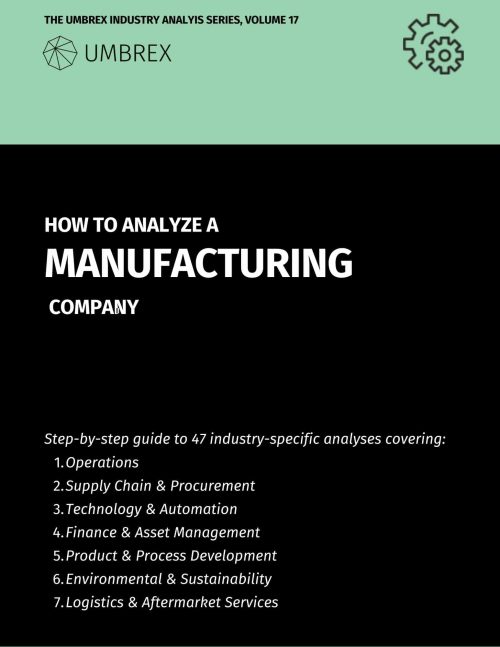
Request the PDF Download of How to Analyze a Manufacturing Company
Menu of the 47 analyses:
Table of Contents
A. OPERATIONS
- Capacity Utilization Analysis
- Operational Efficiency (OEE) Analysis
- Supply Chain and Logistics Optimization
- Production Lead Time Analysis
- Lean Manufacturing and Waste Reduction Assessment
- Inventory Turnover and Management Efficiency
- Quality Control and Defect Rate Analysis
- Capacity Expansion and Flexibility Assessment
- Maintenance Strategy and Downtime Analysis
- Factory Layout and Process Flow Optimization
- Throughput and Bottleneck Identification
- Production Scheduling and Demand Alignment
- Process Standardization and Replication Across Plants
- Work-in-Progress (WIP) Inventory Management
- Material Handling and Internal Logistics Efficiency
- Finished Goods Storage and Warehousing Optimization
- Capacity Buffers and Flexibility in Response to Demand Fluctuations
B. SUPPLY CHAIN & PROCUREMENT
- Bill of Materials (BOM) and Cost Structure Analysis
- Supplier Risk and Dependency Analysis
- Supplier Quality Management
- Raw Material Sourcing and Procurement Efficiency
- Vendor-Managed Inventory (VMI) Program Evaluation
- In-house Production vs. Outsourcing Feasibility
C. TECHNOLOGY & AUTOMATION
- Automation and Technology Integration Analysis
- Factory Automation Level and Robotics Utilization
- Tooling and Machine Setup Time Optimization
- Equipment Downtime Tracking and Root Cause Analysis
- Spare Parts Management and Predictive Maintenance Systems
- Manufacturing Cycle Time Reduction
- Energy Consumption and Efficiency Analysis
D. FINANCE & ASSET MANAGEMENT
- Capital Expenditure (CapEx) Effectiveness in Equipment and Technology
- Cost of Goods Sold (COGS) Breakdown and Margins Analysis
- Asset Utilization and Lifecycle Management
- Return on Invested Capital (ROIC) for Manufacturing Assets
- Working Capital Management in Manufacturing
E. PRODUCT & PROCESS DEVELOPMENT
- Product Customization and Modularity Assessment
- New Product Introduction (NPI) and Time-to-Market Evaluation
- Custom Manufacturing vs. Mass Production Analysis
- Product Yield and Scrap Rate Analysis
- Make-to-Stock vs. Make-to-Order Strategy Evaluation
F. ENVIRONMENTAL & SUSTAINABILITY
- Sustainability and Environmental Impact Analysis
- Heat, Water, and Waste Management in Production
- Environmental Compliance and Emissions Reduction Strategies
- Reverse Logistics and Product Lifecycle Management
G. LOGISTICS & AFTERMARKET SERVICES
- Aftermarket Services and Spare Parts Logistics
- Multi-Site Manufacturing Network Optimization
- Safety and Compliance Audit