
Goal of the analysis:
The goal of Store Labor Productivity Analysis is to assess how efficiently a retail company utilizes its labor force relative to the revenue generated. This analysis helps determine whether labor costs are being managed effectively and identifies opportunities to improve productivity while maintaining or enhancing customer service.
Data required:
- Total labor hours worked per store (by time period: daily, weekly, monthly).
- Total labor costs per store (wages, benefits, etc.).
- Total sales revenue per store.
- Number of transactions per store (optional for deeper insights).
- Foot traffic data (optional for understanding labor demand based on customer visits).
- Historical data on sales and labor costs (optional for trend analysis).
Detailed step-by-step instruction on how to conduct the analysis:
1. Collect labor hours and cost data.
Gather the total number of labor hours worked and the total labor costs (including wages and benefits) for each store during the analysis period (e.g., monthly, quarterly).
2. Calculate labor productivity (sales per labor hour).
Use the following equation to calculate labor productivity:
Sales per Labor Hour = Total Store Sales / Total Labor Hours Worked
This provides insight into how much revenue each labor hour generates.
3. Calculate labor cost percentage.
To understand the portion of sales consumed by labor costs, calculate the labor cost percentage:
Labor Cost Percentage (%) = (Total Labor Costs / Total Sales) x 100
This shows how much of the store’s revenue is used to cover labor expenses.
4. Analyze labor productivity by store.
Conduct the same analysis for each store and compare productivity levels across locations. Stores with low sales per labor hour or high labor cost percentages may indicate inefficiencies in staffing or operations.
5. Consider foot traffic (optional).
If foot traffic data is available, compare it to labor hours to assess whether staffing levels are aligned with customer demand.
For example, calculate labor hours per customer visit:
Labor Hours per Customer = Total Labor Hours / Foot Traffic
This helps evaluate whether the store is over- or understaffed relative to customer volume.
6. Segment analysis by time period (optional).
Analyze labor productivity over time (e.g., daily, weekly, or seasonally) to identify trends and adjust staffing levels accordingly. Peak periods may require more labor, while slower periods may present opportunities for staffing reductions.
Potential complications that can arise with this analysis:
- Fluctuating sales volume: Sales may fluctuate seasonally, which can make labor productivity seem artificially high or low during certain periods.
- Service quality trade-offs: Reducing labor to improve productivity may negatively impact customer service, leading to lower satisfaction or sales.
- Inaccurate labor tracking: If labor hours are not tracked accurately, the analysis may lead to incorrect conclusions about productivity.
- External factors: Events like promotions, local disruptions, or external economic conditions can temporarily affect labor productivity, making it difficult to assess long-term trends.
Format of the output of analysis:
The output of this analysis typically includes key metrics such as sales per labor hour and labor cost percentage, broken down by store, region, or time period.
Example output:
- Sales per labor hour for Store A: $80
- Sales per labor hour for Store B: $65
- Labor cost percentage for Store A: 12%
- Labor cost percentage for Store B: 15%
- Labor hours per customer for Store A: 0.5 hours
- Labor hours per customer for Store B: 0.7 hours
How to interpret results:
- High sales per labor hour: Indicates that the store is using labor efficiently, with each labor hour generating substantial revenue. This is a sign of high productivity.
- Low sales per labor hour: Suggests that the store may be overstaffed or that sales are too low to justify the current labor levels. This could indicate inefficiencies in staffing or poor store performance.
- High labor cost percentage: If labor costs consume a significant portion of sales (above 15-20%), it may signal a need to optimize labor costs through better scheduling or staffing adjustments.
- Low labor cost percentage: A low percentage of labor costs relative to sales indicates efficient labor usage, but care must be taken to ensure that service quality is not compromised.
Steps a company can take to improve on this measure:
- Optimize staff scheduling: Use historical sales and foot traffic data to schedule staff during peak hours and reduce staffing during slower periods to better align labor with customer demand.
- Improve employee training: Ensure that employees are well-trained to work efficiently, handle multiple tasks, and provide excellent customer service. This can help maximize productivity during each labor hour.
- Use part-time or seasonal workers: For stores with significant seasonal fluctuations, employ part-time or temporary workers to meet increased demand during peak times, rather than overstaffing during off-peak periods.
- Automate low-value tasks: Consider automating tasks such as inventory management, checkout, or customer service (self-service kiosks), which can reduce the need for manual labor while maintaining or improving customer experience.
- Monitor labor costs regularly: Track labor productivity and costs regularly to identify trends or anomalies early, allowing management to make timely adjustments to staffing levels.
- Set performance benchmarks: Establish benchmarks for labor productivity across stores and regions to encourage continuous improvement and highlight top-performing locations.
- Align incentives with productivity: Consider tying employee incentives to productivity metrics (e.g., sales per hour or transaction volume) to encourage staff to work efficiently.
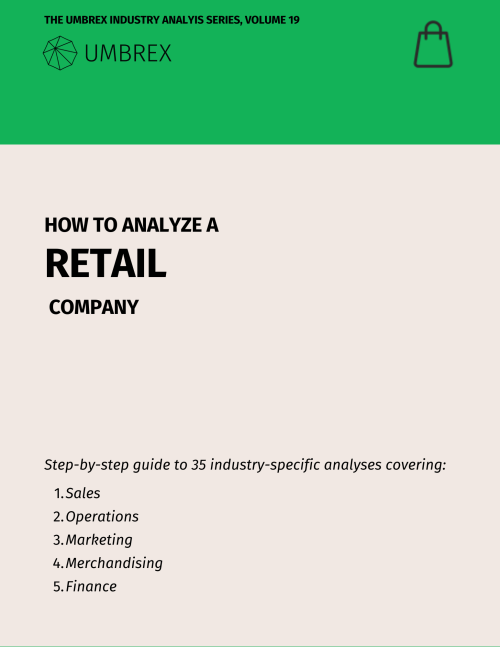
Request the PDF Download of How to Analyze a Retail Company
Menu of the 35 analyses:
Sales:
- Comparable Store Sales Analysis
- Cross-Selling and Up-Selling Effectiveness
- Customer Lifetime Value
- Customer Return Rate Analysis
- Foot Traffic and Conversion Rate Analysis
- Location-Based Performance Analysis
- Omnichannel Strategy Effectiveness
- Seasonality Impact and Sales Mix Analysis
- Store Atmosphere and Experience Impact on Sales
Operations:
- Click-and-Collect/Buy Online, Pickup In-Store (BOPIS) Effectiveness
- E-commerce Fulfillment Efficiency and Cost Analysis
- In-Stock Rate and Out-of-Stock Analysis
- Inventory Turnover and Management Analysis
- Shelf Space Allocation and Optimization
- Store Closure and Rationalization Analysis
- Store Expansion and Cannibalization Risk Analysis
- Store Labor Productivity Analysis
- Store Lease and Real Estate Cost Efficiency
- Sustainability and Ethical Sourcing in Retail
Marketing:
Merchandising:
- Markdown Strategy and Effectiveness
- Merchandising Strategy Effectiveness
- Planogram Compliance and Store Layout Efficiency, including Endcap Performance
- Private Label vs. Branded Product Performance and Supplier Dependency Strategy
- Product Category Margin Analysis
- Stock Keeping Unit (SKU) Rationalization and Retail Product Assortment Optimization
- Visual Merchandising Performance