
Goal of the analysis:
The goal of this analysis is to assess how the physical atmosphere and overall customer experience within a retail store impact sales. This includes evaluating factors like lighting, store layout, music, scent, and customer service on sales performance and customer behavior.
In addition, the analysis examines the relationship between customer dwell time (the amount of time customers spend in the store) and total sales, with the objective of determining how store atmosphere can be optimized to boost customer engagement and revenue.
Data required:
- Sales data by store and time period (before and after atmosphere changes).
- Customer dwell time (measured through in-store sensors, video analytics, or customer surveys).
- Customer foot traffic data (number of visitors per day or week).
- Store layout and visual merchandising data (optional for understanding specific areas).
- Customer satisfaction surveys or feedback regarding store atmosphere (optional).
- Employee-customer interaction data (optional, such as customer service frequency or quality).
- Promotional and event data (optional to track specific campaigns affecting the atmosphere).
- Regional or competitive sales data for benchmarking (optional).
Detailed step-by-step instruction on how to conduct the analysis:
1. Collect sales and foot traffic data.
Gather historical sales data for the store(s) you are analyzing, along with foot traffic data to establish a baseline. This will help you measure the impact of changes in the store atmosphere on overall sales. Track these metrics over a specific period (e.g., daily, weekly, or monthly).
2. Measure customer dwell time.
Use sensors, video analytics, or surveys to measure how long customers spend in the store.
Calculate the average customer dwell time using this formula:
Average Dwell Time = Total Time Spent by All Customers / Total Number of Customers
This will help establish how long customers typically stay and whether there is a correlation between dwell time and sales.
3. Analyze sales per minute of dwell time.
Calculate the sales generated relative to the time customers spend in the store to see how dwell time affects spending:
Sales per Minute of Dwell Time = Total Sales / Total Dwell Time
This metric will allow you to assess whether customers who stay longer tend to spend more.
4. Conduct atmosphere changes (optional).
If you are testing specific changes in store atmosphere (e.g., new lighting, music, or scent), document the changes and their timing. Apply changes to select stores or departments and track the impact on sales and dwell time.
5. Evaluate the impact on sales.
Compare sales data before and after the atmosphere changes or correlate sales performance with periods of longer customer dwell time.
Use this formula to calculate the change in sales:
Sales Change (%) = ((Sales After Atmosphere Change – Sales Before Atmosphere Change) / Sales Before Atmosphere Change) x 100
This will indicate whether atmosphere modifications positively impact sales.
6. Collect customer feedback on store experience (optional).
Use customer surveys or feedback tools to gather insights into how customers perceive the store atmosphere. Questions can focus on aspects such as lighting, music, layout, employee interactions, and overall satisfaction.
7. Analyze layout and high-traffic areas (optional).
If data is available, analyze customer movement patterns and identify high-traffic areas in the store. Determine whether specific parts of the store with better visual merchandising or atmosphere enhancements lead to higher sales.
8. Assess employee-customer interactions (optional).
If relevant, measure the number of employee-customer interactions and compare this to sales. Customer service and interactions can play a significant role in enhancing the shopping experience and potentially boosting sales.
Potential complications that can arise with this analysis:
- External factors: Changes in sales may be due to external factors (e.g., economic conditions, competitor promotions) rather than store atmosphere alone, complicating the analysis.
- Data variability: Dwell time and customer behavior can vary widely depending on the time of day, promotions, or seasonality, making it challenging to isolate the effects of store atmosphere.
- Customer segmentation: Different customer segments may respond differently to changes in store atmosphere, leading to mixed results.
- Difficult-to-measure atmosphere factors: Certain elements like scent, music, or lighting may have subtle effects on customer behavior that are hard to measure precisely.
Format of the output of analysis:
The output typically includes a comparison of key metrics such as sales before and after atmosphere changes, average dwell time, and customer feedback ratings. The results can be presented in tables or charts for easy interpretation and comparison.
Example output:
- Average dwell time (before changes): 20 minutes
- Average dwell time (after changes): 30 minutes
- Sales per minute of dwell time (before changes): $2.50
- Sales per minute of dwell time (after changes): $3.00
- Overall sales change: +20%
- Customer satisfaction rating (before): 4.2/5
- Customer satisfaction rating (after): 4.5/5
How to interpret results:
- Increased dwell time with higher sales per minute: Indicates that store atmosphere changes successfully engaged customers, encouraging them to stay longer and spend more.
- Improved customer satisfaction: Positive feedback on store atmosphere suggests that customers enjoy the experience, which may lead to increased loyalty and repeat business.
- No significant change in sales: If dwell time increased but sales remained flat, this may indicate that the atmosphere changes attracted customers but did not motivate additional purchases.
- Inconsistent results across stores: If different stores show varying results, this could point to location-specific factors (e.g., customer demographics, local competition) impacting the effectiveness of atmosphere changes.
Steps a company can take to improve on this measure:
- Enhance store layout and navigation: Make the store layout easy to navigate while creating visually appealing displays and highlighting key products in high-traffic areas.
- Optimize music, lighting, and scent: Use subtle, consistent improvements to the store environment, such as lighting that highlights products or background music that enhances customer mood, to encourage longer dwell time and increased sales.
- Train employees to enhance customer service: Ensure staff engage customers positively, offering assistance when needed without being overbearing. Customer service is a key part of the overall store atmosphere.
- Monitor dwell time and adjust strategy: Continuously track dwell time and make adjustments as needed to enhance the in-store experience. For example, if certain areas of the store see higher dwell times, consider promoting high-margin products in those areas.
- Run in-store events or promotions: Hold events or offer in-store promotions to encourage customers to stay longer and engage with more products, increasing the likelihood of higher sales.
- Solicit customer feedback regularly: Use feedback from customers to understand what elements of the store atmosphere they value and what improvements could further enhance their shopping experience.
- Test and iterate atmosphere changes: Run controlled tests with changes to store atmosphere in select locations and analyze the impact before rolling out large-scale modifications across the company.
Request the PDF Download of How to Analyze a Retail Company
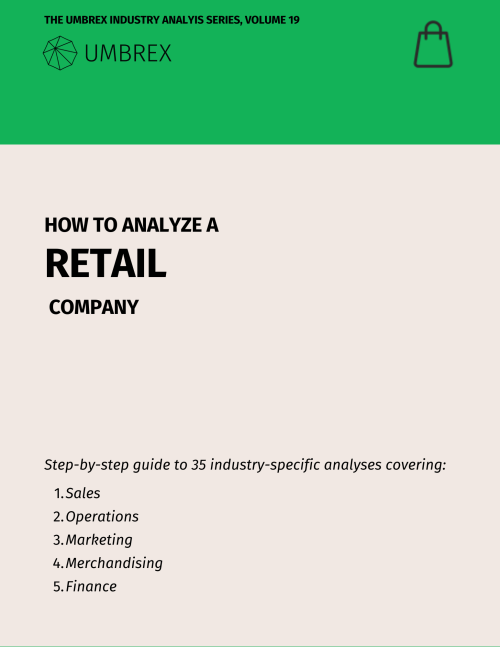
Menu of the 35 analyses:
Sales:
- Comparable Store Sales Analysis
- Cross-Selling and Up-Selling Effectiveness
- Customer Lifetime Value
- Customer Return Rate Analysis
- Foot Traffic and Conversion Rate Analysis
- Location-Based Performance Analysis
- Omnichannel Strategy Effectiveness
- Seasonality Impact and Sales Mix Analysis
- Store Atmosphere and Experience Impact on Sales
Operations:
- Click-and-Collect/Buy Online, Pickup In-Store (BOPIS) Effectiveness
- E-commerce Fulfillment Efficiency and Cost Analysis
- In-Stock Rate and Out-of-Stock Analysis
- Inventory Turnover and Management Analysis
- Shelf Space Allocation and Optimization
- Store Closure and Rationalization Analysis
- Store Expansion and Cannibalization Risk Analysis
- Store Labor Productivity Analysis
- Store Lease and Real Estate Cost Efficiency
- Sustainability and Ethical Sourcing in Retail
Marketing:
Merchandising:
- Markdown Strategy and Effectiveness
- Merchandising Strategy Effectiveness
- Planogram Compliance and Store Layout Efficiency, including Endcap Performance
- Private Label vs. Branded Product Performance and Supplier Dependency Strategy
- Product Category Margin Analysis
- Stock Keeping Unit (SKU) Rationalization and Retail Product Assortment Optimization
- Visual Merchandising Performance