
Goal of the analysis:
The goal of Cross-Selling and Up-Selling Effectiveness Analysis is to evaluate how well a retail company is driving additional sales by encouraging customers to purchase complementary products (cross-selling) or higher-priced alternatives (up-selling). This analysis measures the impact of these tactics on overall revenue, customer satisfaction, and profitability.
Data required:
- Sales data, including individual transaction details.
- Average order value (AOV) before and after cross-selling or up-selling efforts.
- Percentage of transactions with cross-sell or up-sell items.
- Gross profit margin per product (optional for profitability analysis).
- Customer purchase history (optional for analyzing effectiveness by customer segment).
- Marketing or promotion data related to cross-selling and up-selling (optional).
Detailed step-by-step instruction on how to conduct the analysis:
1. Collect transaction and sales data.
Start by gathering sales transaction data that includes details on items purchased, the total order value, and any additional products sold as part of cross-selling or up-selling efforts.
2. Calculate the average order value (AOV).
Measure the AOV before and after cross-selling and up-selling efforts to assess the impact on sales:
AOV = Total Sales Revenue / Number of Transactions
Compare this metric over a period when cross-selling or up-selling strategies were in place to periods when they were not.
3. Measure the percentage of transactions involving cross-sells or up-sells.
Calculate the percentage of total transactions that included cross-sell or up-sell items:
Cross-Sell/Up-Sell Transactions (%) = (Number of Transactions with Cross-Sell or Up-Sell Items / Total Transactions) x 100
This shows how often customers are purchasing additional or higher-value items as a result of these efforts.
4. Analyze sales uplift due to cross-selling and up-selling.
Measure the increase in revenue attributed to cross-selling or up-selling:
Sales Uplift (%) = ((Total Sales from Cross-Sell/Up-Sell Transactions – Sales Without Cross-Sell/Up-Sell) / Sales Without Cross-Sell/Up-Sell) x 100
This metric helps quantify the impact of cross-selling and up-selling on overall revenue.
5. Evaluate gross profit margin (optional).
If profitability is a concern, calculate the gross profit margin for cross-sell and up-sell items to assess their contribution to profit:
Gross Profit Margin (%) = ((Revenue – Cost of Goods Sold) / Revenue) x 100
Comparing the margins on cross-sell or up-sell items to other products can help determine if these strategies are contributing to overall profitability.
6. Segment analysis by product or customer type (optional).
If available, segment cross-selling and up-selling data by product category or customer type to identify which items or customer groups respond best to these strategies. This can help tailor future efforts to maximize effectiveness.
Potential complications that can arise with this analysis:
- Customer dissatisfaction: Aggressive cross-selling or up-selling strategies may lead to customer frustration if they feel pressured or if the suggested products are irrelevant.
- Impact on profitability: Up-selling to higher-margin products can increase profitability, but up-selling or cross-selling low-margin items may reduce overall profitability despite higher sales.
- Data variability: Cross-selling and up-selling effectiveness may vary by season, product category, or customer segment, making it difficult to generalize results across the business.
- Low engagement: If employees are not trained to cross-sell or up-sell effectively, or if the systems do not provide relevant suggestions, the success of these efforts can be limited.
Format of the output of analysis:
The output typically includes metrics such as AOV, the percentage of transactions with cross-sell or up-sell items, sales uplift, and, optionally, gross profit margins. The results can be presented in tables, graphs, or performance dashboards for easy interpretation.
Example output:
- Average Order Value (before cross-sell/up-sell): $50
- Average Order Value (with cross-sell/up-sell): $65
- Cross-Sell/Up-Sell Transactions: 25% of total transactions
- Sales uplift due to cross-selling/up-selling: +30%
- Gross Profit Margin (cross-sell/up-sell products): 40%
- Gross Profit Margin (non-cross-sell/up-sell products): 35%
How to interpret results:
- High AOV with cross-sells/up-sells: Indicates that the strategy is effectively increasing the total value of customer purchases. If this is combined with high profit margins, it is a positive sign for profitability.
- High percentage of cross-sell/up-sell transactions: Shows that a significant portion of transactions includes additional or higher-value items, reflecting successful execution of these strategies.
- High sales uplift: A strong increase in sales due to cross-selling and up-selling suggests that these tactics are having a substantial impact on overall revenue.
- Low gross profit margin on cross-sell/up-sell items: May indicate that while cross-selling and up-selling are increasing sales, they are not improving profitability. In this case, adjustments to product selection or pricing may be necessary.
Steps a company can take to improve on this measure:
- Enhance product relevance: Ensure that cross-sell and up-sell recommendations are relevant to the customer’s initial purchase. This can be done through customer data analysis or by using recommendation algorithms to suggest complementary products.
- Train staff on effective cross-selling and up-selling: Provide training for sales staff to ensure they know how to suggest additional products or higher-value alternatives without being overly pushy. Use scripts or tools that highlight appropriate product pairings.
- Monitor profit margins: Regularly review the profit margins on cross-sell and up-sell items to ensure they are contributing to overall profitability. If low-margin products are frequently suggested, consider revising the strategy.
- Personalize offers: Use customer data to personalize cross-selling and up-selling offers based on purchase history, preferences, and demographics. Tailored recommendations are more likely to be accepted by customers.
- Use promotions to boost cross-sell and up-sell: Offer discounts or bundled pricing for complementary products to encourage cross-selling. Customers are more likely to add items if they perceive value in the combination.
- Test different strategies: Run A/B tests on different cross-selling and up-selling approaches to determine which tactics work best for specific products or customer segments.
- Incorporate customer feedback: Gather customer feedback on cross-selling and up-selling efforts to ensure they enhance the shopping experience rather than detract from it. Make adjustments based on customer preferences and feedback.
Request the PDF Download of How to Analyze a Retail Company
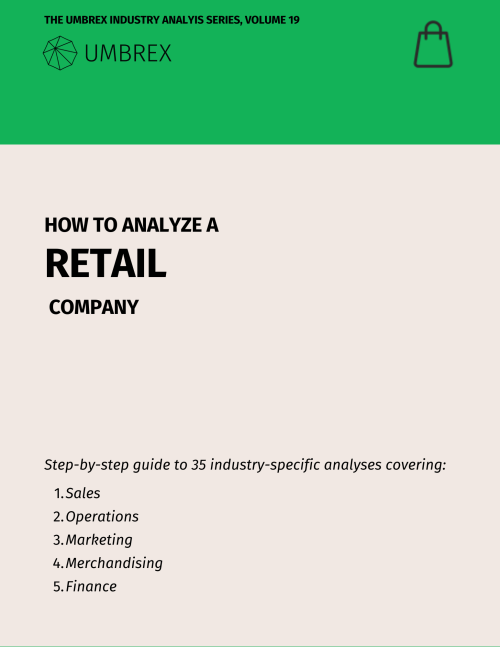
Menu of the 35 analyses:
Sales:
- Comparable Store Sales Analysis
- Cross-Selling and Up-Selling Effectiveness
- Customer Lifetime Value
- Customer Return Rate Analysis
- Foot Traffic and Conversion Rate Analysis
- Location-Based Performance Analysis
- Omnichannel Strategy Effectiveness
- Seasonality Impact and Sales Mix Analysis
- Store Atmosphere and Experience Impact on Sales
Operations:
- Click-and-Collect/Buy Online, Pickup In-Store (BOPIS) Effectiveness
- E-commerce Fulfillment Efficiency and Cost Analysis
- In-Stock Rate and Out-of-Stock Analysis
- Inventory Turnover and Management Analysis
- Shelf Space Allocation and Optimization
- Store Closure and Rationalization Analysis
- Store Expansion and Cannibalization Risk Analysis
- Store Labor Productivity Analysis
- Store Lease and Real Estate Cost Efficiency
- Sustainability and Ethical Sourcing in Retail
Marketing:
Merchandising:
- Markdown Strategy and Effectiveness
- Merchandising Strategy Effectiveness
- Planogram Compliance and Store Layout Efficiency, including Endcap Performance
- Private Label vs. Branded Product Performance and Supplier Dependency Strategy
- Product Category Margin Analysis
- Stock Keeping Unit (SKU) Rationalization and Retail Product Assortment Optimization
- Visual Merchandising Performance