
Goal of the analysis:
The goal of Omnichannel Strategy Effectiveness Analysis is to assess how well a retail company integrates multiple sales channels (online, in-store, mobile, etc.) to provide a seamless customer experience and drive sales. This analysis includes evaluating the performance of online vs. in-store sales and understanding how different channels contribute to overall profitability and customer satisfaction.
Data required:
- Sales data for online and in-store channels (units sold, revenue).
- Customer behavior data (e.g., cross-channel shopping, cart abandonment rates, online vs. in-store preferences).
- Customer traffic data (website visits, store foot traffic).
- Marketing spend by channel (optional for evaluating channel-specific ROI).
- Inventory data, including stock availability by channel (optional for fulfillment analysis).
- Customer satisfaction or feedback data (optional for qualitative insights).
- Return rates for online vs. in-store purchases (optional).
Detailed step-by-step instruction on how to conduct the analysis:
1. Collect sales data for online and in-store channels.
Start by gathering sales data for both online and in-store channels over a specific period (e.g., monthly, quarterly). Ensure the data includes total revenue, units sold, and any associated costs for each channel.
2. Compare online vs. in-store sales performance.
Use the following formula to compare the performance of each channel:
- Online Sales Contribution (%) = (Online Sales / Total Sales) x 100
- In-Store Sales Contribution (%) = (In-Store Sales / Total Sales) x 100
This shows the percentage contribution of each channel to total revenue.
3. Analyze customer behavior across channels.
Examine customer behavior to understand how often customers use multiple channels in their shopping journey.
For example, measure the percentage of customers who browse online but complete their purchases in-store (or vice versa):
Cross-Channel Usage (%) = (Number of Cross-Channel Customers / Total Customers) x 100
This helps assess the effectiveness of omnichannel integration in driving sales.
4. Evaluate the impact of promotions by channel.
If promotional data is available, compare the effectiveness of marketing promotions in driving online vs. in-store sales.
Measure promotional lift using this equation:
Promotional Lift (%) = (Sales During Promotion – Sales Before Promotion) / Sales Before Promotion) x 100
This helps determine which channels respond better to promotions.
5. Assess inventory availability and fulfillment efficiency.
For omnichannel strategies, analyze inventory levels and fulfillment efficiency across both channels.
Measure stock availability and fulfillment performance:
Fulfillment Efficiency (%) = (Orders Fulfilled On Time / Total Orders Placed) x 100
This helps evaluate the company’s ability to fulfill customer orders efficiently in both online and in-store channels.
6. Analyze customer satisfaction and return rates (optional).
If available, compare customer satisfaction data and return rates between online and in-store purchases:
Return Rate (%) = (Number of Returned Items / Total Items Sold) x 100
High return rates in one channel may signal issues with product quality, shipping, or customer experience.
7. Calculate channel-specific profitability.
To evaluate the profitability of each channel, calculate gross profit margins for online vs. in-store sales:
Gross Profit Margin (%) = (Sales – Cost of Goods Sold) / Sales) x 100
This helps identify which channel is more profitable and where costs need to be optimized.
Potential complications that can arise with this analysis:
- Data silos: Sales and customer data from different channels may be siloed, making it difficult to track cross-channel customer behavior and accurately assess the omnichannel strategy.
- Attribution challenges: It may be hard to attribute sales to a single channel if customers interact with multiple channels before completing a purchase.
- Fulfillment inefficiencies: Inefficient stock management and fulfillment processes can result in delays, stockouts, or increased costs, negatively impacting the omnichannel experience.
- Inconsistent customer experiences: Inconsistent service levels between online and in-store channels can distort customer satisfaction data, making it harder to measure the effectiveness of the omnichannel strategy.
Format of the output of analysis:
The output typically includes metrics such as sales contribution by channel, cross-channel customer behavior, promotional effectiveness, inventory efficiency, and profitability by channel. It may also include comparisons of customer satisfaction and return rates between channels.
Example output:
- Sales performance for Q2 2024:
- Online Sales Contribution: 45%
- In-Store Sales Contribution: 55%
- Cross-channel usage: 30% of customers browse online and purchase in-store
- Promotional lift for online sales: 25%
- Promotional lift for in-store sales: 15%
- Fulfillment efficiency: 90% for online orders, 95% for in-store orders
- Gross profit margin by channel:
- Online: 40%
- In-Store: 35%
How to interpret results:
- High online sales contribution: Indicates that the company’s e-commerce platform is performing well and that the omnichannel strategy is driving significant online sales.
- High cross-channel usage: Suggests that customers are taking advantage of multiple channels, such as browsing online and purchasing in-store or using click-and-collect services. This is a positive indicator of omnichannel effectiveness.
- Low fulfillment efficiency for online sales: A lower fulfillment efficiency in the online channel may indicate issues with shipping or inventory management, requiring optimization to improve customer experience.
- High return rates for online sales: High online return rates may suggest problems with product descriptions, sizing, or customer expectations, which should be addressed to reduce returns.
Steps a company can take to improve on this measure:
- Improve channel integration: Ensure that customer data is integrated across all channels to provide a seamless shopping experience, enabling cross-channel behaviors like buying online and picking up in-store (BOPIS).
- Enhance inventory management: Optimize stock levels and fulfillment processes to improve efficiency and avoid stockouts or delays, especially in the online channel.
- Tailor marketing strategies by channel: Use data from the analysis to tailor marketing campaigns for each channel, focusing promotions on where they have the most impact.
- Improve online product presentation: Address any issues with online product descriptions, images, or sizing guides to reduce return rates and improve the customer shopping experience.
- Monitor customer feedback across channels: Use customer feedback to identify inconsistencies between channels and ensure that service levels are maintained across both online and in-store experiences.
- Optimize fulfillment for online orders: Improve the speed and reliability of online order fulfillment by streamlining shipping processes and using more accurate inventory tracking.
- Track channel-specific profitability: Regularly monitor profitability by channel to ensure that each channel contributes positively to the company’s bottom line. Adjust pricing, product offerings, or shipping policies if one channel is less profitable than the other.
Request the PDF Download of How to Analyze a Retail Company
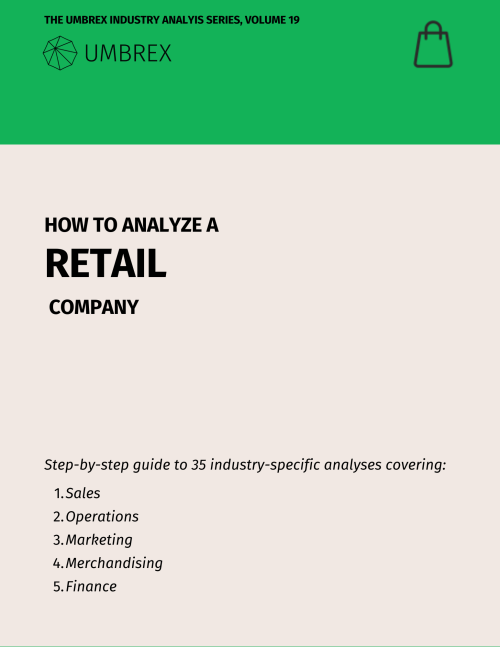
Menu of the 35 analyses:
Sales:
- Comparable Store Sales Analysis
- Cross-Selling and Up-Selling Effectiveness
- Customer Lifetime Value
- Customer Return Rate Analysis
- Foot Traffic and Conversion Rate Analysis
- Location-Based Performance Analysis
- Omnichannel Strategy Effectiveness
- Seasonality Impact and Sales Mix Analysis
- Store Atmosphere and Experience Impact on Sales
Operations:
- Click-and-Collect/Buy Online, Pickup In-Store (BOPIS) Effectiveness
- E-commerce Fulfillment Efficiency and Cost Analysis
- In-Stock Rate and Out-of-Stock Analysis
- Inventory Turnover and Management Analysis
- Shelf Space Allocation and Optimization
- Store Closure and Rationalization Analysis
- Store Expansion and Cannibalization Risk Analysis
- Store Labor Productivity Analysis
- Store Lease and Real Estate Cost Efficiency
- Sustainability and Ethical Sourcing in Retail
Marketing:
Merchandising:
- Markdown Strategy and Effectiveness
- Merchandising Strategy Effectiveness
- Planogram Compliance and Store Layout Efficiency, including Endcap Performance
- Private Label vs. Branded Product Performance and Supplier Dependency Strategy
- Product Category Margin Analysis
- Stock Keeping Unit (SKU) Rationalization and Retail Product Assortment Optimization
- Visual Merchandising Performance