
Goal of the analysis:
Assess the extent and nature of the bank’s off-balance sheet exposures—such as guarantees, commitments, and derivatives—to ensure that these contingencies and potential liabilities are well-managed and transparently reported.
Data required:
- Detailed records of all off-balance sheet items (e.g., letters of credit, guarantees, undrawn credit lines, derivatives)
- Current notional amounts and market values for derivative positions (if applicable)
- Contractual terms, counterparty information, and maturity profiles
- Historical data on utilization rates and credit losses related to commitments
- Regulatory guidelines on capital treatment and disclosure requirements for off-balance sheet exposures
Detailed step-by-step instruction on how to conduct the analysis:
Step 1: Identify and categorize all off-balance sheet items in the bank’s portfolio, including letters of credit, loan commitments, guarantees, and derivatives, ensuring that each item is properly recorded in internal systems.
Step 2: Quantify exposure levels by reviewing notional amounts and market values (if applicable) for each category. For derivatives, consider potential future exposures or mark-to-market valuations to capture market risk.
Step 3: Examine counterparty credit risk by analyzing the quality of counterparties (e.g., credit ratings, internal risk grades), concentration levels, and any collateral agreements or netting arrangements in place.
Step 4: Review contractual terms, maturities, and utilization patterns to understand how quickly off-balance sheet items could become on-balance sheet liabilities in adverse scenarios.
Step 5: Compare the bank’s practices to regulatory requirements regarding capital allocation, disclosure, and risk limits for off-balance sheet exposures, noting any areas of non-compliance or elevated risk.
Step 6: Summarize findings in a comprehensive report, including potential vulnerabilities (e.g., counterparty concentrations, insufficient margining) and recommend actions for improved risk management and reporting.
Format of the output of analysis:
- Tabular breakdown of off-balance sheet exposures by category, counterparty, and notional/market value
- Charts or graphs illustrating concentration by region, industry, or counterparty rating
- Narrative summary highlighting compliance status, risk hotspots, and recommended mitigation steps
How to interpret results:
- Significant or concentrated off-balance sheet exposures can pose hidden risks if they rapidly migrate to the balance sheet under stressed conditions.
- Insufficient collateral or netting arrangements increase counterparty credit risk, potentially leading to losses if defaults or market shocks occur.
- Strong compliance with regulatory guidelines and prudent limit structures indicates robust off-balance sheet risk management.
Steps a company can take to improve on this measure:
- Enhance internal monitoring and reporting systems to provide real-time visibility into off-balance sheet exposures.
- Implement stricter counterparty limits and diversify exposure to reduce the impact of a single default event.
- Strengthen contractual frameworks, collateral requirements, and netting agreements to mitigate counterparty credit risk.
- Integrate off-balance sheet exposures into the bank’s overall stress testing and scenario analysis.
- Regularly review and update policies to align with evolving regulatory guidance and market conditions.
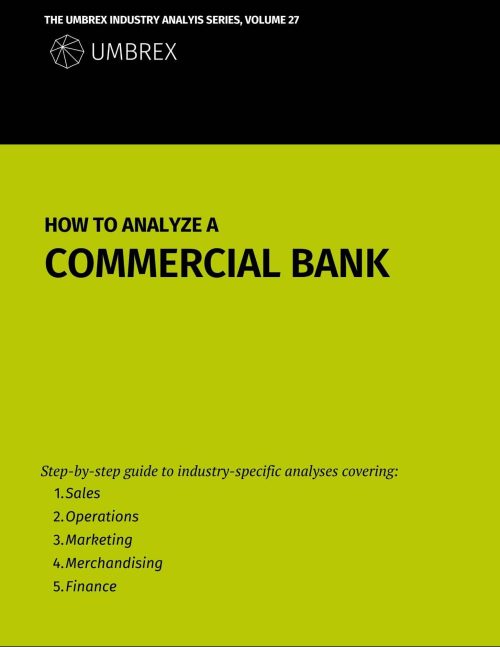
Request the PDF Download of How to Analyze a Commercial Bank Company
Menu of the analyses:
A. Financial Performance and Efficiency
B. Lending and Credit Management
- Loan Portfolio Quality and Concentration Analysis
- Loan Origination and Underwriting Standards Review
- Collateral Management and LTV Review
- Industry Exposure and Concentration Analysis
- Non-Performing Loan Management and Recovery
- Syndicated Loan and Distribution Capabilities Analysis
- Loan Pricing and Risk-Based Pricing Analysis
- Cash Flow and Collateral-Based Lending Review
- Supply Chain Financing and Receivables Purchase
- Green Banking and ESG Lending Assessment
- Specialized Lending Analysis
C. Risk Management and Compliance
- Credit Risk Assessment and Provisioning Levels
- Stress Testing and Scenario Analysis
- Securities Portfolio and Market Risk Assessment
- Regulatory, Governance, and Compliance Review
- Off-Balance Sheet Exposure Review
- Operational Risk, Cybersecurity, and KRI Assessment
- Credit Covenant Tracking and Compliance Monitoring
- Basel Counterparty Credit Risk Review
D. Capital, Liquidity, and Funding
E. Operations and Process Improvement
F. Digital and Technology Transformation
G. Payment Services and Transaction Banking
H. Specialized and Industry-Specific Solutions
I. Mergers and Acquisitions