
Goal of the analysis:
Determine how effectively the bank integrates environmental, social, and governance (ESG) considerations into its lending portfolio and practices.
Data required:
- Existing ESG policies, guidelines, and frameworks
- Loan portfolio data segmented by ESG attributes or “green” classification
- ESG scores or ratings from external agencies (if available)
- Regulatory and industry benchmarks for ESG lending
- Key metrics, such as the volume of green loans or sustainability-linked loans
Detailed step-by-step instruction on how to conduct the analysis:
Step 1: Review the bank’s documented ESG or green lending policies, including frameworks and guidelines used to classify or assess ESG-related loans, ensuring alignment with regulatory standards and recognized industry principles.
Step 2: Collect loan portfolio data and categorize each loan based on ESG factors, such as whether it funds renewable energy projects, energy-efficient construction, or other sustainability initiatives.
Step 3: Assess ESG risk by examining how loans perform against internal or external ESG rating systems, noting any reputational, regulatory, or financial risks associated with lower-rated borrowers.
Step 4: Compare the bank’s share of green or ESG-aligned lending to peer institutions and relevant industry benchmarks, identifying strengths and potential gaps in the bank’s ESG portfolio.
Step 5: Evaluate the financial performance and risk profile of ESG-focused loans (for example, default rates, spreads, and returns) to determine whether they are value-accretive and aligned with the bank’s broader risk appetite.
Step 6: Analyze governance mechanisms, such as oversight committees or dedicated ESG teams, to ensure ongoing compliance, monitoring, and improvement of ESG lending practices.
Format of the output of analysis:
- Tables showing the composition and volume of green or ESG-aligned loans within the portfolio
- Charts illustrating trends in ESG lending growth over time or compared to peers
- Written assessment of the bank’s adherence to ESG guidelines and identified areas for enhancement
How to interpret results:
- A high proportion of ESG-aligned loans and strong compliance with recognized ESG frameworks can bolster the bank’s reputation and potentially improve risk-adjusted returns.
- Low or stagnant growth in ESG lending may signal missed opportunities or gaps in the bank’s sustainability strategy.
- Inconsistent or weak governance around ESG criteria could expose the bank to reputational and regulatory risks.
Steps a company can take to improve on this measure:
- Develop or refine ESG lending policies to ensure clarity in criteria, classification, and due diligence processes.
- Establish dedicated teams or committees to oversee ESG lending initiatives and maintain consistent application of standards.
- Offer incentives for projects or businesses that promote sustainability, such as preferential pricing for renewable energy ventures.
- Engage with external ESG rating agencies to validate the bank’s approach and gain insights for continuous improvement.
- Enhance reporting and disclosure practices to increase transparency with stakeholders, including investors, customers, and regulators.
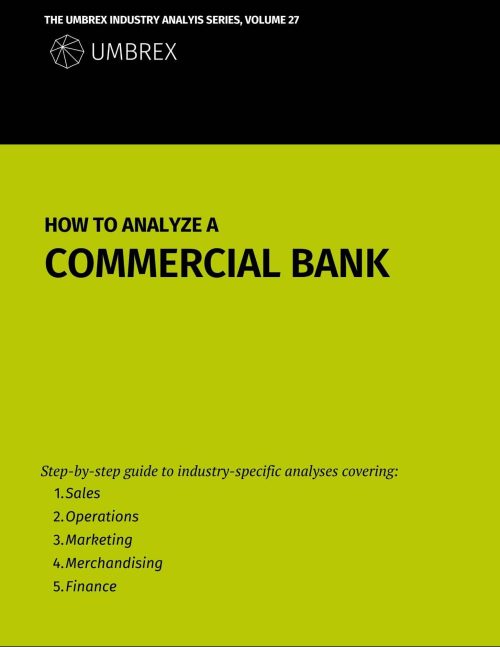
Request the PDF Download of How to Analyze a Commercial Bank Company
Menu of the analyses:
A. Financial Performance and Efficiency
B. Lending and Credit Management
- Loan Portfolio Quality and Concentration Analysis
- Loan Origination and Underwriting Standards Review
- Collateral Management and LTV Review
- Industry Exposure and Concentration Analysis
- Non-Performing Loan Management and Recovery
- Syndicated Loan and Distribution Capabilities Analysis
- Loan Pricing and Risk-Based Pricing Analysis
- Cash Flow and Collateral-Based Lending Review
- Supply Chain Financing and Receivables Purchase
- Green Banking and ESG Lending Assessment
- Specialized Lending Analysis
C. Risk Management and Compliance
- Credit Risk Assessment and Provisioning Levels
- Stress Testing and Scenario Analysis
- Securities Portfolio and Market Risk Assessment
- Regulatory, Governance, and Compliance Review
- Off-Balance Sheet Exposure Review
- Operational Risk, Cybersecurity, and KRI Assessment
- Credit Covenant Tracking and Compliance Monitoring
- Basel Counterparty Credit Risk Review
D. Capital, Liquidity, and Funding
E. Operations and Process Improvement
F. Digital and Technology Transformation
G. Payment Services and Transaction Banking
H. Specialized and Industry-Specific Solutions
I. Mergers and Acquisitions