
Fortune 500 Ranking: #7 in 2024
Company Website: apple.com
Annual Revenues: US$383 billion in 2024
1. What is Winning?
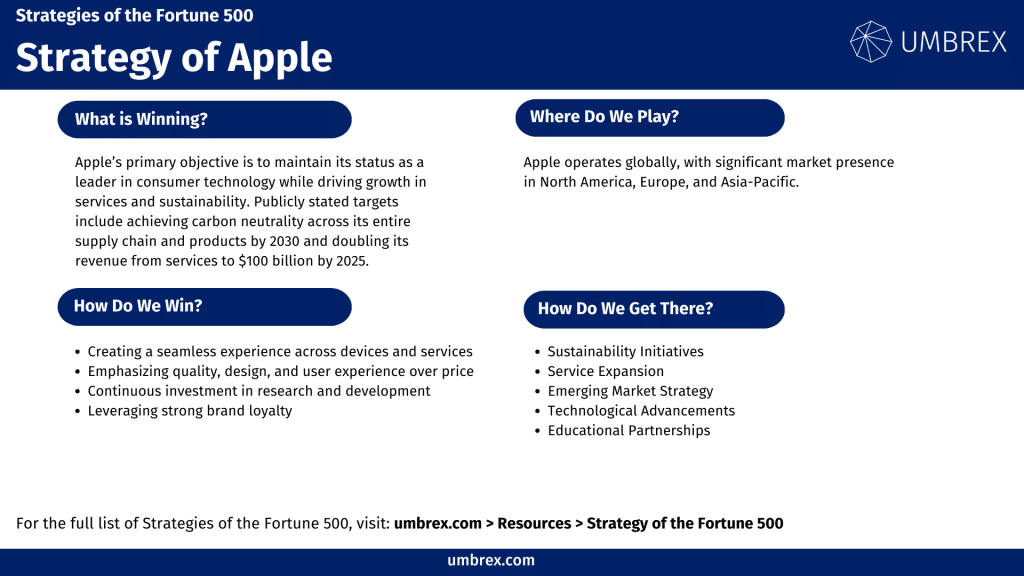
Apple’s primary objective is to maintain its status as a leader in consumer technology while driving growth in services and sustainability. Publicly stated targets include achieving carbon neutrality across its entire supply chain and products by 2030 and doubling its revenue from services to $100 billion by 2025. Additionally, Apple aims to increase its market share in emerging markets and expand its ecosystem of products and services, enhancing customer loyalty and engagement.
2. Where Do We Play?
Apple operates globally, with significant market presence in North America, Europe, and Asia-Pacific. The company targets a diverse range of customer segments:
- Affluent Consumers: Individuals willing to pay a premium for high-quality technology products.
- Young Adults and Teens: Particularly for products like the iPhone and iPad, which are popular among younger demographics.
- Professionals: Targeting business users with high-performance devices like MacBooks and iPads tailored for productivity.
- Education Sector: Engaging schools and universities with discounted products and educational tools.
Apple’s product offerings encompass: - Consumer Electronics: iPhone, iPad, Mac, Apple Watch, AirPods.
- Services: Apple Music, Apple TV+, iCloud, App Store.
- Accessories: Various peripherals that enhance the user experience.
3. How Do We Win?
Apple’s distinctive approach is built on several strategic pillars:
- Ecosystem Integration: Creating a seamless experience across devices and services that encourages customer loyalty. This ecosystem allows users to easily transition between devices while accessing their data and applications consistently.
- Premium Branding: Positioning itself as a luxury brand that emphasizes quality, design, and user experience over price. This strategy attracts consumers who value aesthetics and functionality.
- Innovation Focus: Continuous investment in research and development to drive technological advancements, ensuring that products remain at the cutting edge of the industry. This includes innovations in hardware design, software capabilities, and service offerings.
- Customer Loyalty Programs: Leveraging strong brand loyalty through initiatives like trade-in programs and subscription services that enhance customer retention.
4. How Do We Get There?
To achieve its strategic goals, Apple has announced several key initiatives:
- Sustainability Initiatives: Committing to carbon neutrality by 2030 across all operations, including supply chain management and product lifecycle. This includes investments in renewable energy projects and sustainable materials sourcing.
- Service Expansion: Plans to significantly grow its services segment by enhancing existing offerings like Apple Music and Apple TV+, while introducing new services that cater to consumer needs. This includes partnerships with content creators to expand original programming on Apple TV+.
- Emerging Market Strategy: Focusing on expanding its presence in emerging markets such as India by offering more affordable models of existing products while maintaining premium features to attract a broader customer base.
- Technological Advancements: Investing heavily in artificial intelligence (AI) and machine learning capabilities to improve user experience across devices, particularly through features like Siri and personalized recommendations on platforms like Apple Music.
- Educational Partnerships: Strengthening relationships with educational institutions by providing tailored solutions for students and educators, including discounts on hardware and software.
These strategies collectively position Apple not only as a leader in consumer electronics but also as an innovator in services and sustainability, ensuring long-term growth while enhancing customer satisfaction.
Contact us at [email protected] for a full list of sources.
Menu of the Fortune 50:
- 1. Walmart
- 2. Amazon
- 3. State Grid
- 4. Saudi Aramco
- 5. Sinopec Group
- 6. China National Petroleum
- 7. Apple
- 8. United Health Group
- 9. Berkshire Hathaway
- 10. CVS Health
- 11. Volkswagen
- 12. ExxonMobil
- 13. Shell
- 14. China State Construction Engineering
- 15. Toyota Motor
- 16. McKesson
- 17. Alphabet
- 18. Cencora
- 19. Trafigura Group
- 20. Costco Wholesale
- 21. JPMorgan Chase
- 22. Industrial & Commercial Bank of China
- 23. TotalEnergies
- 24. Glencore
- 25. BP
- 26. Microsoft
- 27. Cardinal Health
- 28. Stellantis
- 29. Chevron
- 30. China Construction Bank
- 31. Samsung Electronics
- 32. Hon Hai Precision Industry
- 33. Cigna
- 34. Agricultural Bank of China
- 35. China Railway Engineering Group
- 36. Ford Motor
- 37. Bank of America
- 38. Bank of China
- 39. General Motors
- 40. Elevance Health
- 41. BMW Group
- 42. Mercedes-Benz Group
- 43. China Railway Construction
- 44. China Baowu Steel Group
- 45. Citigroup
- 46. Centene
- 47. JD.com
- 48. Home Depot
- 49. Marathon Petroleum
- 50. Electricité de France
- 51. Kroger
- 52. Phillips 66
- 53. Ping An Insurance
- 54. Sinochem Holdings
- 55. China Mobile Communications
- 56. China National Offshore Oil
- 57. Honda Motor
- 58. Fannie Mae
- 59. China Life Insurance
- 60. Walgreens Boots Alliance
- 61. Valero Energy
- 62. Banco Santander
- 63. China Communications Construction
- 64. BNP Paribas
- 65. Mitsubishi
- 66. Meta Platforms
- 67. HSBC Holdings
- 68. Verizon Communications
- 69. China Minmetals
- 70. Alibaba Group
- 71. CITIC Group
- 72. China Resources
- 73. Hyundai Motor
- 74. AT&T
- 75. Shandong Energy Group
- 76. Comcast
- 77. Deutsche Telekom
- 78. China Southern Power Grid
- 79. Uniper
- 80. Wells Fargo
- 81. Hengli Group
- 82. Allianz
- 83. China Post Group
- 84. China Energy Investment
- 85. Xiamen C&D
- 86. Reliance Industries
- 87. Goldman Sachs Group
- 88. Freddie Mac
- 89. Rosneft Oil
- 90. Target
- 91. Equinor
- 92. Humana
- 93. SAIC Motor
- 94. State Farm Insurance
- 95. Life Insurance Corp. of India
- 96. Nestlé
- 97. Enel
- 98. ENI
- 99. Petrobras
- 100. SK
