
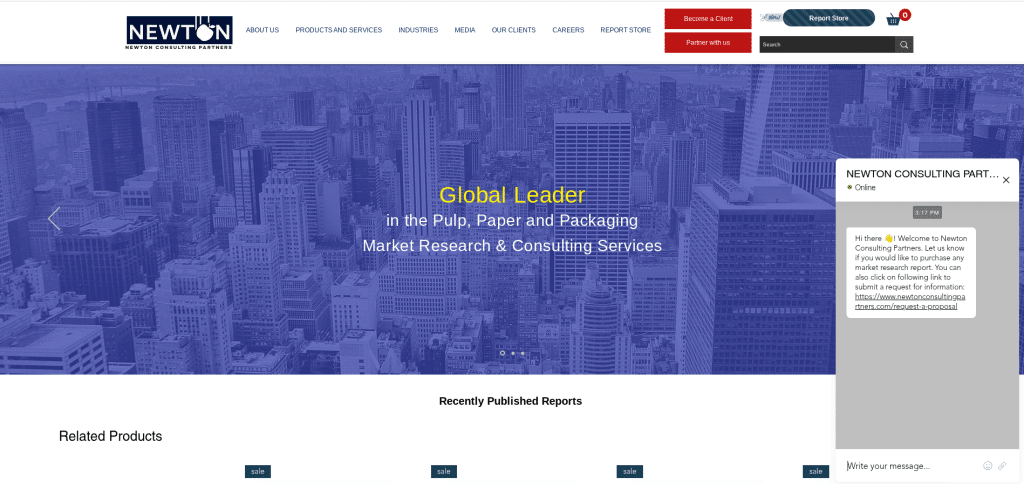
Newton Consulting Partners is a boutique management consulting firm specializing in strategy, operations, organizational transformation, and leadership advisory services. Based in the United States, Newton Consulting Partners is known for its high-touch, partner-led approach to solving complex business challenges, particularly for mid-market and Fortune 1000 clients.
Founded with a focus on delivering measurable impact, the firm brings together experienced consultants with deep industry expertise across sectors such as healthcare, financial services, technology, manufacturing, and consumer products. The firm prides itself on helping clients navigate transformational change, from refining corporate strategy to improving operational efficiency and driving cultural alignment.
Unlike larger firms, Newton Consulting Partners emphasizes tailored solutions over off-the-shelf frameworks. Their consultants often work closely with executive teams to provide pragmatic insights, facilitate critical decision-making, and accelerate implementation.
While relatively small compared to global firms, Newton Consulting Partners has built a strong reputation for trust, quality, and long-term client relationships, distinguishing itself in a crowded consulting marketplace.
History and Evolution
Newton Consulting Partners is a U.S.-based consulting and professional services firm that has grown significantly since its inception. The firm was founded in the early 2000s in Boston, Massachusetts, initially focusing on management consulting and market research services. Over time, Newton Consulting Partners carved out a niche in providing data-driven market intelligence, especially in the packaging and materials industry. During its early years, the company built a reputation for thorough research and actionable insights, helping a handful of clients with strategic market entry and business improvement projects.
In the 2010s, Newton Consulting Partners expanded its scope and geographic reach. By the late 2010s (around 2018), the firm had established global delivery centers and offices outside the U.S., enabling it to better serve an international clientele. This period saw Newton Consulting Partners opening operations in India, as well as establishing a presence in the Middle East (Dubai) and Asia-Pacific (Singapore) regions. The addition of these delivery hubs allowed the company to leverage talent globally and offer consulting support across time zones. The focus also broadened beyond packaging into other industries (while retaining packaging as a core specialty), and the firm began offering a wider array of services including rapid research support and sales enablement.
Throughout its evolution, Newton Consulting Partners has completed over 1,000 projects for clients ranging from small businesses to Fortune 500 companies. From its modest beginnings, it has grown into a mid-sized consultancy with a global footprint. As of today, the firm boasts over 20 years of operational history. It continues to innovate its service offerings (such as launching an online report store and industry-specific newsletters in the early 2020s) and adapts to changing market needs. What started as a boutique Boston consultancy in 2000 has evolved into a global intelligence and strategy partner for companies worldwide, maintaining an entrepreneurial spirit while scaling up its capabilities.
Key Figures and Leadership
Newton Consulting Partners was founded by industry veterans, and its leadership team is composed of seasoned professionals with deep experience in consulting and the industries the firm serves. The Founder and Chief Executive Officer (CEO) of the firm (whose name is not widely publicized) envisioned a consultancy that blends rigorous market research with strategic advisory. Under this CEO’s guidance, Newton Consulting Partners grew from a local practice into an international firm. Supporting the chief executive is a core leadership group that includes directors and vice presidents overseeing key functions such as Research & Analytics, Consulting Services Delivery, Operations, and Finance.
Many of the firm’s leaders have backgrounds at major global companies. For example, several senior consultants and directors at Newton are former executives or analysts from Fortune 500 corporations in packaging, manufacturing, and related sectors. This has provided the firm with insight into client industries and strong management know-how. One notable figure in the company’s finance leadership (as gleaned from public records) served as Director of Finance and brought experience from the financial management of other consulting organizations. Additionally, Newton Consulting Partners prides itself on having subject-matter experts on board – for instance, professionals who spent decades in the pulp and paper, chemicals, or consumer goods industries now hold senior advisory roles at the firm.
The firm’s leadership structure is relatively flat for a consulting company of its size, which encourages mentorship and direct involvement of partners in client work. Partners at Newton Consulting Partners (the highest leadership tier) not only manage client engagements but also play hands-on roles in research and thought leadership. They are supported by Principal Consultants/Engagement Directors who handle multiple project teams and client relationships. Middle management includes Engagement Managers and Team Leads who coordinate the day-to-day consulting projects. At the junior level, Analysts and Associates form the backbone of research and analysis. Newton’s leadership emphasizes a collaborative culture – senior leaders often work closely with junior staff on project teams, ensuring that the firm’s accumulated experience is passed on and that clients benefit directly from veteran insights. This leadership approach, combined with strategic hires from industry, has been pivotal in the firm’s growth and continuing evolution.
Consulting Methodologies and Distinctive Capabilities
Newton Consulting Partners differentiates itself through a blend of data-centric research and actionable consulting advice. The firm’s consulting methodology is rooted in thorough market analysis followed by strategy formulation. A typical Newton engagement begins with deep market research – gathering data on market size, growth forecasts, supply and demand factors, and competitive landscape. The company uses both primary research (expert interviews, industry surveys) and secondary research (market databases, news tracking) to ensure information is up-to-date and reliable. All data points undergo rigorous quality checks by Newton’s in-house analysts. This analytical rigor is a hallmark of the firm’s methodology.
Several distinctive capabilities define Newton’s approach:
- “Growth Hacking” Orientation: Newton Consulting Partners markets itself as a provider of “growth hacking” solutions. In practice, this means the team looks for creative, high-impact strategies to accelerate a client’s growth. They are not limited to traditional consulting recommendations; instead, they might identify unconventional market opportunities or efficiency tweaks that can yield significant gains. The consultants focus on results and strive to propose tactics that quickly improve market position or financial performance for the client.
- Integrated Market Intelligence: The firm combines management consulting with market intelligence services. Newton has a strong capability in Competitive Intelligence – analyzing a client’s competitors, customers, and suppliers. They produce detailed competitor profiles, SWOT analyses (strengths, weaknesses, opportunities, threats of market players), and benchmarking studies. This intelligence feeds into strategic recommendations, ensuring that any plan is grounded in real market conditions. Newton’s ability to continuously track over 150 country markets (as they claim) means clients receive a comprehensive view of global and regional trends.
- Supplier and Value Chain Expertise: A distinctive offering of Newton Consulting Partners is its procurement and supplier selection consulting. The firm helps clients optimize their supply chain by assessing potential suppliers for products or raw materials. Their methodology might include evaluating suppliers on quality, cost, capacity, geographic presence, and even after-sales service. By mapping the entire value chain – from raw material suppliers to end customers – Newton provides advice on where to source, how to reduce costs, and how to mitigate supply risks. This end-to-end value chain perspective is especially valuable in industries like packaging and manufacturing, where sourcing strategies can greatly affect margins.
- Customized “Rapid Research” Support: Newton offers a service called Rapid Research Support, which is essentially on-demand research assistance for clients. If a business needs quick intelligence on a niche question (for example, a sudden regulatory change or a new market entrant), Newton’s team can rapidly gather data and provide insights in a short turnaround time. This capability is supported by their global team and round-the-clock presence. It’s a methodology focused on agility – delivering useful information and analysis under tight timelines – which is a key selling point for clients who operate in fast-moving markets.
- Collaborative Consulting Process: Methodologically, Newton emphasizes close collaboration with client teams. Rather than prescribing solutions from afar, Newton’s consultants often work alongside clients’ internal stakeholders to develop strategies. They use workshops, joint brainstorming sessions, and iterative feedback loops to ensure recommendations are realistic and aligned with the client’s context. This approach helps with change management, as clients feel ownership of the solutions. Newton consultants also provide implementation support in many cases – assisting the client in executing recommendations (for example, helping set up a market entry plan or selecting a vendor).
- Analytical Tools and Modeling: The firm employs a range of analytical tools. They build market models (forecasts and scenario planning using their research data) and use frameworks like Porter’s Five Forces, PESTLE analysis (Political, Economic, Social, Tech, Legal, Environmental factors), and internal proprietary models to examine business problems. Their distinctive capability here is tailoring these tools to the packaging and manufacturing domains – for instance, they have developed models to predict packaging material demand based on consumer trends. The consultants at Newton are adept at translating large data sets into visual dashboards and concise reports, which enables busy executives to quickly grasp the findings.
In summary, Newton Consulting Partners’ methodology merges solid research fundamentals with flexible, client-centric consulting. The firm’s value proposition lies in delivering “intelligent insights” and practical strategies that help clients grow revenue, enter new markets, improve operational efficiency, or make informed investment decisions. This blend of in-depth market knowledge and strategic advisory know-how is what makes Newton’s capabilities distinctive in the consulting landscape.
Industries and Sectors Served
Originally best known for its expertise in the Pulp, Paper & Packaging sector, Newton Consulting Partners now serves a wide range of industries. The firm has organized its practice around several key sectors, offering specialized knowledge in each. Industries and sectors served by Newton Consulting Partners include:
- Pulp, Paper & Packaging: This is a core focus area for Newton. The firm has extensive experience with packaging manufacturers, paper producers, and related materials industries. Projects in this sector often involve market analysis of packaging products (e.g., plastic films, corrugated boxes, paper bags), tracking of industry trends like sustainable packaging, and competitive benchmarking of packaging companies. Many of Newton’s marquee clients are in this space, and the firm’s consultants keep close tabs on developments in pulp prices, packaging innovations, and global supply chains for packaging materials.
- Automotive: Newton provides consulting for automotive industry players, including vehicle manufacturers and auto parts suppliers. This might involve market entry studies for automotive components, analysis of electric vehicle supply chains, or research on consumer trends in mobility. The firm’s knowledge of engineering and manufacturing processes, gained from its research in industrial sectors, is applied to benefit automotive clients especially in areas like procurement and vendor analysis.
- Consumer Packaged Goods (CPG): In the CPG sector, Newton Consulting Partners advises companies that produce food, beverages, personal care, and household products. Engagements here could cover market research on consumer trends, helping a client understand emerging markets for their goods, or optimizing packaging strategies (an overlap of their packaging expertise with consumer products). Newton’s ability to analyze consumer demand and competition is useful for CPG firms looking to launch new product lines or expand to new regions.
- Engineering and Manufacturing: The firm serves industrial engineering companies and manufacturers across various domains (e.g., industrial machinery, equipment, chemicals production). Newton’s consulting might involve operational benchmarking, industry outlook reports for specific manufactured goods, or technology trend assessments (like the impact of automation/Industry 4.0 on a client’s business). Because Newton tracks global industrial trends, it can help manufacturing clients stay ahead of shifts in demand or supply.
- Energy: Newton Consulting Partners works with energy sector clients, possibly including oil & gas companies, renewable energy firms, and energy equipment manufacturers. Projects may include market feasibility studies for new energy technologies, competitive analysis of oilfield service providers, or research into regulatory impacts on energy markets. The firm’s broad geographic research capabilities allow it to advise on energy market dynamics in different regions (for example, analyzing demand for solar power in Asia or forecasting oil supply trends).
- Chemicals: In the chemicals sector, Newton’s consultants might assist chemical producers or specialty materials companies. They provide insights on chemical market prices, supply-demand scenarios for petrochemicals, or identify growth opportunities in specialty chemicals (for instance, chemicals used in packaging or agriculture). Newton’s cross-industry perspective (linking chemicals to end-use industries like plastics packaging, pharmaceuticals, etc.) enables a holistic approach for chemical industry clients.
- Life Sciences & Healthcare: Newton has experience supporting clients in pharmaceuticals, medical devices, and healthcare services. This can involve market entry analysis for a medical product in different countries, competitor analysis for a pharmaceutical segment, or consulting on supply chain improvements for healthcare products. The firm’s method of thorough research is valuable in healthcare, which is a highly regulated and dynamic field; Newton often tracks regulatory changes, patent expirations, and emerging healthcare technologies to inform its advice.
- Retail: The retail sector benefits from Newton’s market trend analysis, especially as retail gets influenced by consumer behavior and supply chain shifts. Newton might consult for retail chains or e-commerce companies on strategies like new market expansion (which cities or countries to enter next), consumer insights (how shopping patterns are changing), or on packaging and logistics improvements (tying back to their logistics and packaging knowledge).
- Technology, Media & Telecommunications (TMT): Newton Consulting Partners also serves TMT clients, providing research on tech market trends and strategic guidance. This might include analysis of emerging technologies, market sizing for software or IT services in various regions, or helping a telecom operator with competitive intelligence. While this may not be the firm’s primary focus area, the broad analytical skillset of Newton’s team allows them to take on projects in fast-changing tech markets effectively.
- Financial Services: In the finance sector, Newton offers market research and consulting to banks, investment firms, or insurance companies. Example engagements include conducting market due diligence for private equity (evaluating an industry before an investment is made), providing intelligence on fintech trends, or helping a financial institution identify growth opportunities in sectors that Newton specializes in (for instance, providing a bank with insight into the packaging industry for potential lending or mergers and acquisitions).
- Freight & Logistics: Newton’s consultants serve logistics companies and freight service providers by analyzing supply chain trends. Projects could involve optimizing distribution networks, studying the market for logistics services in a region, or evaluating the competitive landscape of freight operators. Given their experience with manufacturers and retailers, Newton can use that knowledge to help logistics clients better align with their customers’ needs.
- Professional Services & Non-Profit: The firm also lists Professional Services and Non-Profit Organizations among its sectors served. This suggests Newton can assist other service-oriented organizations (such as law firms, marketing agencies, industry associations) with market research or strategic planning. For non-profits or public sector entities, Newton might perform economic impact studies, policy research, or strategic planning to help these organizations fulfill their missions more effectively. The breadth of industries indicates that Newton Consulting Partners has a versatile team able to adapt its research-driven approach to virtually any sector.
- Public Sector Enterprises: Newton has experience working with government agencies or public sector companies. This can include projects like providing research on industry trends to a government commerce department, advising a public sector manufacturing company on improving efficiency, or analyzing economic data to inform public policy. Their global research capability is particularly useful for public sector clients who need a wide perspective.
While this list of industries is broad, it’s worth noting that Newton Consulting Partners’ deepest domain expertise lies in manufacturing-centric and supply-chain-centric industries, like packaging, paper, chemicals, and industrial goods. In these sectors, the firm has built extensive knowledge bases and data resources. For other industries like technology or finance, Newton applies its general consulting frameworks and augments them by quickly ramping up domain research as needed. Clients across all these sectors rely on Newton for its methodical analysis, factual insights, and strategic recommendations tailored to their industry’s context.
Global Operations and Geographic Footprint
Though headquartered in the United States, Newton Consulting Partners operates as a globally integrated firm. Its main office is in Boston, MA, which houses leadership and serves as the primary liaison for North American clients. However, a significant portion of Newton’s research and consulting workforce is distributed across other countries, enabling a true 24/7 global operation.
The firm’s key global footprints include:
- India (South Asia): India is home to one of Newton Consulting Partners’ major delivery centers. In particular, the company maintains an office in Gwalior, Madhya Pradesh. This India office is critical for Newton’s research support and analysis. The team in India comprises a large number of analysts and consultants (possibly the majority of the 250+ consultants the firm cites). From this location, Newton can tap into highly skilled researchers familiar with global markets and also cover projects in the Asia-Pacific region effectively. The choice of Gwalior indicates the firm’s strategy of operating in cost-effective locations while serving global needs. Additionally, having an India presence means Newton can work closely with clients in the Indian and broader Asian market time zones, offering on-ground insights for those regions.
- Middle East (Dubai, UAE): Newton Consulting Partners has a delivery or client service center in Dubai. The Dubai office serves as a hub for the Middle East and North Africa region. From here, Newton supports clients such as packaging firms, logistics companies, or government initiatives in the Gulf and surrounding areas. Dubai’s strategic location and business environment make it ideal for Newton to coordinate projects in Europe, Africa, and Asia as well. The consultants stationed or assigned to Dubai often have expertise in regional market dynamics (for example, understanding Middle Eastern consumer markets or supply chain routes) which benefits clients operating or expanding in that region.
- Southeast Asia (Singapore): The firm also lists a presence in Singapore, which is another strategic global node. Singapore likely functions as Newton’s Asia-Pacific client services center, handling clients in East Asia, Southeast Asia, and Oceania. With Singapore’s status as a finance and logistics hub, Newton’s operations there allow it to stay close to multinational companies and industries thriving in the region. For instance, a lot of packaging and chemical companies have Asia regional offices in Singapore – Newton can interface with them directly through its local team. Moreover, Singapore’s talent pool and connectivity enhance Newton’s ability to deliver on complex cross-border projects.
- Virtual Teams and Global Coverage: Beyond its physical offices, Newton Consulting Partners runs much of its work virtually across continents. The company claims to study markets in over 150 countries, meaning its research network spans the globe. Consultants are often on the move for client work, and Newton likely has smaller satellite arrangements or remote team members in other key countries (possibly in Europe and Latin America, even if not formal offices). This geographic spread enables Newton to provide localized insights; for example, if a U.S. client needs intelligence on the European packaging market, Newton can leverage sources and experts in Europe to inform the project. The integrated communication systems and project management tools at Newton ensure that a project might have a project manager in Boston, analysts in India, and subject experts looped in from wherever they reside, all working together seamlessly.
- Client Locations: The firm’s client base is global. Newton Consulting Partners serves clients in North America, Europe, Asia, and beyond. Many of its Fortune 500 clients are multinational corporations that engage Newton for worldwide market studies. Thus, Newton’s consultants frequently travel or interact with client teams across different countries. Having a distributed team allows quick on-site presence when needed. For instance, Newton can deploy consultants from its nearest hub to a client facility for workshops or data collection (e.g., sending a team from Dubai to a client in Saudi Arabia, or from Boston to a client site in Chicago, etc.). This flexibility in operating globally is a competitive advantage for the firm.
- Cultural and Language Capabilities: With its international staff, Newton is equipped to handle multilingual research and culturally nuanced consulting. The India team, for example, provides English-language support but likely also covers other languages for Asian markets as needed. Similarly, the Dubai team might include Arabic speakers and those familiar with local business customs. The global footprint has necessitated that Newton Consulting Partners develop cultural intelligence – understanding regional business etiquette, regulatory environments, and market idiosyncrasies – which they incorporate into their consulting deliverables.
In summary, Newton Consulting Partners functions as a global firm with a hub-and-spoke model: a U.S. headquarters hub, major spokes in India, the Middle East, and Asia-Pacific, and the ability to extend its reach virtually anywhere a client requires. This geographic footprint allows it to combine the stability and client focus of a U.S. firm with the scale and cost-efficiency of an international delivery network. Clients therefore get the benefit of local market understanding combined with global perspectives on each project.
Notable Projects and Areas of Work
Newton Consulting Partners is known for a variety of projects, largely centered on market research and strategic consulting in its domains of expertise. While specific client engagements are typically confidential, the firm has publicized some of its work in broad terms and through published studies. A few notable areas of work and example projects include:
- Market Leadership Studies: Newton has made a name by publishing comprehensive rankings and profiles of top companies in various markets. For instance, the firm released reports identifying the “Top 20 Companies in the Global Sack Kraft Paper Market” and similar league tables for packaging sub-segments. These studies require Newton’s analysts to comb through company financials, market share data, and performance metrics to determine which firms lead the market. The output is often a detailed competitive landscape analysis. These kinds of projects showcase Newton’s deep research capabilities and are frequently referenced by industry observers. It positions Newton as an authority on who the key players are in niches like packaging materials, packaging machinery, or paper products.
- Strategic Market Entry and Expansion Projects: Newton Consulting Partners frequently helps clients develop market entry strategies. For example, a notable project might involve a packaging manufacturer in North America hiring Newton to assess opportunities in emerging markets like Southeast Asia or Africa. Newton’s team would analyze local market demand, competition, regulatory requirements, and distribution channels in the target countries. The result would be a strategic plan outlining which country to enter first, what product adaptations might be needed, pricing strategy, and potential local partner relationships. Such projects are crucial for clients looking to expand globally, and Newton’s broad geographic insight is a key asset here. The firm has successfully guided clients in entering new regions, leading to its reputation as a “growth partner.”
- Procurement and Supplier Selection Consulting: A significant area of work for Newton is advising on supplier selection and procurement decisions, especially for manufacturing clients. One notable example could be a Fortune 500 consumer goods company engaging Newton to optimize its packaging suppliers. Newton’s consultants would perform a supplier assessment study: evaluating various packaging suppliers across the world on criteria like cost efficiency, quality standards, capacity, innovation, and risk factors. The deliverable might include a shortlist of recommended suppliers, detailed profiles on each, and a strategic sourcing plan (perhaps suggesting dual-sourcing for risk management or switching to a more cost-effective supplier in a different country). Newton’s recommendations in these projects have helped clients reduce costs and ensure stable supply chains. Their work in this area is well-regarded, especially in the wake of recent global supply disruptions where companies have had to rethink procurement – Newton has been called upon to provide data-driven guidance for those decisions.
- Competitive Benchmarking and Improvement Initiatives: Newton Consulting Partners has done projects where they benchmark a client’s performance against industry peers and then recommend improvements. For instance, a manufacturing company may hire Newton to figure out why a competitor is gaining market share. Newton’s team would analyze both companies in detail – product offerings, pricing, customer segments, marketing strategies, and financial performance. They might uncover that the competitor has a cost advantage due to a more streamlined production process. Armed with this insight, Newton would then suggest a set of improvement initiatives for the client, perhaps ranging from adopting new technology, adjusting pricing models, to refocusing sales efforts on under-served customer segments. Newton’s ability to combine outside-in analysis (how the market sees the competitor) with inside-out analysis (where the client can improve) makes such projects valuable. The outcomes often include detailed action plans that the client’s management can implement to shore up their competitive position.
- Notable Client Achievements: While specific clients aren’t named publicly, Newton often highlights the kinds of results its projects have achieved. For example, Newton’s consulting was credited (in a case study format) with helping a global packaging firm increase its market share in Europe by providing a new go-to-market strategy based on Newton’s market research insights. In another instance, Newton’s research on consumer trends might have guided a food packaging company to innovate a new eco-friendly product line, which became a growth driver. The firm also has helped non-profit or public sector clients – for instance, working with a government export promotion agency to identify high-potential markets for domestic manufacturers, thereby influencing trade policy or support programs. These stories underline Newton’s role in important projects that shape client success.
- Areas of Recognition: Newton Consulting Partners is particularly known for its work in the packaging and paper industries. Industry publications and conferences in those sectors sometimes cite Newton’s reports or invite the firm to share findings. For example, Newton’s analysis on trends in the corrugated packaging market or the pharmaceutical packaging market have been noted by industry journals. This has positioned the firm as a go-to consultant for packaging-related assignments. Additionally, Newton’s involvement in major industry transitions – such as advising on sustainability (helping companies adapt to recyclable or biodegradable packaging) and digital transformation in manufacturing – has been a notable aspect of its portfolio. By staying ahead on such themes, Newton demonstrates thought leadership and keeps its project pipeline strong in those emerging areas.
In essence, Newton Consulting Partners’ most notable projects tend to revolve around providing clarity in complex market environments and guiding strategic decisions. Whether it’s identifying the top competitors, plotting entry into a new market, shoring up supply chains, or benchmarking best practices, the firm’s work has made a tangible impact on clients. This has earned Newton Consulting Partners a solid reputation in its key industries as a consulting partner that delivers insightful analysis and practical solutions.
Career Path and Promotion Timeline
Newton Consulting Partners offers a clear career progression structure for professionals, much like other consulting firms, with opportunities to advance from entry-level roles to partnership. While exact titles can vary, the typical career path and promotion timeline at Newton Consulting Partners is as follows:
- Analyst / Research Associate (Entry Level): New hires, often recent college graduates or those with 0-2 years of experience, start at the analyst level. Analysts are responsible for data gathering, conducting research, and performing quantitative analysis under the guidance of senior team members. They build market models, prepare sections of reports, and support client presentations with their research findings. Analysts at Newton usually spend about 2 to 3 years in this role developing a strong foundation in the firm’s methodologies and industry knowledge. Top-performing analysts may get promoted faster. The progression from analyst to the next level typically requires demonstrating analytical excellence, reliability in delivering assignments, and the ability to communicate findings clearly.
- Consultant / Associate Consultant: After gaining experience as an analyst, individuals are promoted to Consultant (sometimes termed Associate Consultant). This level is often attained around the 2-3 year mark (or immediately for those who join with an MBA or a few years of experience elsewhere). Consultants take on greater responsibility in projects – they might own entire workstreams within a project. For example, a consultant could be in charge of the competitive analysis section of a market entry project, leading a small sub-team of analysts. They interact more frequently with clients, usually in an analyst-to-analyst or mid-level client capacity, to gather information or present portions of the analysis. Time in the consultant role can vary, but generally 2 to 4 years is common before moving upward. To be promoted from consultant to a manager-level role, one must exhibit strong project management skills, an ability to synthesize insights from data, and growing leadership in mentoring new analysts.
- Engagement Manager / Project Manager: The next step is a Manager level (often called Engagement Manager or Project Manager at Newton Consulting Partners). Typically reached around 5-6 years into one’s career (though high performers can get here faster), managers lead entire consulting engagements or significant portions of larger projects. An Engagement Manager at Newton is responsible for day-to-day project execution: defining the project work plan, coordinating the team’s tasks, quality-checking the analysis, and being the primary point of contact for the client’s project manager. They ensure that the project stays on schedule and that the recommendations address the client’s problem. Managers at Newton also start to contribute to business development – they may help draft proposals for new projects or identify additional areas where the client could use help. Advancement from manager to the next tier requires success in delivering results across multiple projects, effective client relationship management, and demonstrating leadership both externally (with clients) and internally (coaching junior staff and contributing to firm initiatives).
- Principal / Director: Above the engagement manager is the Principal Consultant or Director level (the exact title may be Principal Consultant, Associate Director, or simply Director at Newton Consulting Partners). Professionals at this stage usually have around 8-10+ years of experience. Principals/Directors oversee multiple projects or a portfolio of accounts. They are deeply involved in shaping project approaches in their area of expertise and ensuring the quality of the firm’s work. At Newton, a Director might be in charge of all projects in the Packaging sector or lead the practice for a geographic region. They mentor the engagement managers, step in to solve complex problems on projects, and often attend important client meetings to provide high-level assurance. Importantly, Principals and Directors drive business development significantly – they cultivate client relationships, identify new consulting opportunities, and often are responsible for sales targets. They also contribute to thought leadership, perhaps by authoring white papers or representing the firm at industry conferences. Promotion to this level involves recognition as an expert and leader who contributes to the firm’s growth in revenue and reputation.
- Partner / Managing Partner: The top of the pyramid at Newton Consulting Partners is the Partner level. Partners are the firm’s senior-most leaders and usually have well over a decade of experience (often 12-15+ years). Achieving partnership means one has not only proven their consulting expertise and leadership, but also their ability to significantly grow the firm’s business. Partners at Newton set the strategic direction for the firm, make decisions on which new services or markets to develop, and manage relationships with major clients (often C-suite executives of client companies). They often act as the thought leader and public face for Newton in various forums. Partners also have an ownership stake or profit-sharing arrangement, meaning their compensation is tied to the firm’s success. A Partner leads engagement teams indirectly by guiding Principals and ensuring that Newton’s values and quality standards are upheld in all client work. The timeline to become Partner can vary widely – some may achieve it in a decade, others in longer, depending on performance and the growth trajectory of the firm – but it represents the culmination of a consulting career path at Newton Consulting Partners.
At each of these career levels, Newton Consulting Partners provides a supportive environment for professional development. New hires receive training in the company’s research tools and consulting frameworks. Mentorship is emphasized: senior consultants mentor analysts and consultants, helping them learn industry domain knowledge as well as client-facing skills. Performance evaluations happen typically yearly, and high performers can get promoted on an accelerated schedule. The firm encourages a meritocratic progression – meaning that advancement is based on results and leadership shown, rather than just tenure.
Additionally, career paths at Newton can have some flexibility. For example, someone with very specialized expertise (say a Ph.D. in a field relevant to an industry the firm consults in) might enter at a higher level as a Subject Matter Expert and follow a slightly different track focusing on being a Knowledge Expert rather than a generalist manager. However, generally the ladder of Analyst -> Consultant -> Manager -> Principal -> Partner holds true.
Newton Consulting Partners also appears to value a long-term career growth for its employees. The presence of a clear promotion timeline and the opportunity to reach Partner means employees can envision a full career at the firm. As with many consulting firms, some employees may choose to exit after a few years (for roles in industry or further education), but those who stay on are given increasing responsibility and are groomed to become future leaders of the firm.
Compensation at Various Consulting Roles
Compensation at Newton Consulting Partners is structured to be competitive within the consulting industry, though it can vary based on geography (with a significant presence in both the U.S. and India, pay scales differ by country) and role. While the firm does not publicly publish its salary ranges, publicly available data and industry estimates give insight into the typical compensation for different roles. Below is an overview of compensation by role level:
- Analyst / Entry-Level Consultant: In the United States, an entry-level Analyst at Newton Consulting Partners can expect an annual salary roughly in the range of $50,000 to $70,000. This would typically include a base salary plus a potential performance bonus. The exact figure might depend on the candidate’s qualifications (e.g., bachelor’s vs master’s degree) and the region of the U.S. (cost of living adjustments). For example, an analyst based in Boston might be toward the upper end of that range given the city’s higher living costs. In India, where a large number of Newton’s analysts work, the compensation is appropriately scaled to local norms – entry-level research analysts in India might earn on the order of ₹300,000 to ₹600,000 per year (approximately $4,000 to $8,000), plus any bonuses. It’s worth noting that Newton likely provides additional benefits like health insurance, retirement contributions, and perhaps allowances for travel when on client business.
- Consultant / Associate (Mid-Level): At the consultant level, which often includes those who have a few years of experience or an MBA, U.S. salaries at Newton Consulting Partners typically fall in the range of $80,000 to $100,000 (or slightly above) per year, including base and bonus. Consultants begin to get more substantial bonuses tied to project success and utilization rates. If the firm performs well, a consultant could see a bonus that makes total pay exceed the base salary significantly. In India, a mid-level consultant might earn around ₹800,000 to ₹1,200,000 annually (₹8-12 lakhs, which is roughly $10,000 to $16,000). Again, these figures can vary: someone with a specialized skillset or in a high-demand practice area might be on the higher side.
- Engagement Manager / Project Manager: As consultants rise to management roles, their compensation increases to reflect higher responsibility and their role in delivering revenue. An Engagement Manager at Newton in the U.S. might earn on the order of $110,000 to $150,000 per year. This range can vary; a new manager may start at the lower end, whereas a very experienced project manager who’s been at that level for a while (or working in a high revenue-generating practice) might be at or above the upper end. Bonuses become a larger component at this level – a significant portion of pay could be variable, based on project outcomes and overall firm performance. In addition, managers might begin to participate in profit-sharing or get other incentives like stock options if the firm offers them (though as a private firm, equity might be reserved for partners). In the Indian context, an equivalent engagement manager could be earning around ₹2,000,000 to ₹3,500,000 (20-35 lakhs INR, which equates to roughly $25,000 to $45,000). Newton likely aligns its pay such that it can attract top talent in India, so its pay would be above average for local industry jobs, but in line with other global consulting firms’ India offices.
- Principal / Director: Senior leaders at the Director or Principal level command six-figure salaries in the U.S. For a Director at Newton Consulting Partners, the annual compensation typically lands in the range of $150,000 to $220,000 or more. Many directors might earn in the mid to high $100k’s as base salary, with bonuses that can bring them well above $200k in good years. At this stage, part of the compensation could be tied to the business they personally bring in – for example, a director might get a percentage bonus based on the revenues of the accounts they oversee. Other perks also become prominent: directors often have larger expense accounts, greater benefits, and possibly participation in an executive profit-sharing pool. In India, a senior principal might be making ₹5,000,000+ (50+ lakhs INR, which is above $60,000). It’s not unusual for high-level managers in India at global firms to reach such figures, especially if they manage significant global operations. Newton would likely ensure its top local leaders are well-compensated to retain them.
- Partner: Partners at Newton Consulting Partners are among the top earners in the firm. Their compensation usually has a base salary plus a substantial variable component. For a U.S.-based Partner, base salaries might start around $200,000 and go upward, but the real boost comes from profit-sharing or performance-based distributions. In a successful year, a Newton partner could potentially earn total compensation in the high six-figures (e.g., $300,000–$500,000 or more). The exact amount would depend on the firm’s profitability, the partner’s share or equity points, and any large client engagements they oversaw. Since Newton is privately held, partners essentially are the owners, so a portion of the firm’s profits is divided among them. Additionally, partners enjoy benefits like greater say in firm strategy, possibly a car or travel allowance, and other executive perks. If the firm continues to grow, partners stand to see their compensation increase correspondingly. For partners or senior leaders in other regions like India or elsewhere, their base might be lower in local terms, but they would also likely be part of the global profit pool, effectively balancing their pay to a globally competitive level.
It’s important to note that these compensation figures are approximate and based on available data from Glassdoor reviews, industry salary surveys, and typical consulting firm standards in 2025. Newton Consulting Partners, being a mid-sized firm, might have slightly different structures than larger consultancies. Often, mid-sized firms can’t match the absolute highest salaries of top-tier strategy firms, but they may offer other advantages such as a better work-life balance or faster promotion which can be appealing to employees.
In addition to salaries, Newton Consulting Partners presumably offers a range of benefits to employees: health and dental insurance, retirement savings plans (like a 401k match in the U.S.), paid time off, and travel allowances. Consultants who travel for client work likely have their travel expenses covered and might earn travel perks. There may also be programs like annual performance awards, team bonuses, and funding for professional development (e.g. paying for an MBA or certifications, which some consulting firms do to retain talent).
All these compensation elements are designed to attract and retain top talent in a competitive consulting market. As the firm grows and possibly increases its footprint, compensation packages can be expected to evolve, but Newton’s goal is to remain competitive with other global professional services companies at each level of the career path.
Thought Leadership and Knowledge Initiatives
Thought leadership is a major part of Newton Consulting Partners’ identity – the firm actively shares its insights and contributes to industry knowledge, both as a way to build its brand and to provide value to the professional community. Several initiatives highlight Newton’s commitment to thought leadership, published insights, and educational engagement:
- Published Insights and Industry Reports: Newton Consulting Partners regularly produces in-depth market reports and trend analyses. Some of these are made publicly available or summarized in press releases. For example, the firm has published reports like “Global Pulp and Paper Industry Outlook” or “Top 100 Companies in the Pulp & Paper Market”. These reports often contain valuable data, forecasts, and analysis, showcasing Newton’s research capabilities. The firm disseminates key findings through its website and press releases (often picked up by industry news outlets). By doing so, Newton positions itself as a knowledgeable observer of industry trends. Prospective clients reading these insights may come to trust Newton’s expertise even before engaging their services. The published reports also sometimes gain citations in academic papers or trade publications (for instance, a forestry industry journal citing Newton’s ranking of top paper companies), underscoring their credibility.
- Industry Newsletters (PaperNL and others): Newton Consulting Partners has launched industry-specific newsletters as part of its thought leadership and client service. One prominent example is PaperNL: Global Pulp and Paper Industry Newsletter. This is a subscription-based monthly newsletter that Newton offers, containing curated news and analysis about the pulp, paper, and packaging sectors. Each issue typically includes summaries of key global news, analysis of market trends, tracking of mergers & acquisitions or major deals, competitive landscape updates, and commentary from Newton’s analysts. Subscribers (who might be executives in those industries) get a regular digest that keeps them informed. This initiative not only generates a direct revenue stream for Newton (through subscription fees) but also solidifies its role as an ongoing knowledge partner to industry stakeholders. The existence of such newsletters indicates Newton’s proactive approach to staying at the forefront of industry developments and sharing that information in a structured way.
- Thought Leadership Articles and Blogs: On its website and via media platforms, Newton Consulting Partners shares shorter-form articles and blog posts that highlight insights or points of view on specific topics. For example, Newton’s blog has featured pieces such as analysis of beverage can market trends, eco-friendly packaging innovations, and the impact of COVID-19 on pharmaceutical packaging supply chains. These articles often draw from the firm’s project experience or research data, providing readers with valuable perspectives. By regularly posting such content (sometimes authored by “Newton Consulting” generally, other times presumably by individual consultants), the firm engages in content marketing and establishes its consultants as experts in niche subjects. Additionally, Newton uses press release distribution (via platforms like openPR and IssueWire) to broadcast some of these insights to wider audiences, sometimes in conjunction with announcing a new report or a new service offering.
- Participation in Industry Events: Newton Consulting Partners and its team members engage with the industry community by participating in conferences, webinars, and workshops. Senior consultants or partners from Newton have been known to present at trade conferences related to packaging and materials. For instance, a Newton partner might give a talk at a Packaging Expo or an industry summit about the future of sustainable packaging, drawing upon the firm’s research. Similarly, during virtual webinars, Newton’s analysts might join panels discussing market outlooks. This participation serves dual purposes: it contributes thought leadership to the event and it raises Newton’s profile among potential clients in attendance. Furthermore, Newton sometimes collaborates with industry associations or trade media to provide expert commentary – for example, contributing an article to GlassOnline magazine about the glass packaging market trends (as indicated by a 2019 magazine reference to Newton Consulting Partners). Such collaborations indicate Newton’s willingness to share expertise beyond proprietary client work.
- Educational Partnerships and Talent Development: While not heavily publicized, Newton Consulting Partners likely has connections with academic or educational institutions, as many consulting firms do. The firm might recruit from universities and possibly sponsor case competitions or workshops at business schools (common practices in consulting to attract talent and build brand awareness among students). There could also be informal partnerships where Newton’s leaders guest lecture at universities on topics of market research or strategy in manufacturing industries. Additionally, Newton’s emphasis on continuous learning is evident internally – they develop their consultants through training programs. Some senior staff may be involved with professional bodies (like market research societies or industry technical committees), contributing to developing standards and best practices in research.
- Partnerships and Alliances for Insight Generation: Newton Consulting Partners also forms partnerships with other organizations to enhance its insights. For example, the firm has been listed as a partner with Linkfluence (a social media intelligence company). Through such alliances, Newton can incorporate social media analytics into its market research, or conversely provide its industry expertise to tech partners. By teaming up with specialized data providers or technology firms, Newton stays on the cutting edge of research methodologies. These partner collaborations often lead to joint whitepapers or case studies that serve as thought leadership pieces, illustrating how combining capabilities can solve complex client problems (e.g., using social listening data to inform a consumer trend analysis).
- Knowledge Sharing with Clients: Beyond public forums, Newton Consulting Partners engages in thought leadership directly with clients via workshops and training sessions. It is not uncommon for Newton to offer executive briefings to client leadership teams about emerging trends in their industry. As an example, a client might ask Newton to present an annual “State of the Industry” report to its board or strategy team. Newton’s consultants prepare a comprehensive overview – effectively teaching the client about market changes, competitive moves, and potential disruptors. This form of bespoke thought leadership strengthens client relationships and positions Newton as more than just a service provider – they become a trusted advisor and educator for the client’s organization.
Consulting Firm Profiles:
- Accenture
- Accordion Consulting
- Advisory Board
- AlixPartners
- Alvarez and Marsal
- Altman Solon Consulting
- Analysis Group
- Ankura Consulting Group
- Archstone Consulting (Acquired by The Hackett Group, Inc)
- Arthur D. Little
- Arthur J. Gallagher & Co.
- Arcadis
- Aon Consulting Services
- Arup Group
- Atos Group and Atos Consulting
- Bain & Company
- Baker Tilly International
- Bates White Economic Consulting
- BDO Consulting
- BearingPoint
- Berkeley Research Group
- BNP Paribas CIB Consulting & Transformation
- Booz Allen Hamilton
- Boston Consulting Group
- Bridgespan Group
- Capco Consulting
- Capgemini
- Capgemini Invent
- Carpedia International Consulting
- CGI Inc.
- Charles River Associates (CRA)
- Chemonics International Inc.
- ClearView Healthcare Partners
- Coalition Greenwich
- Cognizant Technology Solutions
- Compass Lexecon
- Computer Sciences Corporation (CSC) and Evolution into DXC Technology
- Cornerstone Research
- Corporate Executive Board (CEB)
- Crowe Global and Crowe LLP
- Dalberg Global Development Advisors
- Deloitte
- DGC Partners LLC
- dss+ (Formerly DuPont Sustainable Solutions)
- Environmental Resources Management (ERM)
- Everest Group (acquired by Wavestone)
- EVERSANA and EVERSANA CONSULTING
- EXL Service
- EY Consulting
- EY-Parthenon
- FTI Consulting
- FTI Delta (formerly Delta Partners)
- Forvis Mazars
- Galt & Company (acquired by AlixPartners)
- Gartner Inc. and Gartner Consulting
- GEP Worldwide
- ghSMART Consulting
- Grant Thornton Consulting – U.S. and Global
- Guidehouse
- Hay Group (acquired by Korn Ferry)
- HCL Axon Consulting
- HCLTech Consulting
- HDR, Inc.
- Health Advances Consulting
- Hewitt Associates (acquired by Aon)
- Hitachi Consulting (acquired by Hitachi Vantara)
- HP Enterprise Services Consulting (acquired by Hewlett Packard Enterprise)
- Horváth & Partners Consulting
- Huron Consulting Group
- IDEO
- IBM Consulting
- Infosys Ltd and Infosys Consulting
- Information Services Group (ISG) Consulting
- IQVIA Consulting Business
- INSIGHT2PROFIT Consulting
- Ipsos Consulting
- Jacobs Solutions Consulting
- John Wood Group PLC
- Kantar
- Kearney
- Korn Ferry
- KPMG
- Kroll (formerly Duff and Phelps)
- Kurt Salmon (acquired by Accenture)
- Larx Advisors Consulting
- Launch Consulting Group
- Leidos
- L.E.K. Consulting
- LTIMindtree
- Maine Pointe Consulting (acquired by SGS Group)
- Marakon Consulting
- Marsh & McLennan
- Mars & Co
- Mastercard Advisors and Mastercard Data & Services Division
- McKinsey & Company
- Mercer Consulting
- Metyis
- Miller Heiman Group
- Mitchell Madison Group
- Monitor Deloitte
- Mott MacDonald
- Navigant Consulting (acquired by Guidehouse)
- NERA Economic Consulting
- Newton Consulting Partners
- North Highland Consulting
- NTT DATA Consulting and NTT DATA Inc
- OC&C Strategy Consultants
- Oliver Wyman
- PA Consulting
- Palm Tree LLC
- Parsons Corporation
- Partners in Performance (acquired by Accenture)
- Point B Inc.
- Pointe Advisory
- Porsche Consulting
- ProcureAbility
- Propeller Consulting LLC
- Protiviti
- PRTM Consulting (acquired by PwC)
- Putnam
- PwC Consulting and Strategy&
- Ramboll
- RAND Corporation
- Riveron Consulting
- RGP Global Consulting Firm
- Roland Berger
- RSM International
- Schlumberger Business Consulting (acquired by Accenture)
- Science Applications International Corporation (SAIC)
- ScottMadden Consulting
- Simon-Kucher & Partners
- Slalom Consulting
- SSA & Company
- Stantec
- Strategy& (PwC)
- St. Onge Company
- Syneos Health Consulting
- SynFiny Advisors
- Targus Management Consulting AG
- Tata Consultancy Services
- Teneo Consulting
- Tetra Tech Consulting
- The Brattle Group
- The Cambridge Group
- The Chartis Group
- The Hackett Group
- Tompkins Solutions
- TriVista Consulting
- Visa Consulting & Analytics (VCA)
- Wavestone Consulting
- West Monroe Partners
- Willis Towers Watson Consulting
- Wilson Perumal & Company
- Wipro Consulting
- Worley
- WSP Global
- Xynteo
- ZS
