
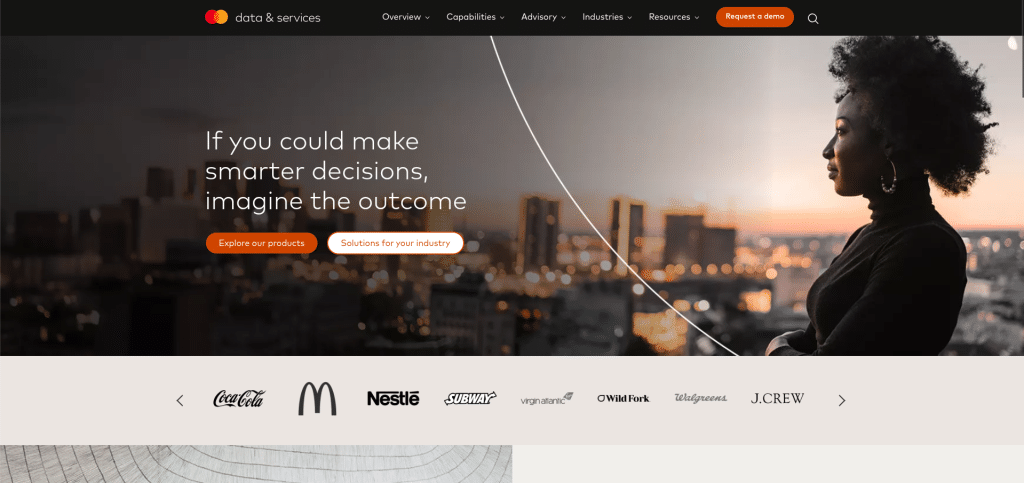
Mastercard Advisors, now operating as part of Mastercard Data & Services, is the professional services and consulting arm of Mastercard, one of the world’s largest global payment technology companies. Founded in the early 2000s, Mastercard Advisors evolved from a niche consulting function into a global team offering strategic insights, analytics, and technology-driven solutions to financial institutions, governments, merchants, and fintechs.
Today, the group operates under the umbrella of Mastercard Data & Services, which brings together consulting, data analytics, marketing services, test-and-learn platforms, and managed services. With operations in over 70 countries, Mastercard Data & Services leverages Mastercard’s vast transactional data, proprietary tools, and deep payments expertise to help clients drive growth, improve efficiency, and stay competitive in the fast-changing digital economy.
Origins and Evolution of Mastercard Advisors
Mastercard Advisors was established around the turn of the millennium as the consulting arm of Mastercard. It began formally in 2001 as Mastercard Advisors, designed to leverage Mastercard’s extensive payments expertise and data to provide strategic advisory services to the company’s clients (banks, merchants, and other financial institutions). In its early years, Mastercard Advisors focused on helping card issuers and acquirers with insights into consumer spending, credit portfolio strategy, and marketing analytics. This was a natural extension of Mastercard’s role in the payments ecosystem – moving beyond transaction processing to offer value-added advice. Through the 2000s, Mastercard Advisors grew its global presence and client base, positioning itself as a unique consulting group within a payments company.
By the 2010s, Mastercard Advisors had expanded significantly in scope. A pivotal shift came as Mastercard began integrating Advisors more deeply into its core business and investing in new capabilities. The company recognized that its rich transaction data and network could fuel broader services, and started to build out services beyond pure consulting. In 2010, Ajay Banga became CEO of Mastercard and emphasized diversifying Mastercard’s offerings – this included scaling the Advisors unit. Under this vision, Mastercard Advisors evolved from a relatively small advisory program into a major division supporting clients worldwide. In 2019, Mastercard unified and rebranded these efforts under the name Mastercard Data & Services, reflecting the broader suite of services now offered. This change marked the integration of Mastercard Advisors into a larger division that encompassed not only consulting, but also data-driven products, analytics platforms, and managed services. By 2020, Data & Services had firmly become one of Mastercard’s core business lines, signifying how the advisory business transformed into an end-to-end solutions provider beyond the transaction processing network.
Key Leadership and Figures in Growth
The growth and transformation of Mastercard Advisors (now Data & Services) can be attributed to several key leaders and strategic visionaries at Mastercard. Kevin Stanton is one notable figure – he served as President of Mastercard Advisors from 2010 to 2017. During his tenure, Stanton led the global expansion of Advisors and the integration of new services, helping lay the groundwork for the later Data & Services division. He was instrumental in steering the group to incorporate analytics and scalable platforms into consulting engagements. After 2018, Kevin Stanton assumed the role of Chief Services Officer, reflecting Mastercard’s commitment to “Services” as a core part of its business.
Another pivotal leader is Raj Seshadri, who took over leadership of Data & Services as its President in 2020. Raj Seshadri brought experience from leading Mastercard’s U.S. issuer business and was tasked with accelerating the growth of Data & Services globally. Under her guidance, the division expanded into new practice areas (such as fintech, open banking, cryptocurrency, and ESG consulting) and further commercialized Mastercard’s data assets. Her tenure saw the launch of new consulting practices (e.g. in Artificial Intelligence and Economics, introduced in 2023) and an emphasis on innovation through initiatives like Digital Labs.
Currently, Craig Vosburg (a long-time Mastercard executive) serves as the Chief Services Officer, overseeing the entire Data & Services division as part of Mastercard’s executive team. His role encompasses ensuring that the various services – from consulting to security solutions – operate cohesively to support clients and drive Mastercard’s diversification. Many other senior leaders have contributed to the division’s expertise: for example, Giorgio Manoni (Executive Vice President of Advisors & Consulting Services) leads the global consulting teams, and Eric Schneider (EVP of Services Business Development) focuses on expanding client engagements worldwide. Additionally, Michelle Meyer, as Chief Economist, heads the Mastercard Economics Institute within Data & Services, providing thought leadership. It’s also worth noting that Mastercard’s top leadership, including former CEO Ajay Banga and current CEO Michael Miebach, championed the growth of services – seeing it as a strategic pillar for the company’s future. Their support enabled significant investment in acquisitions and talent that fueled Mastercard Advisors’ transformation into the powerhouse Data & Services group it is today.
Consulting Methodologies and Data-Driven Approach
Mastercard Advisors distinguishes itself by blending traditional consulting methodologies with Mastercard’s unparalleled data and technology. The consulting teams use classic strategy consulting frameworks – such as market analysis, benchmarking, and structured problem-solving – but augment them with real transaction data, advanced analytics, and proprietary tools. A cornerstone of their approach is a focus on empirical, data-driven decision making. For example, one signature framework is the “Test & Learn” methodology. This approach, originally developed by Applied Predictive Technologies (APT) (now part of Mastercard), involves running controlled business experiments to measure the impact of changes in a real-world environment. Advisors use the Test & Learn platform to help clients pilot initiatives (like a new pricing strategy, marketing campaign, or product offering) in a subset of locations or customers, analyze the resulting transaction data, and statistically quantify the impact. This lets clients “learn” which strategies work before scaling them company-wide, leading to confident, evidence-based decisions.
Beyond Test & Learn experimentation, Mastercard Advisors employs a range of analytics-driven frameworks. Proprietary data analysis is at the heart of every project – consultants mine insights from Mastercard’s vast database of anonymized purchase transactions (125+ billion transactions annually across over 2.9 billion cards worldwide). This data is used to derive consumer spending patterns, segment customers, and benchmark performance. For instance, Advisors might use spending data to identify growth opportunities in a client’s market or to benchmark a bank’s card portfolio metrics against peers. They also utilize tools like SpendingPulse, Mastercard’s economic insights product, which tracks retail spending trends across all payment types. SpendingPulse and other analytics help inform strategic recommendations with up-to-date market intelligence.
Methodologically, a typical Mastercard Advisors engagement will combine qualitative and quantitative techniques. Consultants will conduct strategy workshops and use frameworks (e.g., SWOT analysis, customer journey mapping, financial modeling) like any top consulting firm, but each hypothesis is validated with hard data. They often develop custom models – such as profitability models by customer segment, risk models for fraud, or ROI models for loyalty programs – leveraging Mastercard’s analytics platforms. The team is also well-versed in statistical and machine learning techniques for pattern recognition and forecasting, supported by data scientists within Data & Services. Moreover, Mastercard Advisors have developed specialized benchmarking frameworks: because Mastercard works with many issuers and merchants, it can provide clients with benchmarks (e.g., how a bank’s credit card approval rate or a retailer’s average basket size compares to similar peers). This combination of deep data analysis with consulting frameworks allows Advisors to deliver highly actionable recommendations. In summary, Mastercard Advisors’ consulting methodology is defined by data-driven strategy – using robust analytics (like Test & Learn experimentation, predictive modeling, and industry benchmarks) alongside traditional consulting practices to solve client problems and drive measurable results.
Industries and Sectors Served
Mastercard’s Data & Services (Advisors) division serves a wide array of industries globally, reflecting the broad relevance of payments and consumer analytics across sectors. Key industries and sectors include:
- Financial Institutions (Banking and Payments): Historically, banks and credit unions have been core clients. Advisors works with credit card issuers, debit card issuers, payment processors, and fintech companies on strategies such as product development (e.g., launching a new card program), customer acquisition and retention, portfolio optimization, and digital payment innovation. They also advise payment networks and processors, and even other payment technology companies, drawing on Mastercard’s expertise in the payments ecosystem.
- Retail and Commerce: Retail is a major sector for Mastercard Advisors, ranging from big-box retailers and grocery chains to e-commerce marketplaces and department stores. Projects in retail often involve pricing optimization, promotions strategy, and improving sales through data insights. For example, Advisors might help a retailer analyze transaction patterns to refine its pricing or to personalize offers to shoppers. With e-commerce and digital commerce clients, Advisors provide guidance on checkout optimization, online fraud prevention strategies, and omnichannel customer experience, leveraging Mastercard’s knowledge of digital payment trends.
- Restaurants and Hospitality: The team serves quick-service restaurant chains, dining groups, hotel chains, airlines, and other hospitality companies. They help these clients improve customer loyalty (for instance, designing or revamping a loyalty rewards program for a coffee chain), optimize pricing and menus (using data-driven tests for menu changes or dynamic pricing in hotels), and enhance customer engagement (perhaps using personalization platforms to tailor travel offers). In the airline industry, Advisors might work on co-branded credit card strategy or ancillary revenue optimization using payments data.
- Telecommunications and Media: Telecom companies often collaborate with Mastercard Advisors, particularly in regions where mobile operators provide payment services or loyalty programs. Advisors has experience in mobile payments and digital wallet strategy – for example, helping a telecom launch a mobile money service or integrate payments into a mobile app. They also assist with large-scale customer loyalty programs that telcos run (like points or rewards for subscribers), using SessionM and other Mastercard loyalty solutions. Media and telecom firms also tap Advisors for data monetization strategies, leveraging consumer insights drawn from payment data to create new services.
- Travel and Tourism: In addition to hospitality companies, Mastercard works with tourism boards, transportation authorities, and government agencies in the travel sector. Through products like Tourism Insights and partnerships with governments, Data & Services provides analysis on tourist spending patterns, economic impact of tourism, and strategies to attract travelers. For example, Advisors might advise a national tourism agency on how to boost visitor spending by analyzing which attractions or regions show high card spending growth. They also help transit agencies implement contactless payment systems and optimize fare structures (leveraging Mastercard’s transit payment solutions experience).
- Government and Public Sector: Governments and public sector organizations engage Mastercard Advisors for expertise in financial inclusion, smart city payments, and economic development. A notable area is financial inclusion initiatives – Advisors can help governments or NGOs design programs to bring unbanked populations into the digital economy, often leveraging Mastercard’s tools and partnerships (like prepaid card programs for social disbursements or mobile payment ecosystems in developing countries). Advisors also offer economic advisory services through the Mastercard Economics Institute, providing governments with insights on macroeconomic trends, consumption patterns, and policy impact analysis. Additionally, they work on public transit payment projects, digital identity and payment infrastructure, and even smart city solutions (like urban mobility payment integration).
- Digital Technology and Fintech: With the rise of fintech, Mastercard Data & Services supports a host of digital-native companies. This includes fintech startups, digital banks, cryptocurrency platforms, and software companies that intersect with payments. Advisors assists fintechs in market entry strategy, scaling, and partnership development. For instance, they might help a fintech refine its business model using market data, or advise a tech giant on launching a new digital payment offering globally. In recent years, they have launched dedicated consulting practices for crypto and digital assets, helping financial institutions and fintech firms navigate cryptocurrency adoption, blockchain use cases, and risk management in that space. They also serve digital commerce companies (online-only retailers, gig economy platforms, etc.) by providing insights on user spending behavior and payment optimization.
In summary, Mastercard’s Data & Services team is active across virtually every sector that touches payments or consumer spending. From traditional banking and retail to emerging domains like fintech, open banking, and digital currencies, the Advisors’ breadth of industry coverage allows them to bring cross-industry insights to each client. This global, multi-sector experience is one of their strengths, as lessons learned in one industry (say, loyalty in airlines) can be applied in another (like loyalty in retail or telecom).
Business Units and Offerings in Data & Services
Mastercard’s Data & Services division today encompasses a range of business units and service lines, each providing different types of value-added services beyond Mastercard’s core transaction processing. The major components of Data & Services include:
- Consulting Services (Mastercard Advisors): At the heart of Data & Services is the consulting arm (still often branded as Mastercard Advisors). This is the management consulting unit that engages on projects to solve strategic, financial, and operational challenges for clients. The consulting services cover areas such as strategy development, market entry, portfolio management, product design, and performance improvement. Advisors consulting teams use their expertise in payments and combine it with local market knowledge to deliver recommendations. For example, consulting projects might involve developing a digital payments roadmap for a bank, crafting a retail pricing strategy, or advising a government on increasing electronic payments usage. The consulting practice is organized into specialty areas – for instance, Payments Strategy, Digital Transformation, Risk Management, Loyalty Strategy, and Sustainability/Financial Inclusion consulting, among others – to bring deep subject-matter expertise to each engagement.
- Analytics and Insights: Data & Services includes dedicated analytics offerings and platforms that provide insights to clients on an ongoing or on-demand basis. This encompasses data analytics tools, business intelligence platforms, and insight products. One example is Mastercard SpendingPulse, which provides macro-level insights on consumer spending trends by industry and geography (often used by retailers and governments to gauge economic health). Another example is Portfolio Analytics solutions for banks – Mastercard offers issuers analytical dashboards and reports (through tools like Portfolio Optimizer or Business Intelligence portals) to monitor card portfolio performance, customer spending behavior, and risk metrics. Additionally, Mastercard’s Economics Institute (housed within Data & Services) publishes research and thought leadership, giving clients insights into economic trends, consumer sentiment, and forecasts. Clients can subscribe to data feeds or reports, or engage Advisors for custom analytic studies like market sizing, customer segmentation, or predictive modeling. In essence, this business unit turns Mastercard’s raw data into actionable insights and benchmarks that clients can use for decision-making.
- Managed Services: Managed Services refers to solutions where Mastercard doesn’t just advise, but actually helps execute and operate certain programs for clients. This can take several forms across loyalty, marketing, and fraud management. For instance, through its Marketing Services and Loyalty Operations teams, Mastercard can manage a bank’s rewards program or run marketing campaigns on behalf of a client. The 2019 acquisition of SessionM brought in a robust loyalty management platform – now Mastercard can both provide the technology and the services to operate personalized loyalty and engagement programs for retailers or airlines. Similarly, in fraud and security, Ethoca (acquired in 2019) is now a managed service where Mastercard facilitates communication between merchants and issuers to resolve fraudulent transactions and chargebacks collaboratively. Rather than each bank or merchant tackling fraud in silo, Mastercard operates a network service via Ethoca to quickly identify fraud and notify parties, reducing operational losses. Managed Services also can include running analytics-as-a-service – for example, Mastercard might have a team embedded with a client for a period to help execute on analytics or business transformation initiatives post-consulting. This part of Data & Services is about execution support and operational partnership, ensuring clients can implement recommendations and maintain programs with Mastercard’s ongoing help.
- Test & Learn and Business Experimentation: A flagship offering within Data & Services is the Test & Learn® platform, which originated from the Applied Predictive Technologies acquisition. Test & Learn is both a technology platform and a service. It allows clients to design and analyze experiments (A/B tests or controlled trials) in their business – such as testing a new store layout in a set of stores vs. control stores, or trying a new pricing promotion on a subset of customers vs. a hold-out group. The platform rigorously measures the incremental impact by accounting for external factors and uses patented algorithms to isolate the effect of the change. Mastercard provides this as a software solution, and Advisors consultants often assist clients in developing the experimentation strategy and interpreting results. Many large retailers, restaurants, and banks use Test & Learn to continuously optimize decisions (e.g., menu changes for a restaurant chain, or credit line increase strategies for a card issuer). This capability has become a key differentiator for Mastercard’s Data & Services – it’s a consulting-oriented approach that’s productized into a scalable platform. Essentially, it gives clients a “laboratory” to test ideas in-market with real data before committing fully, which greatly increases the success rate of new initiatives.
- Loyalty and Customer Engagement Solutions: Mastercard’s Data & Services also houses a suite of loyalty, rewards, and customer engagement products. After acquiring companies like SessionM and later Dynamic Yield, Mastercard offers technology platforms for loyalty management, campaign orchestration, and personalization. For example, SessionM (now part of the Customer Engagement solutions) enables brands to collect and analyze customer interactions in real time and deliver personalized offers or rewards to drive loyalty. Mastercard also offers its own Mastercard Rewards Services, which help clients create and manage reward catalogs (points, merchandise, travel rewards for cardholders). The Dynamic Yield platform (acquired in 2022) adds advanced personalization and recommendation engine capabilities – allowing, say, a bank’s mobile app or a merchant’s website to dynamically customize content and offers for each user based on their behavior and transaction history. Alongside the technology, Data & Services provides loyalty consulting and program design. They might help a client restructure their loyalty tiers, optimize earn/burn rates for points, or design omnichannel engagement strategies. This combination of platform + consulting ensures that clients not only have the software to run loyalty programs, but also the strategic guidance to make those programs effective.
- Cyber and Security Solutions: Another important part of Data & Services is the cybersecurity and risk services Mastercard offers. Through acquisitions like Brighterion, RiskRecon, and organic development, Mastercard has built a portfolio of security solutions that often fall under “Services” rather than core processing. For instance, Brighterion (acquired 2017) is an AI platform that powers fraud detection and risk scoring in real time – Mastercard can deploy Brighterion’s AI models for banks to catch fraud more intelligently. RiskRecon (acquired 2020) provides cybersecurity assessments of companies’ external risk posture; Mastercard offers this service to banks and merchants to help them evaluate third-party cyber risks and strengthen their defenses. Additionally, Mastercard runs Cyber Advisory services as part of Advisors, helping organizations develop strategies for cybersecurity, fraud prevention, and business resilience. This can involve simulated cyber exercises (Mastercard has a Cyber Crisis Management service), advisory on compliance with security standards, and deploying Mastercard’s tools like SafetyNet (a fraud prevention system on the network). All these security-related offerings are packaged in the Data & Services division to complement the business strategy work – recognizing that secure and trusted transactions are vital to any growth strategy.
- Insights and Innovation Platforms: Mastercard Data & Services also includes innovation-focused offerings such as Digital Labs and various API-based services. Digital Labs (recently enhanced in 2023) is a concept where Mastercard co-creates and prototypes solutions with clients – for example, rapidly developing a new fintech app feature or testing an open banking use case in a sandbox environment. It’s effectively an innovation studio that clients can tap into as part of a consulting engagement to speed up implementation. Furthermore, Mastercard has numerous APIs and data products (through its Developers platform) which fall under Data & Services for distribution to fintechs and partners – these include open banking APIs (from the Finicity acquisition), data enrichment APIs, and AI services. The Open Banking services, led by the team from Finicity and another acquired company Aiia, allow banks and fintechs to securely share and access financial data to build new apps (e.g., personal finance management, account aggregation, credit decisioning). Data & Services supports these with both technology and advisory on how to leverage open banking strategically. In summary, the business units under Data & Services span consulting, analytics, loyalty, cyber, open banking, and experimentation – all aimed at helping clients make smarter decisions and implement solutions using Mastercard’s data, technology, and expertise.
Global Operations and Regional Presence
Mastercard’s Data & Services division operates globally, with a presence in over 120 countries and an international team of experts. The delivery model is both regional and global – meaning there are local offices and teams in each major region, supported by centralized centers of expertise. Here’s an overview of regional operations and focus:
- North America: North America (USA and Canada) is a major base for Mastercard Advisors. The global headquarters of Mastercard is in Purchase, New York, and many Data & Services team members are based in the New York area. Mastercard Advisors has a significant office in the New York City vicinity, and also in Arlington, Virginia (just outside Washington, D.C.), which originally came via the APT acquisition and serves as a hub for the Test & Learn analytics team. Additionally, there are offices in major cities like San Francisco and Toronto, Canada. In North America, the client focus is on large banks, retailers, tech companies, and regional financial institutions. For example, teams in the U.S. work closely with top issuers, payment fintechs, and national merchants on projects to drive competitive advantage in a mature market. The region also often serves as an innovation testbed for new Data & Services offerings (like early crypto consulting projects or advanced analytics) given the sophisticated client base. North America accounts for a substantial portion of the consulting workforce and revenue, and the teams here often collaborate with global clients that have headquarters in the U.S. or Canada.
- Europe, Middle East and Africa (EMEA): EMEA is a broad and diverse territory for Mastercard Data & Services, and the division has structured operations to cover the sub-regions. Europe has major offices in London (UK) – a key hub for Advisors in Europe – as well as in cities like Dublin, Madrid, Dubai, Paris, Frankfurt, and others. London acts as a center for European banking and retail projects and houses many of Mastercard’s consultants and data scientists working with clients across Western and Central Europe. Middle East & Africa operations are often managed out of hubs like Dubai (covering the Middle East) and Nairobi or Johannesburg for Africa. The client focus in EMEA ranges from global European banks and retailers to telecom companies in Africa and fintech startups in places like the UK or UAE. For instance, in Europe, Advisors might be helping a national bank with digital migration or PSD2 (open banking) strategy, whereas in Africa, a common project might involve financial inclusion or mobile payments growth strategy in emerging markets. EMEA teams are multi-lingual and culturally diverse – Mastercard Data & Services in this region prides itself on having local expertise (native speakers and on-the-ground presence) in key markets to better serve clients. The regional breakdown also aligns with Mastercard’s larger regional structure, ensuring that Data & Services is integrated with local Mastercard market teams. Notably, the Consulting Advisory footprint spans dozens of countries in EMEA, and consultants often travel across countries for client engagements or work remotely from regional hubs to support clients in smaller markets.
- Asia-Pacific (APAC): In Asia-Pacific, Mastercard Advisors have a strong presence in cities such as Singapore (the APAC regional headquarters for Data & Services), Sydney (covering Australia/New Zealand), Mumbai and Gurgaon in India, and also offices in China (e.g., Beijing or Shanghai), Southeast Asia (e.g., Bangkok, Jakarta), and Japan/Korea. Singapore is a critical hub, as it anchors Southeast Asia and often hosts regional leadership. Many APAC consultants are based there to cover ASEAN countries. India plays a dual role: it is both a market served (Indian banks, payments firms, and the booming fintech sector are clients) and a talent hub (Mastercard has large offices in Gurgaon and Pune, where a significant portion of the Data & Services team, including analysts and technology specialists, operate). These Indian offices often function as a global delivery center, supporting projects worldwide with analytics and research, in addition to serving local clients. APAC’s client focus is quite varied. In mature markets like Australia, Japan, and Singapore, projects often involve advanced digital payment strategies, open banking, and customer experience enhancements for banks and retailers. In fast-growing markets like India, Indonesia, or Vietnam, Advisors might focus on growth strategy, new market entry, and building digital payment ecosystems from the ground up. Asia-Pacific also sees a lot of innovation projects – for example, advising super-app companies, mobile wallet providers, and governments launching real-time payment systems. The team’s cultural and linguistic diversity in APAC (speaking dozens of Asian languages) helps tailor solutions to local market conditions.
- Latin America and Caribbean (LAC): Mastercard Data & Services operates across Latin America with regional coordination often from Miami (which serves as a hub for LAC) and local offices in major markets such as São Paulo (Brazil), Mexico City (Mexico), Buenos Aires (Argentina), Bogota (Colombia), and Santiago (Chile). The LAC region has a mix of developed and emerging economies, and Advisors’ projects reflect that diversity. In Brazil and Mexico, for instance, Mastercard Advisors might work with large banks on competitive strategies for credit and debit products, or with big retailers on launching co-branded cards and loyalty programs. In smaller or emerging markets, the focus might be on expanding electronic payments acceptance, financial inclusion solutions (like prepaid programs for the unbanked), or helping governments modernize payment infrastructure. The Caribbean and Central America are often handled by teams based out of Miami or Mexico. Language skills (Spanish, Portuguese, English) are key for the LAC team; many consultants are based locally to work closely with clients in their language. The region also leverages insights from other global markets but adapts them to local contexts like cash-heavy economies or unique regulatory environments. Overall, Data & Services in Latin America has been growing as digital payments surge in the region – advisors often assist clients in capitalizing on the rising use of fintech, mobile payments, and e-commerce in LAC.
Across all these regions, Mastercard Data & Services emphasizes a global network with local presence. There are over 2,000-3,000 team members (consultants, data scientists, product specialists) worldwide, representing more than 80 nationalities and speaking 60+ languages. This global reach means that a client in any country can get access to world-class expertise, while also receiving advice tailored to the local market reality. The division maintains offices in dozens of cities to be close to clients, and it frequently arranges cross-regional collaboration – for example, a project in the Middle East may involve experts from Europe with relevant experience, or a Latin American retail client might benefit from lessons learned in Asia’s e-commerce boom. This integrated global operations model ensures consistent service quality and the ability to tackle international projects (such as helping a global bank with multi-country strategy or a retail chain expanding across continents). Office locations span all continents – some prominent ones include Purchase (NY), New York City, Arlington (VA), Toronto, London, Dublin, Dubai, Singapore, Sydney, Mumbai, Gurgaon, São Paulo, Mexico City, among many others – essentially wherever Mastercard has a significant footprint, the Data & Services team is present.
Career Path and Promotion Track
Careers within Mastercard Advisors (Data & Services) follow a trajectory similar to that of management consulting firms, with clear progression levels and increasing responsibility at each step. A typical promotion track and job title progression looks like this:
- Entry Level (Analyst/Associate Consultant): New graduates (often with bachelor’s degrees) typically join as Associate Consultant or Analyst. In some regions, the title might be “Associate Analyst” or simply “Consultant” for entry-level, but generally this role is the first step. At this level, one’s role is to support project teams by conducting analyses, building models, researching industry trends, and contributing to presentations. Analysts learn Mastercard’s data tools and consulting methodologies, working under the guidance of senior team members. It’s common to spend about 2-3 years at this level developing core consulting skills and payments domain knowledge.
- Consultant (Senior Consultant): The next level is Consultant (sometimes just called “Consultant” if entry was Associate Consultant, or could be “Senior Associate” in some companies, but Mastercard uses Consultant). This is often a post-MBA entry point as well – meaning individuals who join after obtaining an MBA or a few years of industry experience might start at the Consultant level. Consultants are the workhorses of project delivery: they own significant workstreams within a project, do heavy analysis, and start to interface more with clients. They are expected to structure approaches to solve specific client problems and may lead an analyst or two. Time at Consultant level is often 2-3 years, and the person hones skills in project management and more independent problem-solving.
- Manager (Managing Consultant): After demonstrating the ability to independently drive workstreams and contribute to client recommendations, the next step is Manager. In Mastercard Advisors, the title at this level is often “Managing Consultant” (and there is sometimes an intermediate step called Associate Managing Consultant for those transitioning into the manager role). A Managing Consultant is essentially a project manager or engagement manager: they lead the day-to-day execution of consulting projects. In this role, one would be coordinating a team of analysts and consultants, structuring the overall project approach, liaising regularly with the client’s middle or senior management, and ensuring the project meets its objectives. Managing Consultants begin to have responsibilities for multiple projects or a significant piece of a large program. They also contribute to selling additional work (supporting proposal development, demonstrating thought leadership to clients). This level typically requires strong leadership and problem-solving skills, and individuals might stay 2-4 years in this band. Some organizations within Data & Services might use titles like Senior Managing Consultant as a further distinction for very experienced managers or those handling large accounts.
- Director (Engagement Director/Principal): The next substantial promotion is to Director. In Mastercard’s hierarchy, Director is a higher-level position that often corresponds to what consulting firms call “Principal” or junior partner. Within Data & Services, Directors often have dual roles: they oversee multiple client engagements (often as a senior advisor rather than day-to-day manager) and they take on account management/business development responsibilities. A Director might manage a portfolio of clients or a particular region’s service line. They provide thought leadership, mentor team members, and ensure quality of deliverables across projects. They are also involved in selling projects – meeting with senior client executives to scope new engagements, pitching Mastercard’s services, and shaping proposals. At this level, individuals are recognized as experts in their field (e.g., a Director might be known as the go-to person for “Digital Payments Strategy” or “Loyalty and Rewards” expertise). The title “Director” is an internal corporate title at Mastercard, and typically people at this level have around 8-12+ years of experience. Some may have come up through the ranks, while others might be lateral hires with specialized experience.
- Vice President and Above: Beyond Director, the Mastercard Data & Services division has Vice Presidents (VPs) and higher executive roles. A Vice President in Data & Services would likely lead a practice area (for instance, VP for North America Advisors, or VP for Retail Sector Consulting) or hold a role such as Client Services Lead for a region. VPs are senior leaders akin to partners in a consulting firm – they are accountable for client relationships, revenue targets, and strategic direction of their unit. They work on C-suite level engagements, often acting as the executive sponsor on projects. Further up, Senior Vice Presidents (SVP) or Executive Vice Presidents might head entire regions or global business lines (e.g., the EVP of Advisors Consulting globally, as mentioned earlier, is Giorgio Manoni). And the Chief Services Officer or President of Data & Services (executive committee roles) sit at the top, setting overall strategy and ensuring integration with Mastercard’s corporate objectives.
Throughout this career path, Mastercard provides opportunities for growth, including training (both in consulting skills and in Mastercard’s data tools), mentorship from experienced consultants, and international exposure (it’s not uncommon for high-performing consultants to do rotations in other countries or regions). The promotion criteria are typically performance-based, similar to other consulting firms: demonstrating impact on clients, leadership skills, contribution to sales, and teamwork are key. One unique aspect of Mastercard’s Data & Services is that it combines elements of a consulting firm career with those of a technology company – so individuals might find paths to move into product management or other roles within Mastercard over time if they desire, or stay within the consulting track to rise to senior leadership. The career progression is well-defined but also flexible to accommodate the division’s growth into new areas (for example, someone might start in consulting and then become a specialist leader in a field like AI or cybersecurity within the services organization).
Compensation by Level (Analyst, Consultant, Manager, Director)
Compensation at Mastercard Advisors is competitive with the consulting industry, though generally slightly more moderate than the largest top-tier strategy firms. Publicly available data (from sources like Glassdoor and recruitment reports) provides insight into salary ranges for various levels in the United States. Approximate annual total compensation (including base salary and bonuses) for key roles is as follows:
- Analyst / Associate Consultant: Roughly in the range of $90,000 to $120,000 USD in total compensation. Entry-level base salaries tend to be in the high $70k to low $90k range, with additional performance bonus that can bring the total into the low six figures. This level is typically a bit higher paying than entry jobs in industry, and on par with many entry consulting roles, reflecting the analytical skills required.
- Consultant (post-MBA or equivalent experience): Approximately $110,000 to $160,000 USD total. Base salaries for Consultants might be around $100k–$120k, and annual bonuses can be 10-20% of base, plus other incentives, bringing the total up. In some cases, total comp can reach the mid/high $100s if performance is strong. This is comparable to post-MBA packages at many firms, though perhaps slightly below MBB (McKinsey/Bain/BCG) levels; however, Mastercard sometimes offers additional perks like stock grants at certain levels which can add value.
- Manager / Managing Consultant: Typically $150,000 to $200,000 USD total compensation. Base salaries at the Manager or Managing Consultant level might range around $130k–$150k, with bonuses often 20-30% of base, so total could be in the high $100s. Some data shows Managing Consultants at Mastercard with total packages in the $170k–$180k range on average, and high performers possibly hitting $200k or slightly above. At this level, individuals may also begin to receive equity (stock) grants as part of their comp, especially if they are on track for higher leadership.
- Director (Senior Managing Consultant / Engagement Lead): Typically $250,000 USD or more in total compensation. The range for Directors is broad, roughly $230,000 to $350,000 USD including bonuses and stock. A Director’s base salary might be in the low $200k (for example, $210k–$230k), and bonus percentages are higher (30%+ of base, which could be $70k–$100k+ in bonus). Additionally, Mastercard at this level often grants stock units, which can significantly increase the total value when included. Thus, a successful Director could see total comp in the mid $200k and higher, depending on performance and corporate results.
It’s important to note that these figures can vary based on location (salaries in New York or London will be higher than in some other cities, and regions like Asia or Latin America will have different scales), as well as year-to-year company performance (which affects bonus pools and stock value). Also, Mastercard’s Data & Services being part of a large public company means benefits like 401(k) match, ESPP (employee stock purchase plan), and comprehensive health benefits are part of the package, which add to the overall compensation value. In addition, while base pay might be slightly lower than pure consulting firms at certain levels, the work-life balance at Mastercard is often cited as more favorable (with slightly less travel intensive schedules and a bit more predictable hours than some consulting firms), which some consider as part of the “total rewards” of the job.
The above numbers are reflective of mid-2020s publicly reported data. Mastercard also regularly adjusts pay to remain competitive, so there’s potential for these ranges to shift upward with market trends. Overall, Mastercard Advisors pays a strong compensation package to attract talent, aligning with its role as a hybrid of consulting and tech – especially for those with data science or digital skills, there may be premiums in pay.
Notable Projects and Thought Leadership
Mastercard Advisors has led a variety of distinctive projects across industries, often producing innovative and high-impact outcomes. A few hallmark types of projects and areas of thought leadership include:
- Pricing Optimization for Retailers and Banks: One classic engagement is helping clients optimize pricing and revenue. For retailers, Advisors might undertake a project to refine product pricing strategies – for example, analyzing sales data to determine optimal price points or discount strategies that maximize profit without losing volume. Using the Test & Learn framework, they can test different pricing in pilot stores and identify the price elasticity of demand for key products. In banking, pricing optimization projects could involve credit card fees or interest rates – e.g., determining the ideal balance between annual fees and reward benefits on a card, or setting interchange or merchant discount rates in a way that’s competitive yet profitable. Thought leadership in pricing: Mastercard often publishes insights on how data-driven pricing can improve margins, and has demonstrated techniques like dynamic pricing (in hospitality) or personalized pricing offers (using customer segmentation from data).
- Digital Payments Strategy and Transformation: Given Mastercard’s pedigree, many clients seek Advisors’ guidance on digital payment strategies. These projects might involve helping a traditional bank develop a comprehensive digital banking and payments roadmap – including launching mobile banking apps, contactless card rollout, fintech partnerships, and usage of wallets like Apple Pay/Google Pay. Advisors bring to bear global best practices (since Mastercard sees what works in many markets) to craft strategies for migrating consumers from cash to digital, or increasing adoption of new technologies like QR payments or real-time payments. A notable area is central bank digital currency (CBDC) and payments infrastructure modernization – Mastercard Data & Services has the expertise to advise central banks or regulators on designing digital currency trials or faster payment systems, ensuring interoperability with card networks. Thought leadership: Mastercard regularly shares perspectives on the “Future of Payments,” including trends in contactless adoption, the impact of mobile wallets on commerce, and how open banking will reshape financial services. Advisors have contributed to white papers and panels on digital transformation in payments, helping shape industry dialogue.
- Customer Loyalty and Lifecycle Management: Another signature strength of Mastercard Advisors is in customer loyalty programs and marketing strategy. Over the years, the team has worked on numerous projects to either design a new loyalty program from scratch or rejuvenate an existing one. For instance, they might help a major airline revamp its frequent flier program, leveraging data to identify what rewards drive the most engagement, or help a retailer design a multi-tier loyalty program that encourages repeat purchases. With SessionM and Dynamic Yield in their toolkit, they can go further to implement personalized engagement – for example, building a system where a retailer’s customers get tailored offers based on their purchase history, thereby improving loyalty. Mastercard’s thought leadership in this area often covers how combining payments data with other customer data yields richer insights – such as identifying life stages of customers (newlyweds, new parents, etc.) from spending patterns and targeting loyalty efforts accordingly. They also emphasize the importance of omnichannel loyalty (connecting in-store and online behavior). A distinctive project example might be Advisors helping a bank increase credit card customer retention by analyzing attrition drivers and implementing a targeted retention campaign (maybe offering incentives to high-risk-of-churn customers, delivered through personalized channels). The results often show improved customer spend and loyalty metrics.
- Financial Inclusion and Social Impact Projects: Mastercard Data & Services is also known for its work in financial inclusion, which aligns with Mastercard’s corporate commitment to bringing more people into the digital economy. Advisors have partnered with governments, NGOs, and banks on projects aimed at expanding access to financial services. For example, they might design a strategy for a government to distribute social welfare payments via prepaid cards or mobile wallets (reducing reliance on cash and improving efficiency/transparency). Or they could work with a telecom company in an emerging market to scale up a mobile money service that serves unbanked customers for basic payments and remittances. These projects require not only business savvy but cultural and policy understanding, which Advisors provide through local expertise. Thought leadership: The team often publishes case studies on successful inclusion initiatives – like how digital payment solutions can empower small merchants or farmers, or the economic benefits of increasing electronic payment penetration in developing economies. Sustainability is another growing focus; Data & Services now consult on sustainable payments (for instance, how banks can encourage eco-friendly consumer behavior through their rewards or how to measure carbon footprint of spending). They have thought leadership pieces on ESG (environmental, social, governance) in payments, and recently even launched an ESG consulting practice to advise clients on these topics.
- Payment Product Innovation and “Test & Learn” Case Studies: Because of the Test & Learn capability, Mastercard Advisors often engage in innovative pilot projects that become case studies. For example, an issuer might wonder if offering a new credit card feature (say, an installment payment option or a subscription management tool) will increase customer acquisition. Advisors can set up a pilot for a subset of customers and use Test & Learn to measure results, then advise on rollout. There have been projects like testing the removal of late fees on a small group to see if it drives more spending and loyalty, or a merchant testing a subscription loyalty program. Many of these controlled experiment projects become thought leadership examples where Mastercard can share aggregate learnings. They demonstrate the power of data experimentation – a retailer could learn that a certain promotion increases sales but only in urban stores, or a bank learns that increasing credit limits for a segment yields a positive ROI with minimal added risk. Mastercard often shares these anonymized insights at industry conferences, showing how a culture of experimentation leads to continuous innovation.
- Open Banking and Open Data Advisory: With acquisitions like Finicity and the advent of open banking regulations, Data & Services has carved out a role in guiding institutions through the open banking revolution. A notable area of consulting now is advising banks on how to monetize open banking – i.e., how to use customer-permissioned data to offer new services (like account aggregation, personal finance management tools) or how to meet compliance while gaining competitive advantage. For fintechs, Advisors might help strategize how to leverage open APIs (including Mastercard’s own open banking platform) to build products that access bank data, such as credit scoring models using bank transaction history or instant account verification for payments. Mastercard’s thought leadership in this domain includes discussing the concept of “open data ecosystems” beyond financial data – imagining a future where various data sources (telecom, utility, etc.) combine with payments data to create richer services. They highlight the value of partnerships and API-led innovation, often referencing the importance of consumer consent and data security (areas where Mastercard’s credibility in trust helps in advisory).
- Cybersecurity and Fraud Prevention Initiatives: As part of their projects, Advisors also take on fraud reduction and security strategy engagements. A typical project might be helping a bank reduce card fraud losses by analyzing patterns (using AI models from Brighterion) and recommending changes in fraud rules or customer authentication methods. Or working with an e-commerce merchant to improve its fraud detection and checkout security to reduce false declines (cases where good transactions are mistakenly blocked). Given Ethoca and RiskRecon, they might run a program for a client to improve fraud dispute resolution or strengthen third-party cyber risk management. Mastercard’s thought leadership extends here with insights on balancing security and user experience, the role of AI in fraud detection, and preparation for emerging cyber threats. They also have been involved in advising on crypto security (post-CipherTrace acquisition, providing guidance on how firms can safely engage in crypto transactions and monitoring).
In all these areas, Mastercard Data & Services not only executes projects but often publishes insightful content and leads discussions in the industry. The Mastercard Institute of Economics regularly issues reports like an annual Economic Outlook, analyses of consumer spending post-COVID, or studies on “subscription economy” trends, which position the company as a thought leader. Advisors consultants frequently speak at industry events, author articles or blogs on the Mastercard Services website, and share case studies that highlight innovative solutions (while keeping client specifics confidential). For example, they may release a report on how “Buy Now, Pay Later” is impacting consumer credit or best practices in omnichannel retail, based on their engagements and data analysis. This thought leadership not only cements Mastercard’s expertise in these domains but also provides valuable knowledge back to the broader business community.
Integration of Key Acquisitions into Data & Services
A major driver of Mastercard Advisors’ expansion into the full-fledged Data & Services division has been a series of strategic acquisitions. Over the past decade, Mastercard acquired several companies specializing in analytics, loyalty, security, and other services, and integrated them into the Data & Services portfolio. Here are some key acquisitions and how they have been woven into the division’s offerings:
- Applied Predictive Technologies (APT) – acquired 2015: APT was a leading analytics software firm known for its Test & Learn® platform, which helps businesses conduct in-market experiments. Mastercard’s acquisition of APT (for around $600 million) was transformative. The APT team and technology became the backbone of Mastercard’s Test & Learn business experimentation service. Post-integration, Mastercard could offer clients a sophisticated tool to test strategies (pricing, marketing, new products) and get quantitative readouts of results. APT’s team of data scientists and engineers also bolstered the Analytics capability of Mastercard Advisors. The Test & Learn platform is now one of Data & Services’ flagship products, used by clients globally, and APT’s DNA of data-driven experimentation has heavily influenced Mastercard’s consulting approach. The acquisition also brought APT’s client base (which included retailers, restaurants, banks) into Mastercard’s fold, expanding the division’s reach beyond traditional payments clients.
- Brighterion – acquired 2017: Brighterion is an Artificial Intelligence software company that Mastercard acquired to enhance its AI capabilities. Brighterion’s technology, which can analyze data in real time to detect anomalies, has been integrated into Mastercard’s fraud prevention and risk management services. Within Data & Services, Brighterion’s AI algorithms power solutions such as real-time fraud scoring for issuers and network-level security systems. While Brighterion primarily strengthened Mastercard’s Cyber & Intelligence efforts, it also became a value-add in consulting projects – Advisors can deploy AI models to help clients improve everything from credit risk modeling to predictive customer analytics. The acquisition underscored Mastercard’s commitment to being on the cutting edge of analytics tech and gave Data & Services a strong story in AI-driven solutions.
- Ethoca – acquired 2019: Ethoca, a Canadian company, operates a collaboration network that connects merchants and issuers to share fraud and chargeback information. Mastercard’s acquisition of Ethoca brought in a crucial fraud mitigation service. Ethoca was integrated into Data & Services as part of the cybersecurity and fraud solutions. Now, when Advisors work with a merchant or a bank on fraud reduction, they can implement Ethoca’s service to quickly resolve disputed transactions (for example, notifying an online merchant immediately if a transaction is confirmed fraudulent by the cardholder’s bank, so the merchant can stop fulfillment and avoid a chargeback). This real-time collaboration network has reduced chargeback volumes and saved costs for clients. Ethoca’s network also expanded Mastercard’s client relationships with many digital merchants. As a service, it’s often sold alongside consulting – e.g., an advisor might recommend Ethoca participation as part of a holistic fraud strategy. The integration of Ethoca complements Mastercard’s “prevent, detect, and resolve” approach to fraud in its Services offerings.
- SessionM – acquired 2019: SessionM is a customer data and loyalty platform company. Mastercard acquired SessionM for its robust technology that helps brands gather customer data from multiple touchpoints and engage customers with personalized loyalty offers in real time. This acquisition was directly folded into the loyalty and marketing services arm of Data & Services. Now, Mastercard offers SessionM’s platform to clients looking to enhance their loyalty programs – for instance, a retailer can use SessionM to power a mobile app that tracks customer purchases and delivers targeted rewards or messages right after a transaction. The Advisors team can leverage SessionM in engagements that involve building or overhauling loyalty programs, providing not just the strategy but also the tool to execute modern, data-driven loyalty initiatives. The SessionM staff, many of whom have marketing and CRM expertise, joined Mastercard and augmented the consulting talent pool in those domains. The result is a more end-to-end loyalty solution: from strategy conceptualization by Advisors to implementation on SessionM’s platform, all under Mastercard’s roof.
- RiskRecon – acquired 2020: RiskRecon is a cybersecurity assessment company that evaluates companies’ external IT systems for vulnerabilities (often used by banks to vet third-party service providers). By acquiring RiskRecon, Mastercard added a key capability in its Cyber Solutions portfolio. Within Data & Services, RiskRecon is used in cybersecurity consulting projects – for example, Advisors can help a client map out their third-party risks and use RiskRecon’s scans to provide an objective scorecard of those risks, then advise on how to remediate weak points. This service is particularly relevant in an era of increased cyber threats and has been offered to financial institutions, healthcare companies, and others concerned about their supply chain security. RiskRecon’s integration means Mastercard can not only process payments securely but help clients secure their entire digital ecosystem, which is a strong differentiator when pitching Services to large enterprises.
- Finicity – acquired 2020: Finicity is a leading open banking and financial data aggregation platform. Mastercard’s $825 million acquisition of Finicity was primarily aimed at advancing its open banking strategy. The Finicity technology allows consumers (with permission) to share their bank account data with third-party applications (like budgeting apps, or when applying for a loan, etc.) through secure APIs. In Data & Services, Finicity’s capabilities are leveraged in two ways: (1) as a platform product that Mastercard can offer to banks and fintechs for open banking access, and (2) as an advisory topic – helping clients figure out how to use open banking to their advantage. For instance, Advisors might work with a bank on building a personal finance management tool that uses account aggregation (powered by Finicity’s API) to give users a single view of all their finances. They might also advise lenders on how to use aggregated account data to improve credit decisioning. The Finicity team also formed the core of Mastercard’s Open Banking consulting practice, working under Data & Services to engage fintech and bank clients in North America and eventually globally. This acquisition signaled that Mastercard Data & Services is not limited to card data – it’s now dealing with broader financial data and helping shape products in the open banking era.
- Dynamic Yield – acquired 2022: Dynamic Yield is a personalization and decision engine platform that Mastercard bought from McDonald’s. This platform delivers personalized content and product recommendations on digital channels (websites, apps, kiosks). Integrating Dynamic Yield into Data & Services bolstered Mastercard’s consumer engagement and personalization offerings. Now, an Advisors engagement with a retailer or bank that wants to improve digital customer experience can include deploying Dynamic Yield to personalize what each customer sees (for example, showing custom product recommendations on an e-commerce site based on that customer’s purchase history and similar profiles). Dynamic Yield’s technology, combined with Mastercard’s data, creates a powerful proposition for increasing customer satisfaction and conversion rates. Post-acquisition, Dynamic Yield operates within the Services division, and its team collaborates with SessionM and loyalty consultants to deliver unified marketing solutions. Essentially, Mastercard can help a client strategize a personalization approach and immediately implement it with Dynamic Yield’s engine.
- CipherTrace – acquired 2021 (crypto intelligence): While not explicitly mentioned in the question, another notable acquisition was CipherTrace, a cryptocurrency intelligence company. CipherTrace provides tools to monitor blockchain transactions and flag illicit activity. Mastercard folded CipherTrace into its security services. For Data & Services, this has meant the launch of crypto consulting services. Advisors can now guide banks or governments on crypto risk management and compliance, using insights from CipherTrace’s data (for example, helping a bank set up monitoring for crypto transactions to meet regulatory requirements). It complements Mastercard’s push into offering crypto-related services (like crypto card programs) by ensuring there’s an advisory layer to handle the risk and analytics side of digital assets.
These acquisitions (and a few others like Aiia in Europe for open banking, or NuData for biometric security) have all been integrated in a way that expands the scope of Mastercard’s services offerings. Importantly, Mastercard has worked to ensure that these acquired companies aren’t siloed – they become part of one unified Data & Services team. This means on a single client project, an Advisors consultant might pull in capabilities from multiple acquisitions: for example, using Test & Learn (APT) for analysis, SessionM for executing a pilot loyalty program, and Ethoca to improve fraud outcomes during the project. The end result is that Mastercard Data & Services can offer clients a holistic solution – a blend of strategic consulting, data analytics platforms, and even operational support – largely thanks to the breadth gained through acquisition integration.
Each acquisition came with its own experts and sometimes a client base, which Mastercard integrated into its own. Culturally, the division grew from primarily consultants to an organization that also includes software product developers, data scientists, and industry specialists. Mastercard has been recognized for effectively merging these into a single value proposition: helping clients “beyond the transaction,” using both data and services. The success of these integrations is evident in the division’s strong growth; Data & Services has become a significant and fast-growing part of Mastercard’s business, contributing diversified revenue streams. In summary, through strategic acquisitions like APT, SessionM, Ethoca, RiskRecon, Finicity, Dynamic Yield, and others, Mastercard Advisors evolved into a one-stop shop for consulting plus technology solutions – making the Data & Services division a leader in payment analytics, loyalty, and fintech advisory services globally.
Consulting Firm Profiles:
- Accenture
- Accordion Consulting
- Advisory Board
- AlixPartners
- Alvarez and Marsal
- Altman Solon Consulting
- Analysis Group
- Ankura Consulting Group
- Archstone Consulting (Acquired by The Hackett Group, Inc)
- Arthur D. Little
- Arthur J. Gallagher & Co.
- Arcadis
- Aon Consulting Services
- Arup Group
- Atos Group and Atos Consulting
- Bain & Company
- Baker Tilly International
- Bates White Economic Consulting
- BDO Consulting
- BearingPoint
- Berkeley Research Group
- BNP Paribas CIB Consulting & Transformation
- Booz Allen Hamilton
- Boston Consulting Group
- Bridgespan Group
- Capco Consulting
- Capgemini
- Capgemini Invent
- Carpedia International Consulting
- CGI Inc.
- Charles River Associates (CRA)
- Chemonics International Inc.
- ClearView Healthcare Partners
- Coalition Greenwich
- Cognizant Technology Solutions
- Compass Lexecon
- Computer Sciences Corporation (CSC) and Evolution into DXC Technology
- Cornerstone Research
- Corporate Executive Board (CEB)
- Crowe Global and Crowe LLP
- Dalberg Global Development Advisors
- Deloitte
- DGC Partners LLC
- dss+ (Formerly DuPont Sustainable Solutions)
- Environmental Resources Management (ERM)
- Everest Group (acquired by Wavestone)
- EVERSANA and EVERSANA CONSULTING
- EXL Service
- EY Consulting
- EY-Parthenon
- FTI Consulting
- FTI Delta (formerly Delta Partners)
- Forvis Mazars
- Galt & Company (acquired by AlixPartners)
- Gartner Inc. and Gartner Consulting
- GEP Worldwide
- ghSMART Consulting
- Grant Thornton Consulting – U.S. and Global
- Guidehouse
- Hay Group (acquired by Korn Ferry)
- HCL Axon Consulting
- HCLTech Consulting
- HDR, Inc.
- Health Advances Consulting
- Hewitt Associates (acquired by Aon)
- Hitachi Consulting (acquired by Hitachi Vantara)
- HP Enterprise Services Consulting (acquired by Hewlett Packard Enterprise)
- Horváth & Partners Consulting
- Huron Consulting Group
- IDEO
- IBM Consulting
- Infosys Ltd and Infosys Consulting
- Information Services Group (ISG) Consulting
- IQVIA Consulting Business
- INSIGHT2PROFIT Consulting
- Ipsos Consulting
- Jacobs Solutions Consulting
- John Wood Group PLC
- Kantar
- Kearney
- Korn Ferry
- KPMG
- Kroll (formerly Duff and Phelps)
- Kurt Salmon (acquired by Accenture)
- Larx Advisors Consulting
- Launch Consulting Group
- Leidos
- L.E.K. Consulting
- LTIMindtree
- Maine Pointe Consulting (acquired by SGS Group)
- Marakon Consulting
- Marsh & McLennan
- Mars & Co
- Mastercard Advisors and Mastercard Data & Services Division
- McKinsey & Company
- Mercer Consulting
- Metyis
- Miller Heiman Group
- Mitchell Madison Group
- Monitor Deloitte
- Mott MacDonald
- Navigant Consulting (acquired by Guidehouse)
- NERA Economic Consulting
- Newton Consulting Partners
- North Highland Consulting
- NTT DATA Consulting and NTT DATA Inc
- OC&C Strategy Consultants
- Oliver Wyman
- PA Consulting
- Palm Tree LLC
- Parsons Corporation
- Partners in Performance (acquired by Accenture)
- Point B Inc.
- Pointe Advisory
- Porsche Consulting
- ProcureAbility
- Propeller Consulting LLC
- Protiviti
- PRTM Consulting (acquired by PwC)
- Putnam
- PwC Consulting and Strategy&
- Ramboll
- RAND Corporation
- Riveron Consulting
- RGP Global Consulting Firm
- Roland Berger
- RSM International
- Schlumberger Business Consulting (acquired by Accenture)
- Science Applications International Corporation (SAIC)
- ScottMadden Consulting
- Simon-Kucher & Partners
- Slalom Consulting
- SSA & Company
- Stantec
- Strategy& (PwC)
- St. Onge Company
- Syneos Health Consulting
- SynFiny Advisors
- Targus Management Consulting AG
- Tata Consultancy Services
- Teneo Consulting
- Tetra Tech Consulting
- The Brattle Group
- The Cambridge Group
- The Chartis Group
- The Hackett Group
- Tompkins Solutions
- TriVista Consulting
- Visa Consulting & Analytics (VCA)
- Wavestone Consulting
- West Monroe Partners
- Willis Towers Watson Consulting
- Wilson Perumal & Company
- Wipro Consulting
- Worley
- WSP Global
- Xynteo
- ZS
