
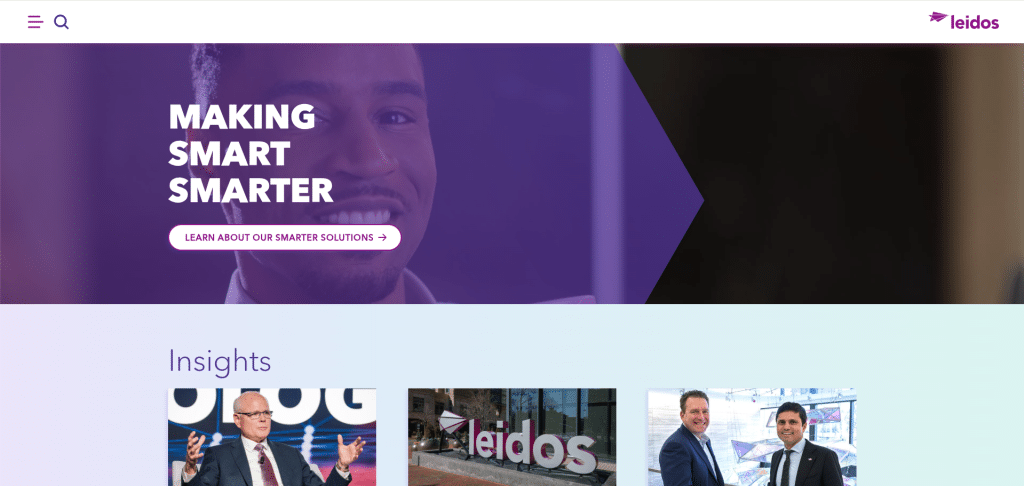
Leidos is a Fortune 500 technology, engineering, and consulting company that delivers science-driven solutions in defense, intelligence, civil government, health, and other critical sectors. Headquartered in Reston, Virginia, Leidos today has approximately 48,000 employees worldwide. The company generated about $16.7 billion in revenue in 2024, reflecting steady growth through strategic expansion. Leidos is one of the largest contractors to the U.S. federal government and has a growing global presence. What began as a small science advisory firm in the late 1960s has evolved into a multifaceted organization known for tackling complex missions through systems integration, digital modernization, and advisory services.
History and Evolution
Founding and SAIC Era (1969–2013): Leidos traces its roots to the founding of Science Applications International Corporation (SAIC) in 1969. SAIC was established by Dr. J. Robert “Bob” Beyster in La Jolla, California, originally as an employee-owned scientific consulting firm. Under Beyster’s leadership, SAIC grew rapidly by leveraging a unique employee-ownership model that attracted top talent and encouraged entrepreneurial initiative. In its early decades, the company focused on U.S. government research and engineering projects – for example, analyzing nuclear weapons effects, supporting the development of the cruise missile in the 1970s, cleaning up the Three Mile Island nuclear accident site, and designing the first FAA-approved airline luggage scanning system after the Lockerbie bombing. By the 1980s and 90s, SAIC had diversified into defense, intelligence, energy, and environmental projects, becoming a major government technical contractor. After Beyster retired in 2003, SAIC went public with an IPO in 2006. The company’s headquarters moved to McLean, Virginia, reflecting its central role in federal contracting. By 2012, SAIC was a $11 billion enterprise with nearly 40,000 employees, but it faced the need to resolve organizational conflicts of interest and streamline its business.
Transformation into Leidos (2013): In 2012, SAIC’s leadership decided to split the company into two independent entities to allow for more focused growth. In September 2013, the enterprise was formally separated. One part retained the SAIC name and concentrated on routine services and government support (approximately $4 billion in annual revenue at the time). The larger, technology-focused business was rebranded as Leidos (a name derived from “kaleidoscope”) and took on SAIC’s more innovative, high-tech programs in national security, healthcare, and engineering (around $7 billion annual revenue then). Leidos became the legal successor of the original SAIC and inherited its stock history. This strategic split enabled Leidos to pursue new contracts (especially in defense and intelligence) that previously were off-limits due to organizational conflicts with SAIC’s advisory work. Initially led by CEO John P. Jumper (a retired U.S. Air Force general who had overseen the restructuring), Leidos began trading on the New York Stock Exchange and established its headquarters in Reston, VA.
Major Growth and Acquisitions: After its formation, Leidos experienced transformational growth through key mergers and acquisitions. In 2016, under the leadership of CEO Roger Krone, Leidos merged with Lockheed Martin’s Information Systems & Global Solutions (IS&GS) business in a $5+ billion deal. This move more than doubled Leidos’ size, adding thousands of employees and significant programs in IT services, defense, and civil agencies. The merger vaulted Leidos into the top tier of federal technology contractors and broadened its portfolio to include air traffic management, cybersecurity products, and large-scale IT outsourcing contracts. Continuing its expansion, Leidos made several strategic acquisitions in subsequent years: in 2020, Leidos acquired Dynetics, a defense R&D and engineering firm known for advanced military hardware and space systems development, bringing in high-end engineering talent and new product lines (e.g. hypersonic weapons prototypes and space sensors). That same year, Leidos also purchased L3Harris Technologies’ Security Detection and Automation unit, which produces airport baggage scanners and related security systems – making Leidos a major provider of aviation security equipment globally. In 2021–2022, Leidos acquired Gibbs & Cox, a renowned naval architecture and marine engineering firm (strengthening its ship design capabilities for the U.S. Navy), as well as 1901 Group (a cloud and IT services integrator) and the Special Mission aviation business of Cobham in Australia (expanding Leidos’ international footprint in defense aviation services). These acquisitions and mergers have been pivotal in shifting Leidos from primarily a services contractor into a more diversified science and technology solutions company.
Recent Developments: By 2024, Leidos had achieved annual revenues of over $16 billion with operations spanning numerous domains. It consistently ranks in the Fortune 500 (around the mid-200s on the list) and is among the largest firms in the defense and government IT sector. The company’s contract backlog (orders awarded but not yet executed) reached over $40 billion, providing multi-year business visibility. Today, Leidos continues to refine its portfolio – focusing on high-growth areas like digital modernization, space and airborne systems, cybersecurity, and healthcare technology. It has also navigated challenges such as changing government budgets and geopolitical factors (for example, in 2025 China placed Leidos on an export control list, reflecting its prominence in U.S. defense technology). Overall, through five decades, the company’s evolution from SAIC to Leidos illustrates a pattern of adaptation and strategic shifts to meet the demands of modern missions and markets.
Leadership and Key Figures
Leidos’ growth and culture have been shaped by a series of notable leaders, both past and present:
- Dr. J. Robert “Bob” Beyster (Founder): Beyster founded the original SAIC and led it for over three decades. He pioneered the employee-ownership model that defined the company’s early culture, believing that sharing equity and decision-making with scientists and engineers would drive innovation. His philosophy proved successful, as SAIC grew from a tiny consultancy into a multibillion-dollar powerhouse under his tenure. Beyster’s influence on the company’s collaborative, entrepreneurial spirit is still felt long after his 2003 retirement.
- Ken Dahlberg and Walt Havenstein: Following Beyster, SAIC’s leadership passed to industry executives who prepared the company for the public market. Ken Dahlberg (CEO 2004–2009) guided SAIC through the transition from private employee-ownership to a publicly traded corporation, including the 2006 IPO. Walt Havenstein (CEO 2009–2012) continued to expand the company’s federal business and helped set the stage for the 2013 split. Their tenures professionalized the management structure and positioned the firm for its next strategic moves.
- John P. Jumper: A retired Air Force Chief of Staff, John Jumper became CEO in 2012 and was the architect of the 2013 separation that created Leidos. Jumper’s background in military leadership and aerospace brought deep customer insight. He steered the complex process of dividing SAIC’s assets and personnel, ensuring that Leidos emerged as a focused enterprise ready to innovate in national security, IT, and engineering. His brief time as CEO (2012–2014) was marked by this pivotal restructuring and the launch of the Leidos brand.
- Roger A. Krone: Roger Krone took over as Chairman and CEO of Leidos in July 2014. Coming from a senior role at Boeing, Krone brought extensive aerospace industry experience and a growth-oriented vision. During his nearly nine-year tenure, Leidos saw significant expansion and diversification. Krone led the major 2016 Lockheed IS&GS merger, doubling the company’s workforce, and oversaw subsequent acquisitions (Dynetics, L3Harris’ unit, etc.) that broadened Leidos’ capabilities. He emphasized innovation in areas like autonomous technologies and positioned Leidos to address emerging needs in cybersecurity and analytics. Under Krone’s leadership, Leidos’ annual revenues grew from roughly $5–6 billion to over $14 billion. Krone was also known for promoting a culture of ethical business practices and was instrumental in raising Leidos’ profile as a leading federal contractor. He retired in 2023.
- Thomas “Tom” Bell: In May 2023, Tom Bell assumed the role of Chief Executive Officer, succeeding Krone. Tom Bell is a seasoned executive with experience at major aerospace firms (previously an executive at Rolls-Royce North America and Boeing). His appointment signals continuity in Leidos’ strategy of combining technology innovation with strong customer relationships in defense and government sectors. As the current CEO, Bell oversees Leidos’ global operations and strategy, focusing on sustaining growth, improving operational efficiency, and investing in new technologies (such as artificial intelligence and digital capabilities) to meet customer needs. Early in his tenure, Bell has highlighted employee culture and has reiterated the company’s commitment to its mission-focused approach.
Other Influential Figures: Throughout its history, Leidos (and formerly SAIC) has attracted many distinguished figures to its board and leadership team. These have included former senior government and military officials who provide strategic guidance – for example, ex-Defense Secretaries, intelligence agency directors, and flag officers have served as advisors or board members. Notably, figures like Melvin Laird, William Perry, John Deutch, and others were involved with SAIC’s governance in the past, underscoring the close ties between the company and the national security establishment. In operational leadership, group presidents such as Gerard Fasano (head of Defense Group) and other division executives have been key in driving business in their sectors. Additionally, Leidos maintains a cadre of Technical Fellows and Chief Scientists (many inherited from Dynetics and other units) who are thought leaders pushing innovation internally. This blend of strategic leadership and technical expertise at the top has been crucial in guiding Leidos’ growth and adapting to changing markets.
Industries and Markets Served
Leidos serves a broad range of industries and government markets worldwide, leveraging its expertise across multiple domains. Key sectors include:
- Defense: The defense sector is a core focus for Leidos. It provides solutions for all branches of the U.S. Department of Defense (Army, Navy, Air Force, Marine Corps, Space Force) and allied military organizations. Leidos delivers command-and-control systems, intelligence, surveillance and reconnaissance (ISR) support, logistics and supply chain services, and engineering of military platforms. For example, Leidos develops mission software for combat systems, integrates sensors and communications networks, and provides training and simulation for warfighters. Many of its contracts support critical defense programs, from helping manage IT infrastructure at the Pentagon to designing components for next-generation aircraft and weaponry. Leidos is also a top provider of operations and maintenance support for defense agencies, ensuring military technologies and facilities remain secure and effective. Its work in defense often overlaps with intelligence and cybersecurity, given modern military needs.
- Intelligence: Leidos has long-standing partnerships with the U.S. intelligence community (IC) and security agencies. It offers highly classified technology services and analytic support to organizations such as the NSA, CIA, DIA, NGA, and other national intelligence bodies. In this realm, Leidos provides data analytics platforms for processing vast intelligence data sets, secure cloud computing and IT environments for intelligence operations, and specialized cybersecurity to protect sensitive networks. The company also employs analysts and subject matter experts who assist in intelligence analysis and operational planning. Though much of Leidos’ intelligence work is confidential, it is known to be a major contractor on programs that enable information-sharing across agencies and advanced surveillance capabilities. In addition to U.S. agencies, Leidos works with allied nations’ intelligence and security services, contributing to shared defense and counterterrorism objectives.
- Civil Government: Beyond the military, Leidos serves numerous civil government agencies at the federal, state, and local levels. This includes work for agencies like the Federal Aviation Administration (FAA), NASA, the Department of Homeland Security (DHS), the Department of Energy (DOE), the Department of Transportation, and many others. In civil agencies, Leidos often functions as a systems integrator and IT modernizer. For instance, it manages air traffic control systems for the FAA (ensuring safe, efficient air travel), provides cybersecurity and data systems for homeland security (helping secure borders and critical infrastructure), and supports scientific research operations for agencies like the National Science Foundation. Leidos is also involved in space and aeronautics projects through NASA contracts – from supporting space launch range operations to developing satellite payload technologies. In the energy domain (which overlaps civil and commercial), Leidos works with the DOE and utilities on power grid modernization and energy efficiency programs. Essentially, any government modernization effort – whether it’s updating the nation’s air traffic software, protecting federal networks from cyber threats, or running logistics for scientific expeditions – could involve Leidos as a key contractor.
- Healthcare: The health sector is another major market for Leidos, particularly in partnership with government health agencies and systems. Leidos has a dedicated Health division that works on projects for the Department of Defense Military Health System, the Department of Veterans Affairs (VA), the Department of Health and Human Services (HHS) (including NIH, CDC, FDA, etc.), and other healthcare organizations. One high-profile example is Leidos’s role as the prime contractor for the DoD’s electronic health record modernization (the MHS GENESIS program), where it leads a team implementing a new Cerner-based EHR system for military hospitals worldwide. Leidos also manages large research support operations, such as running the Frederick National Laboratory for Cancer Research on behalf of the National Cancer Institute – providing scientific staff and facilities management to advance biomedical research. In addition, the company offers health analytics, telehealth technology integration, and cybersecurity for protecting medical data. Leidos Health group (augmented by acquisitions like QTC and Systems Made Simple) also provides services like medical examinations processing for veterans and health IT solutions for public health initiatives. While much of Leidos’ healthcare work is with government clients, the expertise often translates to improved healthcare IT and data security practices that can benefit the broader industry.
- Energy and Utilities: Leidos has decades of experience in the energy sector, both from legacy SAIC’s environmental consulting business and subsequent growth. The company provides engineering and advisory services to utilities, power companies, and government energy departments. Energy systems consulting offered by Leidos includes electric grid design and modernization, renewable energy integration, power plant engineering, and energy efficiency program management. For instance, Leidos engineers design upgrades for substations and transmission lines, help utilities deploy smart grid technologies, and advise on integrating wind, solar, and energy storage into existing grids. They also run demand-side management programs (like energy efficiency rebates and audits) for utility customers. In the realm of oil, gas, and industrial markets, Leidos offers consulting on infrastructure security and environmental compliance. Additionally, Leidos has supported Department of Energy initiatives in areas such as nuclear security and clean energy research. By combining domain knowledge in energy with IT and data analytics capabilities, Leidos helps modernize aging utility infrastructure and improve the reliability and sustainability of energy systems.
- Transportation & Infrastructure: In transportation, Leidos is best known for its contributions to aviation, but it also works on surface transportation and infrastructure projects. The company develops and maintains air traffic management solutions that are used not only by the U.S. FAA but also by international air navigation service providers – by some accounts, Leidos-developed systems help control roughly 60% of the world’s air traffic. Key efforts include the En Route Automation Modernization (ERAM) system that manages high-altitude air traffic across the U.S. national airspace, and modernization of airport traffic flow and safety systems. Leidos also supplies transportation security systems, such as the baggage scanners and explosive detection equipment used in airports and ports worldwide (a business it gained through the L3Harris acquisition). Beyond aviation, Leidos has been involved in intelligent transportation systems (ITS) projects, supporting tolling systems, traffic management centers, and analytics for highway agencies. It has worked on public transit and rail solutions in some cases as well, providing technology for scheduling, communications, or security. In infrastructure, Leidos may assist agencies with big data solutions for smart cities or provide engineering services for large construction programs (for example, acting as a program manager for complex federal construction or modernization projects).
- Information Technology and Consulting: As an overarching capability across all sectors, Leidos offers extensive IT consulting and integration services. This includes enterprise IT outsourcing (running data centers, networks, and user support for agencies), cloud migration and cloud architecture consulting, software development for custom applications, and data center consolidation. Leidos frequently advises government CIOs and CTOs on how to modernize legacy systems – whether that means moving applications to the cloud, implementing new enterprise resource planning (ERP) systems, or adopting modern collaboration tools. The company’s consulting teams help clients plan their technology roadmaps, ensure compliance with regulations, and manage complex IT project deployments. In addition, Leidos provides business consulting in specific niches, such as financial management systems for government (leveraging expertise in federal financial regulations) and program management support offices that help agencies run large programs effectively. While most of Leidos’ consulting is technology-centric, it often goes beyond pure tech by incorporating strategy, change management, and training for customer organizations undertaking modernization. The company’s deep experience with government standards and mission requirements makes it a trusted advisor for navigating large-scale IT transformations in the public sector.
(In summary, Leidos operates at the intersection of technology and mission across these industries – from the battlefield to the hospital, from the power grid to the airport, Leidos personnel are working behind the scenes to design, secure, and optimize complex systems that society depends on.)
Consulting and Advisory Service Lines
Leidos structures its offerings into various service lines and capabilities that cut across the industries it serves. Key consulting and technical service areas include:
- Digital Modernization: This is a flagship service area for Leidos, encompassing the overhaul of legacy systems and the deployment of next-generation digital technologies. Under digital modernization, Leidos helps clients migrate applications to cloud environments, modernize data centers, implement enterprise software solutions, and leverage modern architectures (like microservices and APIs). The company often starts with assessing an organization’s current IT landscape, then designing a transformation roadmap to improve performance, user experience, and cost efficiency. Cloud adoption is a major element – Leidos is proficient in establishing hybrid and multi-cloud setups using providers such as Amazon Web Services, Microsoft Azure, and others, tailored for government security requirements. They also modernize enterprise applications, for example updating an old logistics management system for an agency to a new cloud-based platform, or introducing automation and low-code solutions into business processes. Importantly, Leidos embeds cybersecurity and data protection as standard components of any modernization effort (recognizing that modernization without security can introduce new risks). The goal of this service line is to accelerate customers’ digital transformation so that agencies and businesses can operate with agility and meet modern demands. Leidos’ consulting teams in this area employ best practices like Agile development and DevSecOps (development, security, and operations) to quickly deliver incremental improvements while maintaining high reliability for mission-critical systems.
- Cybersecurity: Leidos provides end-to-end cybersecurity solutions and advisory services to protect critical systems and data. This ranges from high-level cyber strategy consulting (helping an organization design a zero-trust security architecture or comply with cybersecurity frameworks) to hands-on deployment of cyber defense tools. Leidos security experts conduct risk assessments, penetration testing, and cybersecurity audits for clients to identify vulnerabilities. They then implement robust security measures such as advanced network monitoring, intrusion detection systems, identity and access management solutions, and incident response plans. A signature approach is building resilient systems for customers – for example, Leidos has worked on the Department of Homeland Security’s networks, applying continuous diagnostics and mitigation (CDM) techniques to detect threats in real-time. They also develop custom cyber tools and analytics (sometimes using AI to spot anomalies). In operational contexts, Leidos often runs Security Operations Centers (SOCs) for agencies, providing 24/7 monitoring and threat hunting. The company’s cybersecurity advisory extends to specialized areas as well, like industrial control system security (for utilities or transportation systems) and cyber training exercises to improve client preparedness. With cyber threats growing, Leidos emphasizes a proactive stance – it not only responds to breaches but also helps clients build a culture of cybersecurity and resilience. Notably, Leidos has contributed to government-wide cyber initiatives and often partners with agencies on classified cyber defense projects. Its consultants stay up-to-date with evolving threats and compliance requirements (such as NIST standards), ensuring the advice and solutions provided are at the cutting edge of the field.
- Data Analytics and AI: Leveraging the explosion of data in government and industry, Leidos offers extensive data analytics, artificial intelligence (AI), and machine learning services. The company assists clients in aggregating and managing large datasets, whether it’s intelligence surveillance data, healthcare records, or sensor readings from engineering systems. Leidos data scientists then help extract actionable insights through techniques like predictive analytics, pattern recognition, and AI-driven modeling. For example, in defense and intelligence, Leidos develops analytics platforms that can sift through vast amounts of intelligence information to flag security threats or support military targeting decisions. In healthcare, Leidos might create data analytics solutions to improve patient care outcomes or detect fraud in medical claims. A notable focus is on “mission analytics” – applying AI to directly enhance mission outcomes (e.g., using machine learning algorithms to improve object detection in aerial imagery for an intelligence agency). Leidos has also been exploring Trusted AI frameworks, ensuring that AI solutions are explainable, ethical, and secure for use in sensitive applications. On the consulting side, Leidos advises organizations on how to structure their data architecture, adopt big data technologies (like Hadoop, Spark, or cloud-based analytics), and govern their data effectively. Additionally, Leidos often performs proof-of-concept projects where they demonstrate how emerging tech (like deep learning or natural language processing) can solve a client’s specific problem. By coupling domain experts (such as former analysts or doctors) with technical AI specialists, Leidos is able to tailor data solutions closely to each mission area. The outcome is that clients can make data-driven decisions faster, with tools that might automate analysis or provide decision support via dashboards and visualizations.
- Mission Operations and Support: A significant portion of Leidos’ work is in mission support services, which involves directly supporting the operational needs of customers in defense, intelligence, homeland security, and similar fields. Unlike pure IT projects, this service line is about providing the people, processes, and onsite assistance to keep critical missions running. For example, Leidos deploys field service teams and logistics specialists to help the U.S. military maintain equipment and manage supply chains in global operations. Under the U.S. Antarctic Program, Leidos manages daily operations at research stations in Antarctica – handling everything from logistical support (shipping supplies, operating research vessels and aircraft) to facility maintenance and IT support in harsh conditions. This is mission operations support in a nutshell: ensuring that the customer’s core mission can proceed smoothly by taking care of the backend and technical chores. Another area is training and simulation – Leidos provides training program support for personnel (like cyber operators or pilots), running exercises and war-games to prepare them for real-world scenarios. In intelligence, mission support might mean Leidos analysts working side by side with agency staff to process intelligence reports or run surveillance systems. In civilian agencies, it could involve staffing an operations center (for disaster response or border security) with skilled contractors. Leidos also runs program management offices (PMOs) for large programs, which is a form of mission support ensuring all the moving parts of a project (schedules, budgets, contractors) are coordinated. The company’s delivery approach here is often embedded with the customer: Leidos employees frequently work on-site at government facilities, becoming trusted extensions of the customer’s workforce. The emphasis is on reliability and continuity – making sure that vital missions (military deployments, security operations, scientific missions, etc.) have the technical and logistical support needed 24/7.
- Systems Engineering & Integration: Systems integration and engineering services lie at the heart of Leidos’ technical offerings, especially for complex, large-scale projects. Leidos has a strong pedigree in systems engineering – the discipline of designing and integrating all components of a complex system to work together effectively. In practice, this means if a government client needs a new capability (say an integrated border surveillance system or a next-gen aircraft sensor suite), Leidos can take on the role of lead integrator: defining the system requirements, designing the architecture, selecting and integrating hardware/software components, testing the system, and delivering a fully functional solution. The company’s engineering teams span multiple disciplines: software engineering, electrical and mechanical engineering, aerospace engineering, and more. For instance, through Dynetics (its subsidiary), Leidos can engineer physical hardware prototypes like small satellites, missile components, or autonomous vehicles. Meanwhile, its legacy in IT allows integration of complex software systems and networks. A hallmark project is the FAA’s en-route air traffic control modernization – Leidos served as the system integrator, knitting together new software with radars, user displays, and communications links, all without disrupting ongoing air traffic operations. Similarly, Leidos integrates C4ISR systems (command, control, communications, computers, intelligence, surveillance, reconnaissance) for the military – ensuring sensors, communications gear, and command software all interoperate in the field. The consulting aspect here often involves architecture advisory: Leidos experts help clients plan how to migrate from older systems to a new integrated system, managing technical risk. They also bring rigorous systems engineering methodologies (like requirements traceability, interface control, iterative prototyping) to reduce problems in deployment. Ultimately, Leidos’ integration services are about delivering turnkey complex systems – whether it’s a cybersecurity operations center or a fleet of unmanned drones – and guaranteeing those systems meet performance goals in real operational environments.
- Energy & Environmental Consulting: Under its energy and infrastructure business, Leidos provides specialized consulting in energy systems and environmental management. For energy utilities, Leidos offers advisory services on grid modernization strategies, helping plan investments in smart grid technology, distributed energy resources, and resilience improvements. It conducts engineering studies and modeling – for example, analyzing a utility’s transmission network to identify upgrades or assessing the feasibility of adding large-scale battery storage. Leidos consultants also assist with energy market analysis and planning: they might advise power companies on fuel sourcing, rate impacts, or how to integrate renewable energy while maintaining grid stability. On the demand side, Leidos manages energy efficiency and demand response programs on behalf of utilities and government agencies, effectively consulting on program design and then executing those programs (engaging consumers, tracking energy savings). In the realm of environmental consulting, Leidos (drawing on SAIC’s legacy) helps clients with environmental impact assessments, remediation projects, and sustainability initiatives. They ensure that projects comply with environmental regulations and use analytics to minimize environmental footprint. For example, Leidos has worked on cleaning up contaminated sites (like military bases) and provided consulting on disposing of hazardous materials safely. Another niche is energy security – advising facilities like data centers or military bases on backup power, microgrids, and protection against power outages or cyber-attacks on energy systems. Leidos’ energy consultants often collaborate with its engineers to deliver end-to-end solutions, from planning to implementation, in making energy infrastructure smarter, cleaner, and more secure.
(These service lines often overlap and are tailored to each client’s mission. For instance, a single contract might involve digital modernization (cloud and software updates), with embedded cybersecurity, plus data analytics tools – all delivered through a rigorous systems engineering process. Leidos’ ability to offer this full spectrum under one roof is a key differentiator in the consulting and technology marketplace.)
Methodologies and Delivery Approach
Leidos employs a range of modern methodologies and best practices to deliver its consulting and integration projects effectively. Some hallmarks of its approach include:
- Agile and Iterative Development: Many Leidos software and IT projects use Agile methodologies (such as Scrum or Kanban) to incrementally develop and deliver capabilities. Rather than long, monolithic project cycles, Leidos teams operate in short sprints, regularly demonstrating working features to clients and incorporating feedback. This approach is supported by DevSecOps pipelines – integrating development, security, and operations – to rapidly deploy updates while ensuring security is built in at every step. For example, when modernizing an application for a government agency, Leidos might stand up an “Agile software factory” where cross-functional teams continuously code, test, and release new features. This reduces risk and accelerates time-to-mission, a crucial factor when clients need quick results.
- Mission-Focused and User-Centric Design: Leidos emphasizes understanding the end-user’s mission and workflows as a guiding principle in solution delivery. Before implementing technology, Leidos consultants often conduct thorough requirements workshops, stakeholder interviews, and field observations. They tailor solutions to fit how soldiers, analysts, air traffic controllers, doctors, or other end-users actually operate. This human-centered design philosophy ensures that new systems are intuitive, and mission needs (like reliability under stress, or ease of use in the field) are prioritized. It’s common for Leidos to embed subject matter experts with operational experience into project teams to represent the customer’s perspective throughout development. By keeping the focus on mission outcomes – e.g., faster intelligence analysis or improved patient care – Leidos aligns technical deliverables with real-world impact.
- Quality and Process Discipline: Given its work on critical national security and safety systems, Leidos maintains rigorous quality management processes. The company often adheres to industry standards like CMMI (Capability Maturity Model Integration) Level 3/5 for its software development units and ISO 9001 for overall quality management. This means projects follow defined procedures for requirements management, risk management, configuration control, and testing. Peer reviews, automated testing, and security scans are integrated into the workflow to catch issues early. Leidos also leverages Six Sigma and Lean principles where applicable to eliminate inefficiencies and defects in processes. For delivery of large programs, Leidos applies robust program management frameworks (often aligned with PMI’s PMBOK standards). Experienced program managers oversee schedules, budgets, subcontractors, and deliverables, using tools like earned value management to track progress. Customers have visibility through regular status reports and performance metrics. This disciplined approach is especially critical in multi-year government programs where accountability and reliability are paramount.
- Innovation and Prototyping: While following structured processes, Leidos also encourages innovation through prototyping and R&D. The company often initiates pilot projects or develops proof-of-concept demos at early stages to validate new technologies in a low-risk environment. For instance, if introducing a machine learning solution to an intelligence workflow, Leidos might first build a prototype model to ensure the approach is viable before scaling it up. They utilize their internal research arm (the Leidos Innovation Center) to inject cutting-edge techniques and emerging tech into projects. This culture of innovation means that beyond standard deliverables, Leidos might propose creative solutions a client hadn’t considered – such as using augmented reality for maintenance training or applying blockchain for secure data sharing – backing those ideas with small-scale demonstrations. By blending R&D with delivery, Leidos keeps its solutions at the forefront of technology.
- Collaborative Partnerships: Leidos’ delivery approach often involves working closely with a network of partners and subcontractors to provide the best overall solution. They manage a Leidos Alliance Partner Network which includes major tech vendors (for hardware, software, cloud services) and specialized small businesses. On projects, Leidos integrates products from these partners – for example, deploying Cisco and Juniper network gear, using Dell or HPE servers, integrating Red Hat or Microsoft software, etc., in a harmonious solution. The company’s methodology emphasizes open communication and alignment with these partners, so that everyone (Leidos engineers, partner product teams, customer stakeholders) are on the same page regarding requirements and integration. This extends to co-development in some cases: Leidos might work with a Silicon Valley startup (an “Emerging Technology Partner”) to tailor their innovative tool for a government use-case, effectively bringing new tech to the client under Leidos’ guidance. Internally, Leidos fosters communication using modern collaboration tools and cross-team scrums, especially on geographically dispersed projects. The end result is a coordinated delivery where all pieces – whether built in-house or by a partner – fit together seamlessly to meet the client’s objectives.
In summary, Leidos marries the agility and innovation of a tech company with the process rigor and mission focus required in government contracting. This balanced delivery approach helps ensure projects are on time, on budget, secure, and ultimately effective for the end-users.
Global Operations and Regional Presence
Although the United States remains Leidos’ primary market (the bulk of its revenue comes from U.S. federal contracts), the company has a growing international footprint. Leidos operates in multiple countries and regions, adapting its offerings to local needs and forging partnerships abroad:
- North America: In the U.S., Leidos has offices and project sites across the country. Major concentrations of employees are in the Washington D.C. area and other hubs of government activity (such as Huntsville, Alabama; San Diego, California; and Orlando, Florida, among others). These locations often align with key customers – for example, Huntsville is near the U.S. Army’s Redstone Arsenal (and home to Dynetics), while San Diego has naval and homeland security clients. Leidos’ Reston, Virginia headquarters oversees its corporate functions and a significant portion of its workforce. In Canada, Leidos has a subsidiary (Leidos Canada) that engages with Canadian government clients on defense IT, cybersecurity, and engineering projects. Leidos Canada has roots going back to SAIC’s presence and has contributed to Canadian Department of National Defence programs and civilian agency support (like air navigation systems for NAV CANADA). Overall in North America, Leidos’ role is that of a leading domestic contractor with deep local knowledge of government processes, which also allows it to export U.S.-proven solutions to allies.
- Europe (United Kingdom & EU): The UK is a key regional base for Leidos in Europe. Leidos UK (headquartered in London, with offices in locations like Glasgow and Farnborough) has over 1,200 employees. The UK division was significantly bolstered by the Lockheed Martin IS&GS acquisition, which transferred a number of UK government contracts to Leidos. In the UK, Leidos is a strategic supplier to the Ministry of Defence and other departments. A marquee program is the Logistics Commodities and Services Transformation (LCST) contract for the UK MoD – under this long-term program, Leidos manages procurement and supply chain for military supplies, ensuring British armed forces get food, uniforms, medical supplies, and equipment delivered efficiently. Leidos UK also supports the Home Office on border security and immigration information systems, providing technology to modernize border management especially post-Brexit. In Scotland, Leidos works with the Scottish Government and local agencies on IT initiatives (for example, digitizing tax collection systems). Beyond the UK, Leidos has operations or projects in other European countries: it has supported NATO programs and EU agencies, sometimes providing command-and-control systems or cybersecurity expertise. There are Leidos offices/teams in Germany, and potentially in countries like Belgium or the Netherlands, often to be close to NATO headquarters and research centers. The company also partners with European defense firms when pursuing large opportunities (for instance, teaming arrangements in space or defense competitions). Leidos Europe’s focus is on defense logistics, IT services, air traffic control solutions (some European air navigation providers use Leidos systems), and scientific research support. Being in Europe also allows Leidos to participate in EU R&D initiatives and standardization efforts, bringing transatlantic know-how to European clients.
- Asia-Pacific: Leidos’ presence in the Asia-Pacific region has been expanding, with Australia as a cornerstone. Leidos Australia (based in Melbourne and Canberra) is a fully owned subsidiary that grew out of SAIC/Leidos’ existing Australian contracts and was augmented by the 2022 acquisition of Cobham’s Special Mission business. In Australia, Leidos has several hundred employees working on defense, border security, and IT projects. The Special Mission unit operates aircraft for the Australian government – for example, conducting maritime surveillance patrols and search-and-rescue missions under contract to the Australian Border Force and other agencies. Leidos Australia also delivers IT services to the Australian Department of Defence, including logistics software and intelligence systems support. It provides cybersecurity and systems integration for Australian military modernization programs, aligning closely with the needs of a key U.S. ally. In other Asia-Pacific locales, Leidos might not have large offices but still supports U.S. or partner nation operations. For instance, Leidos personnel support U.S. Pacific Command activities and could be stationed in locations like Japan, South Korea, or Guam to assist with military IT and logistics (wherever U.S. forces require contractor support, Leidos may be present). The company also pursues contracts with governments in the region for solutions such as air traffic control upgrades or security detection equipment – its airport scanners, for example, can be found in international airports across Asia. Additionally, Leidos engages with regional partners in places like Singapore or New Zealand for technology collaborations, though these are smaller scales compared to its U.S., UK, and Australian operations.
- Middle East and Other Regions: Leidos has historically supported U.S. missions in the Middle East (e.g., providing field support in conflict zones like Iraq and Afghanistan during military operations). While it may not have permanent large offices in these countries, Leidos teams have deployed there for contract work, such as infrastructure rebuilding efforts or intelligence analysis in-theater. In the Gulf states, there are opportunities where Leidos has provided training or systems (some Gulf nations have purchased U.S. defense systems that Leidos helps integrate or maintain). For example, Leidos once had involvement in Saudi Arabia’s air traffic management system or cybersecurity training for allied militaries. In Africa and Latin America, Leidos’ direct presence is limited, but it occasionally works on development contracts (e.g., supporting USAID projects with IT solutions or providing surveillance tech for anti-poaching efforts). As a global company, Leidos can send specialists anywhere required by a contract, but the sustained regional hubs are mainly North America, Europe, and Asia-Pacific as described above.
Overall, Leidos executes a strategy of being a global solutions provider: it takes the expertise honed in the U.S. market and offers it to international allies and commercial customers. This globalization is often achieved through acquisitions (like in Australia) and hiring local talent to navigate each country’s market. The company’s global operations benefit from local knowledge combined with corporate resources – for instance, a project in the UK can draw on specialized tools or experts from the U.S. as needed. Leidos also aligns its global activities with the foreign policy and security frameworks of the U.S. and allies, focusing on nations where technology sharing is feasible and missions are complementary. While international business is a smaller portion of the pie compared to domestic U.S. work, it represents a growth avenue for Leidos and a chance to diversify its revenue streams.
Notable Projects and Programs
Leidos has been involved in numerous high-profile projects over the years. The following are some distinctive programs for which the company is well known, illustrating the breadth of its contributions:
- FAA NextGen Air Traffic Control Modernization: Leidos is the prime contractor for modernizing the U.S. Federal Aviation Administration’s en-route air traffic control system. It developed and deployed the En Route Automation Modernization (ERAM) system, which replaced legacy air traffic management software at 20 FAA Air Route Traffic Control Centers nationwide. This massive, multi-year effort (completed mid-2010s) has greatly increased the capacity and reliability of U.S. airspace management. ERAM serves as the backbone for the FAA’s NextGen initiative, enabling capabilities like more direct flight routings and real-time data sharing among controllers. Leidos continues to enhance air traffic systems through follow-on contracts – including terminal automation at airports and new decision-support tools for controllers. Thanks in part to these projects, U.S. air travel is safer and more efficient, and Leidos-built systems are a gold standard, used by other countries’ air traffic agencies as well.
- Military Health System Genesis (DoD EHR Modernization): Leidos is leading the MHS GENESIS program, one of the largest healthcare IT projects in the world, to modernize the Department of Defense’s electronic health records. Valued at around $4.3 billion, this program replaces multiple legacy medical systems with a single, integrated EHR platform for all military health facilities globally (in partnership with software provider Cerner (now Oracle) and Accenture). As the prime integrator, Leidos is managing the deployment of the new system across hundreds of hospitals and clinics serving millions of active duty personnel, veterans, and their families. This involves significant consulting work – standardizing clinical workflows, migrating vast amounts of patient data, and training medical staff – all done while ensuring high cybersecurity for sensitive health information. The project is transformative in that it connects care from the battlefield to home clinics, allowing seamless access to patient records. Leidos’ performance on this DoD health modernization has been closely watched and is expected to also influence the VA’s parallel EHR modernization (where Leidos is a subcontractor). It’s a marquee example of Leidos’ ability to handle complex, multi-stakeholder IT implementations that directly impact quality of life.
- UK Ministry of Defence Logistics Programme (LCST): In the United Kingdom, Leidos is known for running the Logistics Commodities and Services Transformation program for the British armed forces. Since 2015, under a 13-year contract, Leidos has taken responsibility for procuring and managing supplies such as food rations, uniforms, medical kits, and other commodities for the UK military. Leidos built a modern logistic system and warehouse network that replaced outdated MoD supply depots. Through better inventory management software, streamlined procurement processes, and involving its commercial supply chain partners, Leidos has delivered cost savings and improved delivery times to frontline units. This program also includes supporting the MoD’s e-commerce and operations for equipment parts. It is a high-profile public-private partnership in the UK defense sector. The success of LCST has reinforced Leidos’ reputation in the UK as a capable integrator and steward of critical military support services, leading to additional UK contracts in areas like IT and border security.
- Antarctic Support Contract (U.S. Antarctic Program): Leidos is the prime contractor managing the United States Antarctic Program (USAP) on behalf of the National Science Foundation. Through the Antarctic Support Contract, Leidos handles the logistical and operational support for U.S. research stations in Antarctica (McMurdo Station, South Pole Station, and Palmer Station) and associated field camps. This unique project involves coordinating the annual sealift and airlift of supplies and personnel, running icebreaker ships, operating research vessels, constructing and maintaining facilities in extreme cold, and providing IT and communications for scientists. Leidos employs many specialists (engineers, mountaineers, pilots, etc.) to ensure that researchers can live and work safely in Antarctica’s harsh environment. It’s a distinctive program because of the challenges of working in the most remote part of the planet. Leidos took over this contract in 2016 (inheriting it via the Lockheed IS&GS merger) and has since been recognized for improving efficiencies, such as implementing better supply tracking and modernizing equipment at the bases. The Antarctic Support Contract showcases Leidos’ ability to manage complex, multidisciplinary operations – essentially running a small “town” and its logistics in Antarctica – which few companies in the world are equipped to do.
- Dynetics Advanced Defense Projects: Through its subsidiary Dynetics, Leidos is at the forefront of some cutting-edge defense technology programs:
- Hypersonic Weapons and Space Systems: Dynetics is a key player in the development of hypersonic weapon components. Notably, it has been working on the Common-Hypersonic Glide Body (C-HGB), which is the warhead component for new U.S. Army and Navy hypersonic missiles. Dynetics is responsible for prototyping and producing test units of this glide vehicle, which can travel at speeds above Mach 5, providing the U.S. with a strategic hypersonic strike capability. In parallel, Dynetics has contributed to NASA’s space exploration goals – it was one of the contenders for NASA’s Human Landing System for the Artemis moon missions. While its direct lander proposal wasn’t selected for the first lunar landing, Dynetics is still involved in NASA programs (such as developing components for lunar lander technology and other space payloads). Dynetics also built the LADEE spacecraft structure for a past lunar mission and works on small satellite technologies. These projects are high-profile as they represent the future of defense and space; having them under Leidos’ umbrella elevates the company’s profile as not just a services provider but also a manufacturer of advanced hardware.
- Directed Energy and Advanced Sensors: Dynetics (and thus Leidos) have been advancing directed energy weapons (like high-energy laser systems for defense against drones or missiles). They have contracts with the DoD to prototype laser weapon systems for U.S. Army vehicles and have developed a high-power microwave system to disable enemy electronics. Additionally, Dynetics builds advanced sensor suites – an example is the Army’s Ground Aware radar or the sensor payloads for unmanned systems. These efforts contribute to Leidos’ portfolio of innovative defense solutions and often make headlines in defense media for their technical achievements.
- Security Detection Systems for Transportation: After acquiring the security products division from L3Harris, Leidos became a leading supplier of airport and border security screening equipment. This includes the large-scale CT scanners used to screen checked baggage at airports, explosive trace detectors, and body scanners used at checkpoints. Leidos has contracts with the U.S. Transportation Security Administration (TSA) to deploy next-generation scanners that provide 3D images of luggage, improving threat detection capability. Internationally, Leidos sells these systems to airports and customs agencies around the world. For example, many European and Asia-Pacific airports have installed Leidos (formerly L3) screening machines as they upgrade security per new standards. Leidos is also innovating in this space, developing automated screening lanes and software algorithms to better identify prohibited items. A notable project is the TSA’s Integrated Tunnel Scanner pilot, where Leidos is trialing a high-throughput baggage scanner with AI-powered detection. This line of business is high-profile in that it directly touches the public – millions of travelers experience Leidos’ equipment without realizing it. Success here enhances global aviation security and cements Leidos as a critical player in homeland security technology.
- Intelligence Community IT Enterprise (IC ITE) Support: Leidos has been deeply involved in initiatives to modernize the intelligence community’s IT infrastructure. Under programs like IC ITE (a joint effort of U.S. intelligence agencies to create a common cloud and shared services), Leidos has led or supported major contracts. For example, Leidos was a prime contractor for the NGA’s (National Geospatial-Intelligence Agency) IT modernization, building cloud-based analytics systems to handle geospatial data and enabling secure collaboration across agencies. Leidos also had key roles in NSA’s computer science programs, CIA’s cybersecurity improvements, and multi-agency service desks for intelligence users. While much of this work is classified, one publicly known piece is the Joint Worldwide Intelligence Communications System (JWICS) upgrades – Leidos has been involved in enhancing this Top-Secret network’s capabilities. Another is the JANUS contract for the DIA, which Leidos won to provide all-source intelligence IT systems and services. These projects are high-profile within government because they underpin the intelligence community’s shift to more integrated and efficient technology use. Leidos’ performance in this arena affects national security daily and demonstrates the trust placed in the company to handle sensitive operations.
Each of the above programs reflects a facet of Leidos’ expertise – from running enormous IT systems and logistics operations, to delivering tangible high-tech products and platforms. The diversity of projects (air traffic control, electronic health records, Antarctic logistics, weapon prototypes, etc.) underscores Leidos’s unique position as a comprehensive solutions provider. These high-impact projects have not only been critical for Leidos’ business growth but also have often earned industry recognition and awards for their complexity and success. Leidos frequently highlights these programs in its marketing and annual reports as emblematic of its mission: “to make the world safer, healthier, and more efficient,” whether in the skies, on the battlefield, or in everyday infrastructure.
Career Progression and Roles in Consulting/Advisory
Leidos offers a wide array of career paths for professionals in consulting, technical, and advisory roles. As a large organization with both project-based teams and corporate functions, the company’s career progression tends to follow a hierarchy of increasing responsibility, though it also allows for technical experts to advance as individual contributors. Below is a generalized overview of job roles and progression within Leidos, particularly focusing on consulting and technology tracks:
- Entry-Level Positions: New graduates and those early in their careers typically join Leidos in roles such as Associate Analyst, Engineer I, Software Developer I, or Consultant I. These are junior roles where employees are part of project teams, learning the ropes and developing skills under the guidance of senior staff. For example, an entry-level Systems Engineer might assist in requirements gathering and testing, or a junior Energy Analyst might help collect and analyze utility data for a consulting project. At this stage, emphasis is on building domain knowledge (be it cybersecurity, data analysis, engineering, etc.) and understanding Leidos’ methodologies. Many new hires in consulting roles rotate through different tasks – they might support documentation, do research, or write code – to get a broad foundation.
- Mid-Level Roles: With a few years of experience, employees move into fully productive roles such as Senior Analyst, Engineer II/III, Software Engineer, or simply “Consultant”. These mid-tier positions involve greater independence and technical contribution. A Senior Consultant at Leidos would typically handle client interactions more directly, maybe leading a sub-task of a project or serving as a subject matter expert in a niche area. Titles vary by department – for instance, someone in project management might become a Project Lead or Task Order Manager, while in pure tech, they might be Senior Software Engineer or Network Security Engineer. Mid-level professionals often mentor junior staff and take ownership of deliverables. They are expected to execute complex assignments (like designing a subsystem, performing in-depth data analysis, or developing a project plan) with minimal supervision. This is also a phase where employees might specialize – e.g., becoming a cybersecurity specialist focusing on penetration testing, or an energy consultant expert in power grid modeling, depending on their interest and company needs.
- Senior and Principal Positions: As employees demonstrate leadership and deep expertise, they advance to senior ranks. Titles here include Lead Consultant, Principal Engineer, Staff Scientist, Technical Fellow, or Program Manager, among others. In consulting/advisory contexts, Principal Consultants or Principal Investigators lead entire projects or major workstreams. They often function as the face of Leidos to the client’s senior management for that engagement, responsible for solution strategy and successful delivery. A Program Manager or Project Manager (PM) typically oversees large contracts, coordinating multiple teams and subcontractors – at Leidos, PMs are crucial for handling multi-million-dollar government programs, ensuring they meet technical, schedule, and budget goals. On the technical side, Chief Engineers or Architects emerge at this level: these are individuals who guide the overall design of complex systems and are the top technical authorities on projects. Leidos also has a Technical Fellow/SME (Subject Matter Expert) track, wherein a person might not manage people but is recognized as a top expert (for example, a Distinguished Cybersecurity Architect or an AI/ML Fellow) who advises on multiple projects and contributes to innovation. Senior roles often involve business development responsibilities as well – senior consultants and managers help write proposals, pitch ideas to clients, and shape new contracts drawing on their expertise.
- Executive and Leadership Roles: At the highest levels within the consulting and technical domain are roles like Division Manager, Consulting Director, Portfolio Director, Vice President, and ultimately C-level executives. For instance, a Director of Consulting Services might oversee all advisory engagements in a certain domain (say, energy or digital modernization) across a region, ensuring quality and consistency, and managing a team of principal consultants. Similarly, a Technical Director or Chief Scientist might lead the strategic direction of a technology area company-wide – e.g., setting the R&D agenda for artificial intelligence offerings. Vice Presidents and Group Presidents at Leidos handle large business units or geographic regions, combining operational oversight with strategic planning and high-level client relationships. They allocate resources among projects, decide on new markets to enter, and ensure revenue and profit targets are met. Many executives have risen from technical or program management ranks, bringing hands-on understanding of the work. At the top, the Chief Executive Officer (CEO), Chief Technology Officer (CTO), Chief Operations Officer (COO), etc., form the leadership team steering the entire enterprise. These positions are of course limited in number – only a few individuals – but they set policies that affect the careers of all below.
- Career Development and Transitions: Leidos encourages a flexible career path. An employee might start in a technical role and then transition into a project management or business development track, or vice versa. For example, a software engineer could become a Scrum Master or Agile Team Lead (a quasi-managerial role) on a project, then grow into a Portfolio Manager overseeing multiple software projects. Alternatively, someone in a more advisory role (like a business process consultant) might deepen their technical skills and become a solution architect. The company provides training and mentoring for such progression. Additionally, due to the project-based nature of the work, it’s common to move between contracts, gaining varied experience. Leidos also values employees obtaining advanced degrees or certifications (PMP for project managers, CISSP for security professionals, etc.), and these can accelerate career advancement. Veterans and former government personnel often join Leidos at mid-to-senior levels, leveraging their domain expertise; they might enter as Senior Analysts or Consultants and have a path to quickly take on leadership of teams that align with their background.
- Workforce Structure: It’s worth noting that Leidos, like many federal contractors, uses a labor category system for contracts (especially on government projects). This means job titles on a contract (e.g., “Consultant Level III” or “Systems Analyst Journeyman”) correspond to certain experience and education bands. An individual’s corporate title might be different from their contract labor category, but generally progression means moving to roles associated with higher labor categories. For example, an Engineering Tech II category might map to a mid-level engineer job, whereas Engineering Tech IV is a more senior engineer/leader on the contract. Understanding these categories is part of career navigation in the consulting environment at Leidos.
In essence, career progression at Leidos allows talented individuals to rise from supporting roles to leading roles over time. Consultants can aim to become engagement leads or practice directors; engineers can aspire to become chief engineers or program managers. The company’s broad portfolio means there are opportunities to grow in many directions – vertically into management, or horizontally into new technical specialties. Performance and merit drive advancement, and successful employees are those who continually develop their skills, take initiative in solving client problems, and demonstrate leadership potential even before they have formal authority.
Compensation in Consulting and Technical Roles
Leidos offers competitive compensation packages to attract and retain skilled professionals in the consulting and technology fields. While specific salaries vary based on factors like job role, experience level, geographic location, and security clearance, some general trends can be identified from publicly available data and industry surveys:
- Entry-Level Pay: For junior positions (e.g., entry-level analysts, engineers, or consultants coming straight from university), base salaries tend to start in the range of roughly $60,000 to $80,000 USD per year. Those with advanced degrees (Master’s or PhD) or highly sought-after skills might start on the higher end of that range. In addition to base salary, new hires usually receive standard benefits (health insurance, retirement plan contributions, etc.), and occasionally a sign-on bonus for hard-to-fill roles.
- Mid-Level Professionals: Employees with several years of experience (say 5–10 years, at senior analyst/engineer or mid-tier consultant level) often see salaries in the high five-figures to low six-figures. For instance, a software engineer or systems engineer at Leidos might earn on the order of $90,000 to $120,000 in base salary. Similarly, a “Consultant” or project manager with moderate experience could be in that range. According to data from job websites, common technical roles like Senior Software Engineer, Senior Systems Engineer, or IT Project Manager at Leidos often pay around $100K (plus or minus $10-20K). It’s worth noting that Leidos employs many individuals in the Washington D.C. area (a high cost-of-living market with salary premiums) and also in lower-cost regions; thus, averages can vary.
- Senior and Principal Roles: At the higher experience levels (10+ years or subject matter experts), salaries comfortably land in the six-figures. Senior consultants, lead engineers, and program managers typically have base salaries in the $120,000 to $170,000 range, depending on scope of responsibility. For example, a Senior Consultant or Solutions Architect in cybersecurity might have a base salary around $140K, and a Program Manager running a large government contract might be in the upper part of that range. Some specialized senior technical roles (like a Chief Engineer on a critical program, or a Principal Data Scientist in AI) can go higher, possibly approaching the $180K–$200K mark in base pay, especially if they have rare expertise.
- Bonuses and Incentives: In addition to base salaries, Leidos provides performance-based incentives. Many employees are eligible for annual bonuses that are tied to company and individual performance. These might range from a few thousand dollars for junior staff up to a significant percentage of salary for senior staff. Senior managers and key leaders often have a bonus target (for instance, 10-20% of base salary). Furthermore, when programs are delivered under budget or achieve exceptional results, spot bonuses or awards can be given. Leidos also offers other incentives such as overtime pay for certain technical roles, or differentials for working on-site in hardship locations (e.g., a bonus for deployments to Antarctica or conflict zones).
- Stock and Long-Term Compensation: As a publicly traded company, Leidos has stock-based compensation plans. While regular engineers/consultants typically do not receive stock grants except as part of broad-based programs, more senior personnel might. Directors and above often get annual Restricted Stock Unit (RSU) awards. The company also has an Employee Stock Purchase Plan (ESPP) that allows all employees to buy Leidos stock at a discount, which is a benefit that effectively boosts compensation value if the stock performs well. Executives and high-level VPs certainly receive a notable portion of compensation in stock and options, aligning their incentives with company performance.
- Benefits and Other Perks: Total compensation at Leidos includes a robust benefits package. Leidos offers health insurance (medical, dental, vision), a 401(k) retirement plan with company matching contributions, and often pension contributions for those grandfathered from older plans. They provide paid time off (vacation, holidays, sick leave) and flexible work arrangements where possible (many roles allow some telework, though classified work must be on-site). The company invests in training and education – employees can get tuition reimbursement for further studies, which indirectly adds value to their compensation. Leidos also gives allowances or support for maintaining security clearances and professional certifications. For cleared employees, compensation often accounts for the value of their clearance (a cleared cybersecurity analyst might earn more than an uncleared one due to the clearance need).
- Comparisons and Raises: Industry sources like Glassdoor indicate that Leidos’ salary ranges are generally on par with other large federal contractors (such as Northrop Grumman, Booz Allen Hamilton, Raytheon, etc.). In some cases, Leidos may pay a bit more for certain high-demand skills since it competes with pure tech companies for talent (for example, AI engineers or cloud architects might find slightly higher offers in Silicon Valley, but Leidos will be competitive in the context of defense contracting). Annual raises at Leidos are typically modest (merit increases of a few percent), tied to performance reviews and budget availability, although promotions to the next level come with larger salary jumps. The company must balance being cost-competitive in government bids with rewarding its employees, so it strives for fair market pay rates.
To illustrate, based on 2025 data: a Senior Software Engineer at Leidos might have a base salary around $110,000 and could receive a bonus of $8,000, plus benefits – making the total compensation roughly $130K in value. A Lead Consultant in, say, energy consulting might have a salary of $125,000, with perhaps a 10% bonus on top if performance goals are met. Entry-level positions might see total comp around $70K when factoring benefits. At the top end, executive salaries are much higher (the CEO’s compensation in 2022 was reported over $12 million, primarily through stock awards), but those are outliers compared to the typical employee.
In summary, Leidos’ consulting and technical staff are well-compensated, with packages designed to attract talent with advanced skills or clearances. The company aims to provide stability (a solid base salary and benefits) along with performance incentives. Employees often cite the combination of meaningful work and fair pay as reasons for staying, though like any company, there are always adjustments being made to stay competitive in the evolving tech labor market.
Thought Leadership and Innovation Initiatives
Leidos places a strong emphasis on thought leadership, innovation, and contributing to advancements in technology and industry practices. This commitment is visible through several initiatives and activities:
- Leidos Innovation Center (LInC): The company’s primary in-house R&D organization is the Leidos Innovation Center. LInC is charged with incubating new technologies and capabilities that can feed into Leidos’ solutions. It hosts research teams specialized in areas such as artificial intelligence and machine learning, quantum computing, signal processing, autonomy (unmanned systems), sensors and materials science, and more. Through LInC, Leidos scientists and engineers pursue projects often in collaboration with U.S. government research agencies (DARPA, IARPA, DOE labs, etc.) or academic institutions. For example, LInC researchers have worked on quantum cryptography experiments, advanced airborne sensor prototypes, and AI algorithms to automate image analysis. This investment in R&D keeps Leidos at the forefront of science and allows it to offer cutting-edge capabilities to customers. Many of the innovative solutions that Leidos provides (like AI tools in intelligence analysis or new radar technologies) originate from LInC efforts. The center also sponsors “innovation days” and internal hackathons where employees across the company pitch new ideas and prototypes, fostering a culture of continuous innovation.
- Publications and Technical Papers: Leidos encourages its experts to publish and share knowledge externally (when not restricted by security classification). The company regularly releases white papers and reports on important topics – such as best practices in zero-trust cybersecurity, leveraging digital twins for defense maintenance, or strategies for improving healthcare data interoperability. These publications often appear on Leidos’ website in the “Insights” section or are presented at industry conferences. Leidos engineers and scientists frequently author or co-author papers for journals and conference proceedings in fields like IEEE aerospace, military operations research, or energy efficiency. For instance, a Leidos data scientist might publish findings on improving machine learning model transparency, or a healthcare expert might write about lessons learned in EHR deployment. By contributing to the body of knowledge, Leidos positions its people as thought leaders and helps shape industry discourse. Additionally, Leidos sometimes sponsors research with think tanks or partners to produce studies on future trends in areas like space security or infrastructure protection, further solidifying its thought leadership credentials.
- Conference Participation and Leadership Roles: Leidos employees are active in professional communities. They present at conferences such as RSA (for cybersecurity), HIMSS (for health IT), the Interservice/Industry Training, Simulation and Education Conference (I/ITSEC) for defense training, and many others. At these venues, Leidos shares case studies and new techniques – for example, demonstrating a new simulation training system for pilots at I/ITSEC, or discussing AI ethics in defense at an international forum. Company leaders often serve on boards or committees of industry groups; for example, a Leidos cybersecurity director might be on a DHS advisory council for critical infrastructure security, or a senior engineer might chair a working group at the National Defense Industrial Association (NDIA). Leidos also hosts its own events and webinars where experts discuss emerging issues (the company has done webinars on topics like “Digital Modernization in Government” or “Trends in Autonomous Vehicles”). These activities help Leidos influence industry standards and government policies, ensuring its perspective (often advocating for technology adoption and best practices) is heard.
- Academic and Industry Partnerships: Collaboration is a cornerstone of Leidos’ innovation approach. The company has partnerships with major technology firms through the Leidos Alliance Partner Network. This network includes established giants like AWS, Dell Technologies, Intel, Cisco, IBM, and others, as well as emerging technology partners (innovative startups and venture-backed companies). By working closely with these partners, Leidos stays abreast of the latest products and can integrate cutting-edge tech into its solutions. For instance, Leidos might partner with a cloud analytics startup to incorporate a new AI tool into a defense intelligence platform, benefiting both the startup (market access) and Leidos’ client (capability boost). Leidos also engages with academia: it funds research at universities, hires interns and co-op students, and sometimes licenses technology from academic labs. Notably, Leidos has relationships with universities strong in its fields, such as Virginia Tech (cybersecurity and aerospace) or the University of Maryland (quantum computing, given UMD’s quantum research). The Hume Center at Virginia Tech has had seminars sponsored by Leidos, and the company’s technical fellows often serve as adjunct professors or guest lecturers. These ties create a pipeline of new ideas and talent.
- Innovation Awards and Recognitions: Leidos’ commitment to innovation has earned it recognition. It has been listed on Forbes’ and Fortune’s lists as an innovative company in the government services arena. The company regularly wins industry awards for specific projects – for example, Leidos’ team might win an Aviation Week “Laurel” for a breakthrough in air traffic systems, or an FedHealthIT Innovation Award for a novel health data solution. The Antarctic logistics team has won environmental and sustainability awards for their efficiencies in Antarctica. Leidos also highlights employee innovations through internal awards. They have programs like the Annual Technical Excellence Awards to recognize employees who have developed impactful new solutions or patents. Leidos employees hold numerous patents in areas from signal processing to biochemical detection; the company’s patent portfolio is a measure of its technical creativity.
- Corporate Initiatives in Emerging Tech: At a strategic level, Leidos periodically launches corporate initiatives to delve into emerging areas. For example, as artificial intelligence has risen, Leidos announced a corporate-wide focus on “Trusted AI,” aiming to incorporate AI responsibly in all its products. They invest in building frameworks for AI that ensure bias is mitigated and results are explainable – positioning themselves as leaders in ethical AI for defense and government. Similarly, Leidos has initiatives for 5G and advanced communications, exploring how 5G can be used by the military or in smart cities, and one for climate change technology (helping clients with climate resilience tools, given their energy and civil work). By proactively developing offerings around such themes, Leidos demonstrates thought leadership, often publishing viewpoint papers on these issues and engaging with policymakers about them.
- Community and STEM Outreach: As part of its broader responsibility, Leidos promotes STEM education and community engagement related to technology. While not directly “thought leadership” in the commercial sense, programs like sponsoring science fairs, robotics competitions, or veteran training programs allow Leidos to share its passion for innovation with the community. In the UK, for example, Leidos UK runs STEM events in schools and sponsors scholarships for veterans to enter tech fields. These efforts help cultivate the next generation of innovators and further cement Leidos’ image as a forward-thinking organization.
In conclusion, Leidos doesn’t just execute contracts – it actively contributes ideas and innovations that push its industries forward. Whether through publishing an influential white paper on cybersecurity resilience, partnering to bring a new startup’s product to federal missions, or investing in long-term R&D that yields a breakthrough sensor, Leidos consistently demonstrates leadership in the technology domains it operates in. This thought leadership not only enhances the company’s brand but also ensures that its clients have access to the latest and most effective solutions to meet their mission challenges.
Financial and Operational Highlights (Recent Data)
To round out the profile, it’s important to note Leidos’ recent financial and operational statistics, which reflect its position and momentum:
- Revenue and Growth: Leidos has been experiencing steady revenue growth. In the full year 2024, the company reported revenues of approximately $16.66 billion, which was about an 8% increase over the previous year (2023 revenue was around $15.4 billion, and 2022 was about $14.4 billion). This growth has been driven by a combination of organic expansion (winning new contracts and extending existing ones) and the impact of acquisitions. Leidos’ compound annual growth over the last several years has outpaced general defense budget growth, indicating it has been capturing market share.
- Profitability: Alongside revenue, Leidos has remained profitable. In 2024, it achieved a net income of roughly $1.25 billion, which translates to a profit margin of around 7–8%. Operating income was about $1.8 billion (reflecting operating margins in the low teens percentage-wise, which is typical for its industry). Leidos focuses on managing costs and achieving efficiencies, especially after integrating large acquisitions, which has helped maintain healthy margins. It generates substantial operating cash flow (over $1.3 billion in 2024), supporting investments and shareholder returns.
- Backlog: A key indicator for government contractors is funded and unfunded backlog – the value of contracted work remaining to be performed. Leidos ended 2024 with a record backlog of approximately $43–$44 billion in total. Out of that, around $8–$9 billion was funded (i.e., money appropriated to be spent in the near term) and the rest represents long-term potential value on multi-year contracts. This backlog, which grew significantly in 2024 due to major contract wins, provides a solid book of business for the future. For context, a backlog nearly three times its annual revenue suggests strong visibility and confidence in forward revenue streams. In early 2025, the backlog further increased (it was cited around $46 billion by Q1 2025), indicating continued booking of new work.
- Segments and Profit Mix: Leidos currently operates through segments that align to capability areas (Defense & Intelligence, Civil, Health, and an emerging fourth segment often described as Advanced Solutions). In recent financial reporting, the Defense segment is the largest, contributing roughly half of total revenues – fueled by military, intelligence, and homeland security programs. The Civil segment (which includes aviation, energy, and federal/civil agency work) and the Health segment (DoD/VA health and life sciences) each contribute around 20–25% of revenues. Each segment has slightly different profit margins, but all are in a similar range after overhead allocation. The diversification across segments means Leidos is not overly reliant on any one government funding area. If defense budgets flatten, growth in civil (like infrastructure or climate-related projects) or health can balance it, and vice versa.
- Employees: As of 2024, Leidos’ headcount was approximately 47,000–48,000 employees worldwide. This number has grown from about 33,000 right after the 2016 Lockheed IS&GS merger to the current level, due to acquisitions and hiring for new contracts. The workforce is highly educated – a significant percentage hold advanced degrees, and over half of employees have active U.S. security clearances (a reflection of how many projects are classified). Leidos emphasizes talent retention in key areas such as cyber and engineering; its inclusion in lists like U.S. News “Best Companies to Work For” in the Defense & Aerospace category suggests it’s competitive as an employer. The company also leverages a number of subcontractors and consultants on its projects, but the stated employee count refers to full and part-time direct staff.
- Geographic Revenue: The majority of Leidos’ revenue (estimated around 85% or more) comes from U.S. domestic contracts. International business (UK, Australia, etc.) makes up perhaps 10-15% of revenue, but is expected to grow as the company pushes further globally. For example, the UK and Europe operations contribute a solid portion through defense logistics and IT programs, and Australia’s contributions grew after 2022. While specific breakdowns fluctuate, U.S. federal government remains by far the largest customer category. Within the U.S., the Department of Defense and Intelligence Community combined account for roughly half of revenue, civilian agencies for a significant chunk, and some commercial energy/industrial work and state/local projects making up a small percentage.
- Stock Performance and Market Cap: Leidos is publicly traded (NYSE: LDOS) and is a component of the S&P 500 index. Its market capitalization in 2025 has been in the range of roughly $12–15 billion (market cap can vary with stock price; the stock had been trading in the $80–$100 per share range in late 2024/early 2025). The stock performance has seen ups and downs – for instance, it dipped in 2022 due to broader market issues and a one-time charge (related to some contract write-downs and a legal settlement), but recovered as the company posted strong new bookings and earnings in 2023–2024. Investors view Leidos as a stable, dividend-paying tech contractor. The company does pay a regular dividend (about $0.36 per quarter per share as of 2024, which yields around 1.5-2%) and has engaged in share repurchases, indicating confidence in its cash generation.
- Recent Notable Events: Operationally, one event in 2025 was the Department of Homeland Security’s decision to terminate a major $2.4 billion cybersecurity contract with Leidos (known as “CyTech” contract) for convenience – essentially a change in DHS needs. While a setback for that particular program, Leidos has indicated it will repurpose the affected employees and focus on other DHS opportunities (so it’s not expected to dramatically affect finances, given the backlog of other work). On a positive note, Leidos has continued winning large deals, such as a new contract to provide the next generation of flight information display systems for the FAA, and a sizable contract for U.S. Navy digital modernization. These wins replenish and grow its backlog. Additionally, 2023–2024 saw the leadership transition with Tom Bell taking over as CEO, which the market viewed as smooth with no change in strategy.
In essence, the financial and operational picture of Leidos in recent years is one of a stable, growing enterprise. It has balanced growth with profitability, maintained a strong order pipeline, and invested in its workforce and technology. The company’s financial health enables it to continue pursuing innovation, acquisition opportunities, and global expansion, all while delivering on the commitments to its government and commercial clients. This stability and forward momentum are a critical part of Leidos’ profile, underpinning the consulting and technical capabilities described throughout this report.
Consulting Firm Profiles:
- Accenture
- Accordion Consulting
- Advisory Board
- AlixPartners
- Alvarez and Marsal
- Altman Solon Consulting
- Analysis Group
- Ankura Consulting Group
- Archstone Consulting (Acquired by The Hackett Group, Inc)
- Arthur D. Little
- Arthur J. Gallagher & Co.
- Arcadis
- Aon Consulting Services
- Arup Group
- Atos Group and Atos Consulting
- Bain & Company
- Baker Tilly International
- Bates White Economic Consulting
- BDO Consulting
- BearingPoint
- Berkeley Research Group
- BNP Paribas CIB Consulting & Transformation
- Booz Allen Hamilton
- Boston Consulting Group
- Bridgespan Group
- Capco Consulting
- Capgemini
- Capgemini Invent
- Carpedia International Consulting
- CGI Inc.
- Charles River Associates (CRA)
- Chemonics International Inc.
- ClearView Healthcare Partners
- Coalition Greenwich
- Cognizant Technology Solutions
- Compass Lexecon
- Computer Sciences Corporation (CSC) and Evolution into DXC Technology
- Cornerstone Research
- Corporate Executive Board (CEB)
- Crowe Global and Crowe LLP
- Dalberg Global Development Advisors
- Deloitte
- DGC Partners LLC
- dss+ (Formerly DuPont Sustainable Solutions)
- Environmental Resources Management (ERM)
- Everest Group (acquired by Wavestone)
- EVERSANA and EVERSANA CONSULTING
- EXL Service
- EY Consulting
- EY-Parthenon
- FTI Consulting
- FTI Delta (formerly Delta Partners)
- Forvis Mazars
- Galt & Company (acquired by AlixPartners)
- Gartner Inc. and Gartner Consulting
- GEP Worldwide
- ghSMART Consulting
- Grant Thornton Consulting – U.S. and Global
- Guidehouse
- Hay Group (acquired by Korn Ferry)
- HCL Axon Consulting
- HCLTech Consulting
- HDR, Inc.
- Health Advances Consulting
- Hewitt Associates (acquired by Aon)
- Hitachi Consulting (acquired by Hitachi Vantara)
- HP Enterprise Services Consulting (acquired by Hewlett Packard Enterprise)
- Horváth & Partners Consulting
- Huron Consulting Group
- IDEO
- IBM Consulting
- Infosys Ltd and Infosys Consulting
- Information Services Group (ISG) Consulting
- IQVIA Consulting Business
- INSIGHT2PROFIT Consulting
- Ipsos Consulting
- Jacobs Solutions Consulting
- John Wood Group PLC
- Kantar
- Kearney
- Korn Ferry
- KPMG
- Kroll (formerly Duff and Phelps)
- Kurt Salmon (acquired by Accenture)
- Larx Advisors Consulting
- Launch Consulting Group
- Leidos
- L.E.K. Consulting
- LTIMindtree
- Maine Pointe Consulting (acquired by SGS Group)
- Marakon Consulting
- Marsh & McLennan
- Mars & Co
- Mastercard Advisors and Mastercard Data & Services Division
- McKinsey & Company
- Mercer Consulting
- Metyis
- Miller Heiman Group
- Mitchell Madison Group
- Monitor Deloitte
- Mott MacDonald
- Navigant Consulting (acquired by Guidehouse)
- NERA Economic Consulting
- Newton Consulting Partners
- North Highland Consulting
- NTT DATA Consulting and NTT DATA Inc
- OC&C Strategy Consultants
- Oliver Wyman
- PA Consulting
- Palm Tree LLC
- Parsons Corporation
- Partners in Performance (acquired by Accenture)
- Point B Inc.
- Pointe Advisory
- Porsche Consulting
- ProcureAbility
- Propeller Consulting LLC
- Protiviti
- PRTM Consulting (acquired by PwC)
- Putnam
- PwC Consulting and Strategy&
- Ramboll
- RAND Corporation
- Riveron Consulting
- RGP Global Consulting Firm
- Roland Berger
- RSM International
- Schlumberger Business Consulting (acquired by Accenture)
- Science Applications International Corporation (SAIC)
- ScottMadden Consulting
- Simon-Kucher & Partners
- Slalom Consulting
- SSA & Company
- Stantec
- Strategy& (PwC)
- St. Onge Company
- Syneos Health Consulting
- SynFiny Advisors
- Targus Management Consulting AG
- Tata Consultancy Services
- Teneo Consulting
- Tetra Tech Consulting
- The Brattle Group
- The Cambridge Group
- The Chartis Group
- The Hackett Group
- Tompkins Solutions
- TriVista Consulting
- Visa Consulting & Analytics (VCA)
- Wavestone Consulting
- West Monroe Partners
- Willis Towers Watson Consulting
- Wilson Perumal & Company
- Wipro Consulting
- Worley
- WSP Global
- Xynteo
- ZS
