
Goal of the analysis:
To evaluate retention rates and identify strategies to reduce customer churn. Additionally, to analyze dormant accounts and develop reactivation strategies to re-engage inactive customers, increasing overall account activity and profitability.
Data required:
- Historical customer data, including account tenure and product usage patterns.
- Retention rates: percentage of customers retained year over year.
- Dormant account data: accounts with no activity for a specified period (e.g., 6 months).
- Transaction history and engagement data (e.g., frequency of branch visits, online logins).
- Customer demographics and segmentation data.
- Feedback or survey data from dormant and churned customers.
Detailed step-by-step instruction on how to conduct the analysis:
1. Calculate Retention and Churn Rates
- Retention Rate = (Number of Customers Retained / Total Customers at Start of Period) x 100
- Churn Rate = 100 – Retention Rate
Segment these metrics by demographics, product ownership, or customer value tiers.
2. Identify Dormant Accounts
- Define dormancy criteria (e.g., accounts with no transactions or logins in the past 6 months).
- Segment dormant accounts by customer type (e.g., savings, checking, or credit card holders).
3. Analyze Dormancy Causes
- Examine historical activity to identify patterns leading to dormancy (e.g., reduced transactions, high fees).
- Use customer feedback or exit surveys to uncover reasons for inactivity.
4. Behavioral Patterns of Retained vs. Lost Customers
- Compare transaction and engagement data between retained and churned customers.
- Identify key behaviors linked to retention (e.g., regular digital banking use, multiple product ownership).
5. Dormant Account Profiling
- Create profiles of dormant account holders based on demographic and behavioral data.
- Determine which accounts are most likely to reactivate based on prior activity levels or product usage.
6. Develop Retention and Reactivation Strategies
For retention:
- Offer loyalty rewards or discounts for long-term customers.
- Implement early warning systems to identify and address at-risk customers.
For reactivation:
- Use targeted campaigns offering incentives (e.g., fee waivers, bonus interest) for reactivation.
- Personalize outreach using channels preferred by dormant customers (email, SMS, or phone).
7. Monitor and Test Strategy Effectiveness
a. Track retention rate improvements and reactivation campaign success rates:
Reactivation Rate = (Number of Reactivated Accounts / Total Dormant Accounts Targeted) x 100
b. Use A/B testing to optimize reactivation messages and offers.
Format of the output of analysis:
- Retention and churn rates segmented by customer type.
- Dormant account profiles with demographics and inactivity patterns.
- Charts showing trends in retention rates and reactivation campaign performance.
- A prioritized list of actionable strategies with expected impact.
How to interpret results:
- Low retention rates or high churn rates highlight issues in customer satisfaction or engagement.
- Insights from dormant account profiling can guide resource allocation for reactivation efforts.
- High reactivation rates in response to targeted campaigns indicate effective messaging and incentives.
- Behavioral patterns of retained customers can serve as benchmarks for at-risk or dormant customers.
Steps a company can take to improve on this measure:
- Implement proactive retention strategies, such as personalized check-ins or offers for at-risk customers.
- Develop targeted campaigns for dormant accounts with attractive reactivation incentives.
- Improve customer satisfaction by addressing common pain points (e.g., high fees, complex processes).
- Promote account activity through gamification or reward programs for frequent transactions.
- Regularly monitor churn and dormancy trends to identify emerging risks and adjust strategies accordingly.
Request the PDF Download of How to Analyze a Retail Bank
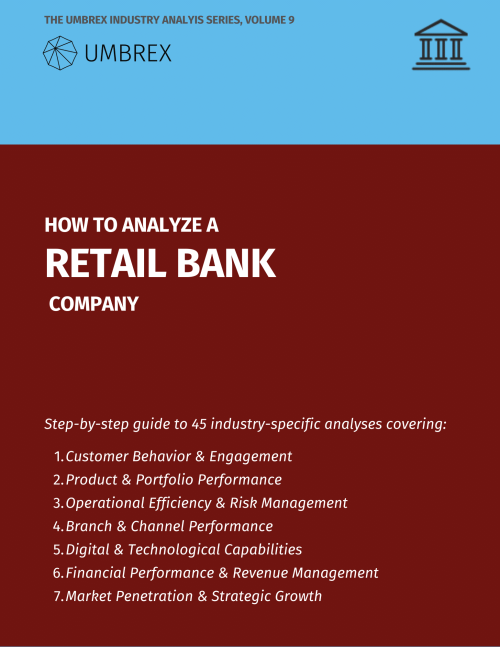
Menu of 45 analyses:
A. Customer Behavior and Engagement
- Customer Segmentation and Product Penetration Opportunities
- Customer Satisfaction and Net Promoter Score (NPS)
- Cross-Selling and Up-Selling Effectiveness
- Customer Lifetime Value (CLV) and Acquisition Cost
- Customer Journey Mapping and Experience Optimization
- Customer Demographics and Financial Behavior
- Personal Financial Management Tool Engagement
- Customer Financial Health and Credit Utilization
- Customer Segment Profitability and Risk Assessment
- Customer Retention and Dormant Account Reactivation Strategy
- Debit and Credit Card Rewards Program Engagement
- Customer Support and Resolution Time Efficiency
B. Product and Portfolio Performance
- Retail Deposit and Loan Portfolio Performance
- Mortgage Portfolio Risk and Valuation
- Savings and Investment Account Tenure
- Loan Portfolio Diversification and Sectoral Risk Exposure
- Mortgage Loan-to-Value (LTV) and Debt-to-Income (DTI) Ratio
- Debt Consolidation Product Demand and Risk
- Loan Repayment Behavior and Default Management Strategy
C. Operational Efficiency and Risk Management
- Risk and Compliance Adherence for Retail Banking Operations
- Credit Quality and Loan Loss Provisioning
- Fraud Detection and Prevention Effectiveness
- Loan Origination and Underwriting Efficiency
- Operational Efficiency and Cost-to-Income Ratio
- Regulatory Compliance Cost
- Regulatory Capital Adequacy and Stress Testing
D. Branch and Channel Performance
E. Digital and Technological Capabilities
F. Financial Performance and Revenue Management
G. Market Penetration and Strategic Growth Opportunities
- Financial Inclusion and Market Penetration
- Deposit Growth and Stability
- Wealth Management and Investment Product Penetration
- Fee Income and Revenue Dependency
- Payment Services Usage and Revenue
- Personalized Banking Services Uptake and Impact
- Household-Level Financial Product Cross-Holdings
- Retail Banking Product Lifecycle and Attrition
- Loan Prepayment and Refinance Behavior
- Household Wealth Accumulation Trends
- Strategic Growth and Market Expansion Planning
