
Goal of the analysis:
The goal of Perishability and Freshness Management in the supply chain for the consumer packaged goods (CPG) industry is to optimize the handling, storage, and transportation of perishable goods to ensure product freshness, reduce spoilage, minimize waste, and maintain product quality. Efficient perishability management is essential for maintaining customer satisfaction, meeting regulatory requirements, and reducing financial losses due to expired or spoiled products. This analysis helps CPG companies improve inventory management, streamline logistics, and increase operational efficiency for perishable goods.
Data required:
- Shelf life data for all perishable products (e.g., expiration dates, freshness windows)
- Temperature and storage condition requirements for perishable products
- Inventory levels and turnover rates for perishable goods across distribution centers, warehouses, and retail locations
- Transportation lead times and conditions (e.g., cold chain logistics, temperature-controlled vehicles)
- Spoilage and waste rates for each perishable SKU
- Product delivery schedules and frequency to retail partners
- Demand forecasting data for perishable goods to align supply with demand
- Supplier lead times and consistency for perishable raw materials and finished products
- Competitor benchmarking data for perishability management and spoilage reduction strategies
- Compliance data with food safety regulations and industry standards (e.g., HACCP, FDA, EU regulations)
Detailed step-by-step instruction on how to conduct the analysis:
1. Define the objectives of the analysis.
Clearly outline the goals of the perishability and freshness management analysis. These could include reducing spoilage and waste, extending product shelf life, improving inventory turnover, and enhancing customer satisfaction.
For example, a goal could be to reduce spoilage rates by 15% over the next six months while ensuring product freshness at retail locations.
2. Collect shelf life and spoilage data for perishable products.
Gather shelf life data for each perishable SKU, including the expiration date or the freshness window within which the product must be sold or consumed.
In addition, track spoilage rates across the supply chain by monitoring how much product is lost due to spoilage or expiration.
The formula for spoilage rate is:
Spoilage Rate (%) = (Quantity of Spoiled Goods / Total Quantity of Goods) x 100
For example, if 500 units out of 10,000 spoil:
Spoilage Rate = (500 / 10,000) x 100 = 5%
High spoilage rates may indicate issues in inventory management, storage conditions, or transportation.
3. Evaluate storage and transportation conditions.
Review temperature and storage condition requirements for perishable products. Assess whether current storage facilities (e.g., cold storage warehouses) and transportation methods (e.g., refrigerated trucks) are maintaining optimal conditions for product freshness.
Poor temperature control can accelerate spoilage, so maintaining a cold chain is critical for certain products, such as dairy, meats, and fresh produce.
4. Analyze inventory turnover and stock levels.
Examine inventory turnover rates for perishable products to ensure that goods are moving through the supply chain efficiently. Products with low turnover rates or excessive stock may spoil before they reach consumers.
The inventory turnover ratio for perishables can be calculated as:
Inventory Turnover = Cost of Goods Sold / Average Inventory
For example, if $500,000 worth of perishable goods are sold and the average inventory value is $250,000:
Inventory Turnover = $500,000 / $250,000 = 2
A higher turnover ratio is preferable for perishable products to avoid spoilage.
5. Monitor transportation lead times and temperature conditions.
Track transportation lead times for perishable goods and ensure that temperature conditions are maintained throughout transit.
Long transportation times or poor temperature control can lead to product degradation. Implement systems to monitor temperature during transit to ensure that perishable goods remain within their required temperature range.
6. Align product delivery schedules with demand.
Adjust delivery schedules to ensure that perishable products arrive at retail locations just in time for optimal freshness and demand.
Demand forecasting can help predict when products will be needed, allowing for more accurate ordering and scheduling.
For example, if demand for fresh produce spikes during the summer, adjust delivery frequencies to match this seasonal trend.
7. Track supplier lead times and consistency.
Evaluate how reliably your suppliers deliver perishable raw materials or finished goods. Long or inconsistent lead times can disrupt freshness management and increase the risk of spoilage.
Work with suppliers to improve delivery schedules and ensure they can meet your freshness requirements consistently.
8. Implement first-in, first-out (FIFO) inventory management.
Ensure that the oldest stock is sold first by implementing a FIFO system across distribution centers and retail locations. This reduces the likelihood of expired or spoiled goods sitting in inventory and improves the overall freshness of products that reach consumers.
9. Assess spoilage reduction strategies and process improvements.
Review existing spoilage reduction strategies and identify opportunities to improve perishability management.
For example, reducing handling time in warehouses, optimizing delivery routes, or improving demand forecasting can help minimize waste and maintain product quality.
10. Ensure compliance with food safety regulations: Review compliance with food safety standards such as Hazard Analysis Critical Control Point (HACCP), FDA regulations (for U.S. companies), or EU food safety regulations.
Compliance ensures that the supply chain meets health and safety standards, reducing the risk of contamination or spoilage.
Format of the output of analysis:
The output of a Perishability and Freshness Management analysis typically includes:
- A breakdown of spoilage rates by SKU, distribution center, and retail location.
- Shelf life data and product freshness windows for each perishable SKU.
- Inventory turnover rates and stock level analysis for perishable goods.
- Evaluation of transportation lead times, temperature conditions, and cold chain compliance.
- Demand forecasting data for perishable goods, aligned with delivery schedules and inventory levels.
- Supplier lead time and performance analysis for perishable raw materials and finished products.
- Recommendations for reducing spoilage, improving freshness, and optimizing the cold chain.
- Compliance review with food safety standards and regulations.
- Competitor benchmarking data on perishability management and spoilage reduction strategies.
How to interpret results:
- High spoilage rates with low inventory turnover: This indicates poor perishability management, likely due to long lead times, excess stock, or inefficient inventory practices. Focus on improving turnover rates and optimizing delivery schedules to reduce spoilage and waste.
- Long transportation lead times with inconsistent temperature control: If transportation lead times are long and temperature control is inconsistent, this may be a key factor driving product spoilage. Consider investing in better cold chain logistics or sourcing suppliers closer to distribution centers.
- Low stock levels with frequent stockouts: If stock levels are too low and stockouts are frequent, it may result in missed sales and customer dissatisfaction. Improve demand forecasting and adjust delivery frequencies to ensure products are available when needed.
- High compliance with low spoilage rates: A well-maintained cold chain and adherence to food safety regulations typically result in lower spoilage rates and higher product freshness. Continue to monitor compliance and make incremental improvements to the cold chain.
Steps a company can take to improve on this measure:
- Invest in cold chain logistics: Ensure that storage facilities, trucks, and warehouses are equipped with the necessary temperature controls to preserve product freshness. Implement temperature-monitoring technology to track conditions in real time.
- Optimize delivery schedules and frequency: Adjust delivery schedules to align with product demand and ensure that perishable goods arrive just in time for sale. Increase delivery frequency for highly perishable items, such as fresh produce or dairy.
- Implement FIFO inventory practices: Ensure that the oldest stock is sold first by using the FIFO method in warehouses and retail stores. This reduces the risk of spoilage and ensures that fresher products are always available to consumers.
- Improve demand forecasting: Use historical sales data and market trends to predict demand for perishable products more accurately. Improved forecasting helps optimize inventory levels and reduce waste.
- Collaborate with suppliers for better lead times: Work with suppliers to ensure consistent, shorter lead times for perishable goods. Consider diversifying suppliers or sourcing from local producers to minimize transportation times and costs.
- Monitor and improve compliance with food safety regulations: Regularly review compliance with food safety standards and train staff to handle perishables according to best practices. Reducing the risk of contamination or spoilage ensures product quality and safety.
Request the PDF Download of How to Analyze a Consumer Packaged Goods Company
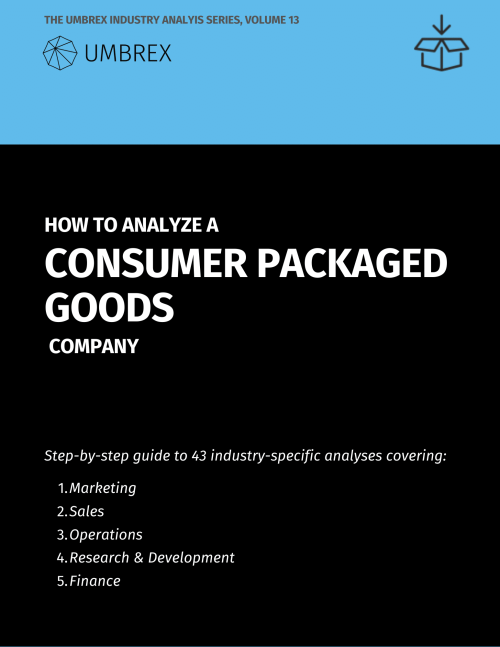
Menu of the 43 analyses:
A. MARKETING
- Brand Portfolio Analysis
- Consumer Behavior and Segmentation Analysis
- Consumer Loyalty and Retention Analysis
- Marketing Mix Effectiveness (4Ps)
- Ethnic and Multicultural Consumer Segment Analysis
- Product Reformulation and Ingredient Cost Trade-off Analysis
- Consumer Advocacy and Brand Perception Tracking
- Shopper Marketing and Path-to-Purchase Insights
- Consumer Sentiment and Social Listening Analysis
- Consumer Demand Shaping through Marketing Campaigns
B. SALES
- Channel Strategy Assessment
- Direct-to-Consumer Channel Performance
- Promotional Pricing and Discount Depth Analysis
- Retailer Relationship and Negotiation Power Assessment
- Retailer-Specific Marketing and Joint Business Planning
- Trade Promotion Effectiveness
- Shelf Availability and Out-of-Stock Analysis
- In-store Execution and Merchandising Compliance Analysis
- Category Management and Shelf Space Optimization
- In-store Sampling and Shopper Activation Effectiveness
- Price-Pack Architecture Optimization
- Private Label Cannibalization and Erosion Impact
C. OPERATIONS
- Product Mix and SKU Rationalization
- Supply Chain Efficiency and Distribution Network Analysis
- Co-packing and Contract Manufacturing Evaluation
- Sourcing and Raw Material Cost Analysis
- Regional and Local Market Penetration Analysis
- Perishability and Freshness Management in Supply Chain
- End-to-End Product Traceability and Transparency Analysis
- Inventory Turns and Shelf-Life Optimization
- Distributor and Wholesaler Performance Analysis
- Distributor Margin and Channel Conflict Assessment
- Product Recall and Quality Control Analysis
D. RESEARCH & DEVELOPMENT
- Innovation Pipeline and New Product Development (NPD) Analysis
- Product Cannibalization and Cross-Selling Impact
- Product Lifecycle Management (PLM)
- Packaging and Labeling Regulatory Compliance
- Health and Wellness Trends Impact on Product Portfolio
- Global Sourcing Strategy for Commoditized Ingredients
- Sustainability and Packaging Innovation Analysis
- Brand Dilution and Extension Risk Analysis
E. FINANCE
- Trade Spend Optimization and Return on Investment (ROI)
- Product Line Profitability by Retailer Analysis