
Goal of the analysis:
The goal of an In-store Execution and Merchandising Compliance Analysis in the consumer packaged goods (CPG) industry is to evaluate how well a company’s merchandising strategies and in-store promotional plans are executed at the retailer level. This analysis focuses on assessing the compliance of retailers with agreed-upon planograms, displays, and promotional activities. Ensuring merchandising compliance is critical to maximizing product visibility, driving sales, and enhancing the effectiveness of marketing investments. Non-compliance can result in missed sales opportunities, poor brand representation, and diminished returns on promotional spend.
Data required:
- Planogram and merchandising agreements (e.g., shelf space, facings, product placement)
- Store-level compliance data (e.g., audits, field sales team reports, third-party data)
- Sales performance data during merchandising campaigns
- Promotional execution data (e.g., displays, signage, endcaps)
- In-store promotional spend (e.g., costs for displays, marketing materials)
- Retailer compliance rates and non-compliance reports
- Sales uplift data from compliant vs. non-compliant stores
- Competitor merchandising compliance (if available)
- Customer feedback or observations regarding in-store merchandising
- Store visit frequency and follow-up actions from sales representatives
Detailed step-by-step instruction on how to conduct the analysis:
1. Define the objectives of the analysis.
Clearly define the goals of the in-store execution and merchandising compliance analysis. Objectives may include ensuring compliance with promotional displays, optimizing product placement for increased visibility, identifying gaps in merchandising execution, and maximizing the return on in-store marketing investments.
2. Collect planogram and merchandising agreement data.
Gather data on the agreed-upon merchandising plans with each retailer. This includes planograms (shelf layout and product facings), special display agreements (endcaps, floor displays), and promotional signage commitments. Ensure that you have a clear understanding of what was agreed upon with each retailer for the analysis.
3. Conduct store audits or collect compliance data.
Use in-store audits, reports from field sales teams, or third-party merchandising services to assess whether retailers are executing the agreed-upon merchandising and promotional plans. Compliance audits should measure key factors such as:
- Planogram adherence: Are products placed according to the agreed-upon shelf layout, with the correct number of facings?
- Display compliance: Are promotional displays, endcaps, and floor displays set up as planned?
- Signage and promotional materials: Are in-store promotional materials, such as signage, banners, or digital screens, displayed properly?
4. Calculate compliance rates.
Measure the percentage of stores that are fully compliant with the merchandising plans. The formula for compliance rate is:
Compliance Rate (%) = (Number of Compliant Stores / Total Number of Stores Audited) x 100
For example, if 80 out of 100 stores are fully compliant:
Compliance Rate = (80 / 100) x 100 = 80%
This metric helps quantify how well retailers are adhering to the agreed merchandising and promotional plans.
5. Analyze the impact of compliance on sales.
Compare sales data from compliant stores with non-compliant stores to determine the impact of merchandising compliance on sales performance.
Calculate the sales uplift in compliant stores using the formula:
Sales Uplift (%) = ((Sales in Compliant Stores – Sales in Non-Compliant Stores) / Sales in Non-Compliant Stores) x 100
For example, if compliant stores generate $200,000 in sales and non-compliant stores generate $150,000:
Sales Uplift = (($200,000 – $150,000) / $150,000) x 100 = 33.33%
This shows how much better compliant stores are performing compared to non-compliant stores.
6. Evaluate the effectiveness of in-store promotions.
Review how well in-store promotions, such as discounts, endcaps, or product sampling, were executed.
If retailers do not comply with agreed-upon promotional activities, it may explain lower-than-expected sales. For example, if promotional displays were missing or incorrectly set up, customers may not have been aware of the promotion.
7. Identify patterns of non-compliance.
Analyze which retailers or regions have the highest rates of non-compliance. Determine if certain store types (e.g., smaller-format stores, regional chains) are more likely to deviate from merchandising agreements. Identifying patterns can help focus corrective actions on high-priority areas.
8. Review the reasons for non-compliance.
Investigate why non-compliance occurred. Possible reasons may include poor communication between the company and the retailer, insufficient staff training at the store level, logistical issues (e.g., delayed shipments), or competing priorities from other brands. Engage with retailers to understand these challenges and address them.
9. Assess competitor merchandising compliance (if available).
If data is available, compare your brand’s merchandising compliance with that of key competitors. If competitors have higher compliance rates, assess whether they have stronger relationships with retailers, more efficient execution processes, or better merchandising strategies.
10. Develop action plans for improving compliance.
Based on the findings, create retailer-specific action plans to improve merchandising compliance. This could include providing additional training for store staff, increasing the frequency of store visits by field sales teams, or offering incentives for achieving compliance targets. Ensure that corrective actions are tracked and followed up with retailers.
Format of the output of analysis:
The output of an In-store Execution and Merchandising Compliance Analysis typically includes:
- A breakdown of merchandising compliance rates by store, region, and retailer.
- Sales uplift data comparing compliant vs. non-compliant stores.
- Insights into promotional execution, including compliance with in-store displays, endcaps, and signage.
- Identification of patterns of non-compliance by retailer or region.
- Reasons for non-compliance and areas where improvements are needed.
- Competitor benchmarking (if available) showing differences in merchandising execution.
- Recommendations for improving future in-store execution and ensuring higher compliance rates.
How to interpret results:
- High compliance rates with strong sales uplift: Indicates that merchandising strategies and promotional plans are being executed effectively, leading to higher sales. Continue working with compliant retailers to maintain these standards and replicate success in other stores.
- Low compliance rates with minimal sales impact: This may suggest that even when merchandising plans are followed, the promotions or product placements are not driving significant sales. Reevaluate the effectiveness of the merchandising strategy and consider testing alternative approaches.
- High non-compliance with significant lost sales: If non-compliant stores show a significant drop in sales compared to compliant stores, this indicates that poor execution is directly impacting sales. Focus on improving communication, training, and accountability with retail partners to address the issue.
- Competitor compliance is higher: If competitors are consistently outperforming your brand in terms of merchandising compliance, this may signal that your merchandising agreements or execution processes need improvement. Consider working with retailers to prioritize your brand’s in-store presence.
Steps a company can take to improve on this measure:
- Strengthen communication with retailers: Ensure that retailers clearly understand merchandising expectations by providing detailed planograms, promotional guidelines, and timelines. Regular communication and follow-up can help reinforce compliance.
- Increase store visits and field audits: Conduct more frequent store visits and compliance audits to ensure that merchandising plans are being followed. Real-time feedback from sales teams or third-party auditors can help identify and resolve issues quickly.
- Provide incentives for compliance: Offer retailers or store managers incentives for achieving high compliance rates. This could include bonuses, co-op marketing funds, or exclusive promotions for top-performing stores.
- Improve training for retail staff: Work with retailers to provide training for store staff on the importance of merchandising compliance. Ensure they understand how to set up displays, manage shelf facings, and follow promotional guidelines.
- Enhance in-store execution support: Provide retailers with the tools and resources needed to execute merchandising plans effectively. This could include display materials, signage, and clear instructions on how to set up endcaps or other promotional displays.
- Address supply chain and logistical issues: Ensure that products and promotional materials arrive at stores on time to avoid delays in setting up merchandising displays. Improve coordination between the company’s supply chain and retail partners to reduce the risk of non-compliance due to stock shortages or late deliveries.
Request the PDF Download of How to Analyze a Consumer Packaged Goods Company
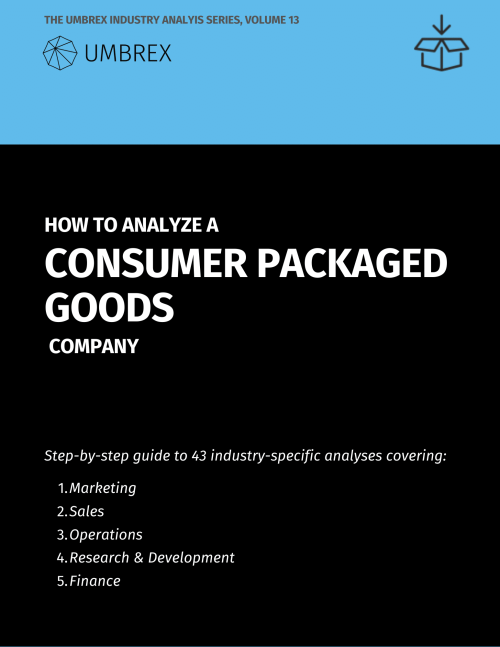
Menu of the 43 analyses:
A. MARKETING
- Brand Portfolio Analysis
- Consumer Behavior and Segmentation Analysis
- Consumer Loyalty and Retention Analysis
- Marketing Mix Effectiveness (4Ps)
- Ethnic and Multicultural Consumer Segment Analysis
- Product Reformulation and Ingredient Cost Trade-off Analysis
- Consumer Advocacy and Brand Perception Tracking
- Shopper Marketing and Path-to-Purchase Insights
- Consumer Sentiment and Social Listening Analysis
- Consumer Demand Shaping through Marketing Campaigns
B. SALES
- Channel Strategy Assessment
- Direct-to-Consumer Channel Performance
- Promotional Pricing and Discount Depth Analysis
- Retailer Relationship and Negotiation Power Assessment
- Retailer-Specific Marketing and Joint Business Planning
- Trade Promotion Effectiveness
- Shelf Availability and Out-of-Stock Analysis
- In-store Execution and Merchandising Compliance Analysis
- Category Management and Shelf Space Optimization
- In-store Sampling and Shopper Activation Effectiveness
- Price-Pack Architecture Optimization
- Private Label Cannibalization and Erosion Impact
C. OPERATIONS
- Product Mix and SKU Rationalization
- Supply Chain Efficiency and Distribution Network Analysis
- Co-packing and Contract Manufacturing Evaluation
- Sourcing and Raw Material Cost Analysis
- Regional and Local Market Penetration Analysis
- Perishability and Freshness Management in Supply Chain
- End-to-End Product Traceability and Transparency Analysis
- Inventory Turns and Shelf-Life Optimization
- Distributor and Wholesaler Performance Analysis
- Distributor Margin and Channel Conflict Assessment
- Product Recall and Quality Control Analysis
D. RESEARCH & DEVELOPMENT
- Innovation Pipeline and New Product Development (NPD) Analysis
- Product Cannibalization and Cross-Selling Impact
- Product Lifecycle Management (PLM)
- Packaging and Labeling Regulatory Compliance
- Health and Wellness Trends Impact on Product Portfolio
- Global Sourcing Strategy for Commoditized Ingredients
- Sustainability and Packaging Innovation Analysis
- Brand Dilution and Extension Risk Analysis
E. FINANCE
- Trade Spend Optimization and Return on Investment (ROI)
- Product Line Profitability by Retailer Analysis