
Accounting Software is a fundamental tool for independent consultants and boutique firms to manage their financial transactions effectively. It automates processes such as invoicing, expense tracking, bank reconciliation, and financial reporting. By utilizing accounting software, consultants can save time, reduce errors, ensure compliance with tax regulations, and gain valuable insights into their business finances.
Also See: Accountants & Bookkeeping Services
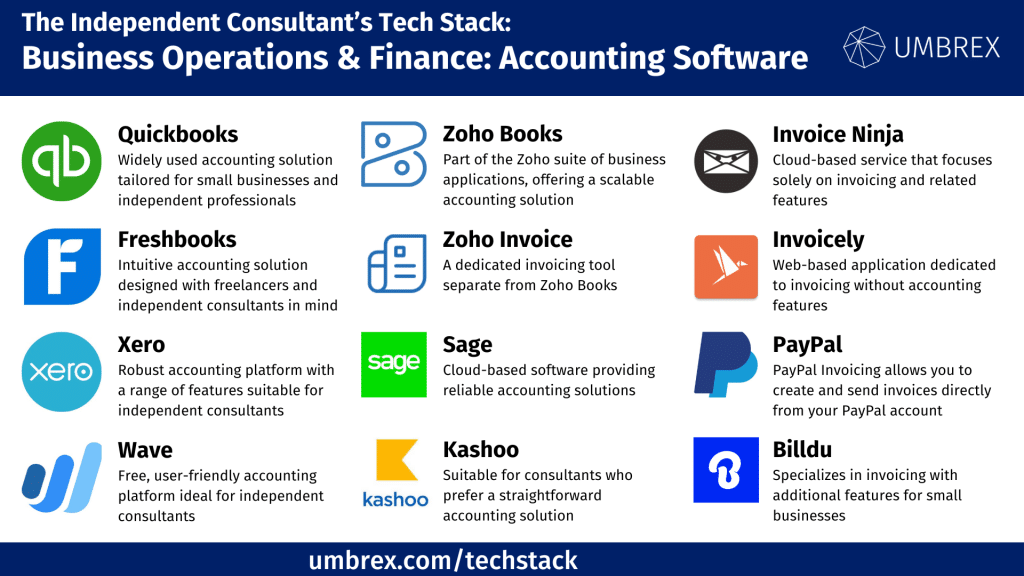
1. QuickBooks Online
- Website: quickbooks.intuit.com
- Form of Tool: Cloud-based software accessible via web browser and mobile apps (iOS and Android).
- Cost: Plans start at $15 per month for the “Simple Start” plan; pricing increases with additional features.
- Geographic Coverage: Available globally, with country-specific versions for the U.S., Canada, U.K., Australia, and more.
Description and Features:
QuickBooks Online is a widely used accounting solution tailored for small businesses and independent professionals. It offers a comprehensive suite of features to streamline financial management:
- Invoicing: Create and send customized invoices with your branding.
- Expense Tracking: Automatically import and categorize expenses from linked bank accounts and credit cards.
- Bank Reconciliation: Match bank transactions with your records to ensure accuracy.
- Financial Reporting: Generate profit and loss statements, balance sheets, and cash flow reports.
- Tax Preparation: Organize income and expenses to simplify tax filing.
- Mobile App: Access your finances on the go with robust mobile apps.
- Integrations: Connect with third-party apps like PayPal, Shopify, and CRM systems.
Pros and Cons for Independent Consultants:
Pros:
- User-Friendly Interface: Easy to navigate, even for those without accounting experience.
- Scalability: Offers multiple plans that can grow with your business.
- Comprehensive Features: Provides a wide range of accounting tools in one platform.
- Integration Capabilities: Seamlessly connects with numerous business applications.
Cons:
- Cost: Monthly subscription can be higher compared to some competitors.
- Learning Curve: Advanced features may require time to learn fully.
- Customer Support: Some users report delays in reaching support representatives.
2. FreshBooks
- Website: freshbooks.com
- Form of Tool: Cloud-based software accessible via web browser and mobile apps (iOS and Android).
- Cost: Plans start at $17 per month for the “Lite” plan; pricing increases with additional clients and features.
- Geographic Coverage: Available globally, suitable for users worldwide.
Description and Features:
FreshBooks is an intuitive accounting solution designed with freelancers and independent consultants in mind. It focuses on simplifying accounting tasks:
- Invoicing: Create professional invoices quickly with customizable templates.
- Expense Tracking: Snap photos of receipts and log expenses on the move.
- Time Tracking: Log billable hours directly into client invoices.
- Online Payments: Accept credit card payments and ACH transfers directly from invoices.
- Automated Reminders: Send late payment reminders to clients automatically.
- Financial Reports: Access detailed reports on earnings, spending, and profitability.
- Mobile App: Manage your business finances from anywhere.
- Integrations: Connects with tools like PayPal, Stripe, G Suite, and more.
Pros and Cons for Independent Consultants:
Pros:
- User-Friendly: Designed for non-accountants with an easy-to-use interface.
- Excellent Customer Support: Known for responsive and helpful service.
- All-in-One Solution: Combines invoicing, expense tracking, and time tracking.
Cons:
- Client Limitations: Lower-tier plans limit the number of billable clients.
- Pricing: Can become expensive as your client base grows.
- Limited Inventory Management: Not ideal for those needing advanced inventory features.
3. Xero
- Website: xero.com
- Form of Tool: Cloud-based software accessible via web browser and mobile apps (iOS and Android).
- Cost: Plans start at $13 per month for the “Early” plan; pricing increases with additional features.
- Geographic Coverage: Available globally, with a strong presence in Australia, New Zealand, the U.K., and the U.S.
Description and Features:
Xero is a robust accounting platform offering a range of features suitable for independent consultants:
- Invoicing: Create and send custom invoices and quotes.
- Bank Reconciliation: Connect your bank accounts for automatic transaction imports.
- Expense Claims: Submit and manage expense claims efficiently.
- Multi-Currency Support: Handle transactions in over 160 currencies.
- Financial Dashboards: Real-time view of cash flow with customizable dashboards.
- Project Tracking: Monitor project time and costs.
- Integrations: Access to over 800 third-party apps, including CRM and project management tools.
- Mobile App: Manage your finances on the go.
Pros and Cons for Independent Consultants:
Pros:
- Comprehensive Features: Offers advanced accounting tools.
- Unlimited Users: All plans include unlimited user access.
- Strong Reporting: Detailed and customizable financial reports.
Cons:
- Learning Curve: May be complex for users without accounting experience.
- Cost: Higher-tier plans are more expensive.
- Customer Support: Primarily online support; no direct phone support.
4. Wave Accounting
- Website: waveapps.com
- Form of Tool: Cloud-based software accessible via web browser and mobile apps (iOS and Android).
- Cost: Free for accounting and invoicing; fees apply for payment processing and payroll services.
- Geographic Coverage: Global for accounting and invoicing; payroll services limited to the U.S. and Canada.
Description and Features:
Wave Accounting offers a free, user-friendly accounting platform ideal for independent consultants and freelancers:
- Accounting and Invoicing: Full-featured accounting and invoicing tools at no cost.
- Expense Tracking: Connect bank accounts for automatic transaction imports.
- Receipt Scanning: Use the mobile app to scan and store receipts.
- Financial Reports: Generate essential reports like profit and loss statements.
- Online Payments: Option to accept credit card and bank payments (transaction fees apply).
- Integrations: Integrate with PayPal, Shoeboxed, and more.
- Mobile App: Manage finances from anywhere.
Pros and Cons for Independent Consultants:
Pros:
- Free to Use: No cost for core accounting and invoicing features.
- User-Friendly Interface: Simple and intuitive design.
- Ideal for Startups: Great for consultants just starting out.
Cons:
- Limited Features: Lacks some advanced accounting features found in paid software.
- Customer Support: Limited support options; priority support costs extra.
- Payroll Limitations: Payroll services only available in the U.S. and Canada.
5. Zoho Books
- Website: zoho.com/books
- Form of Tool: Cloud-based software accessible via web browser and mobile apps (iOS and Android).
- Cost: Free plan available for businesses with annual revenue less than $50,000; paid plans start at $20 per month.
- Geographic Coverage: Available globally, with region-specific editions.
Description and Features:
Zoho Books is part of the Zoho suite of business applications, offering a scalable accounting solution:
- Invoicing and Estimates: Create invoices and convert estimates seamlessly.
- Expense Tracking: Track and categorize expenses, upload receipts.
- Bank Reconciliation: Automate bank feeds and reconcile transactions.
- Time Tracking: Log billable hours and link them to projects and invoices.
- Multi-Currency and Multi-Language: Cater to global clients.
- Automation: Set up workflows for routine tasks like payment reminders.
- Integrations: Seamless integration with other Zoho apps and third-party services.
- Mobile App: Access your accounts from anywhere.
Pros and Cons for Independent Consultants:
Pros:
- Integrated Ecosystem: Works well with other Zoho products.
- Affordable Pricing: Competitive pricing plans.
- Customization: Highly customizable invoices and reports.
Cons:
- Learning Curve: May take time to familiarize with all features.
- Limited Third-Party Integrations: Fewer integrations outside the Zoho ecosystem.
- Customer Support: Some users report slow response times.
6. Zoho Invoice
- Website: zoho.com/invoice
- Form of Tool: Cloud-based software accessible via web browser and mobile apps.
- Cost: Free for all users.
- Geographic Coverage: Global.
Description and Features:
Zoho Invoice is a dedicated invoicing tool separate from Zoho Books:
- Customizable Invoices: Create professional invoices with ease.
- Time Tracking: Log billable hours and convert them into invoices.
- Expense Management: Track expenses and include them in invoices.
- Automated Reminders: Ensure timely payments.
- Client Portal: Clients can view and pay invoices online.
- Multi-Currency and Multi-Language: Ideal for international consultants.
- Integration: Connects with payment gateways and other Zoho apps.
Pros and Cons for Independent Consultants:
Pros:
- Free to Use: Offers extensive features at no cost.
- User-Friendly: Intuitive interface.
- Comprehensive Features: Includes time and expense tracking.
Cons:
- Limited Integrations: Best used within the Zoho ecosystem.
- No Accounting Features: Purely for invoicing; requires additional tools for accounting.
7. Sage Business Cloud Accounting
- Website: sage.com
- Form of Tool: Cloud-based software accessible via web browser and mobile apps.
- Cost: Plans start at $10 per month for “Accounting Start”; full features at $25 per month.
- Geographic Coverage: Available in the U.S., U.K., Canada, and other regions with localized versions.
Description and Features:
Sage Business Cloud Accounting provides reliable accounting solutions with features suitable for consultants:
- Invoicing: Create and send professional invoices.
- Cash Flow Management: View money in and out to stay on top of finances.
- Bank Feeds: Connect your bank for automatic transaction updates.
- Financial Reporting: Access essential reports to monitor business health.
- Inventory Management: Track inventory levels if needed.
- Multi-Currency Support: Handle international transactions.
- Mobile App: Manage your accounting tasks from your smartphone.
- Integrations: Connect with payroll services and other apps.
Pros and Cons for Independent Consultants:
Pros:
- Easy to Use: Simple interface suitable for non-accountants.
- Affordability: Competitive pricing for the features offered.
- Scalability: Can grow with your business needs.
Cons:
- Limited Features in Basic Plan: Advanced features require higher-tier plans.
- Customer Support: Mixed reviews on support quality.
- Smaller User Community: Less widespread than some competitors.
8. Kashoo
- Website: kashoo.com
- Form of Tool: Cloud-based software accessible via web browser and iOS app.
- Cost: $20 per month or $199 per year; includes all features.
- Geographic Coverage: Available globally.
Description and Features:
Kashoo offers simplicity and ease of use, making it suitable for independent consultants who prefer a straightforward accounting solution:
- Automated Bookkeeping: Uses machine learning to categorize expenses.
- Invoicing: Create, customize, and send invoices.
- Income and Expense Tracking: Monitor your earnings and expenditures.
- Bank Feeds: Connect to thousands of banks for real-time updates.
- Multi-Currency Support: Ideal for international clients.
- Reporting: Generate financial reports to understand your business performance.
- Security: Employs encryption and secure data centers.
- Mobile App: Available on iOS for accounting on the go.
Pros and Cons for Independent Consultants:
Pros:
- Simplicity: Easy setup and minimal learning curve.
- All-Inclusive Pricing: One plan includes all features.
- Excellent Customer Service: Responsive support team.
Cons:
- Limited Features: Lacks some advanced functionalities.
- Mobile App Limitation: Full-featured app only available for iOS.
Fewer Integrations: Limited third-party app integrations.
9. Invoice Ninja
- Website: invoiceninja.com
- Form of Tool: Cloud-based service and self-hosted open-source option.
- Cost: Free for up to 100 clients; paid plans start at $10 per month.
- Geographic Coverage: Global.
Description and Features:
Invoice Ninja focuses solely on invoicing and related features:
- Custom Invoices: Design personalized invoices.
- Payment Gateways: Integrate with over 40 payment options.
- Quotes and Proposals: Create and convert to invoices.
- Time and Expense Tracking: Manage billable hours and expenses.
- Client Portal: Clients can view and pay invoices.
- Mobile Apps: Available for iOS and Android.
- Open-Source Option: Offers flexibility for customization.
Pros and Cons for Independent Consultants:
Pros:
- Feature-Rich Free Plan: Generous offerings without cost.
- Customization: High degree of control over invoices.
- Multiple Payment Options: Flexibility for clients.
Cons:
- Technical Setup: Self-hosted version requires technical knowledge.
- Support Limitations: Limited assistance for free users.
10. Invoicely
- Website: invoicely.com
- Form of Tool: Web-based application.
- Cost: Free basic plan; premium plans start at $9.99 per month.
- Geographic Coverage: Global.
Description and Features:
Invoicely is dedicated to invoicing without accounting features:
- Unlimited Invoices: Even on the free plan.
- Customizable Templates: Personalize your invoices.
- Multi-Currency: Bill clients worldwide.
- Online Payments: Accept payments through PayPal and Stripe.
- Estimates and Quotes: Send and convert to invoices.
- Team Collaboration: Available on premium plans.
Pros and Cons for Independent Consultants:
Pros:
- Free Option: Suitable for basic invoicing needs.
- Simplicity: Easy to set up and use.
- Global Billing: Supports multiple currencies.
Cons:
- Limited Features on Free Plan: Advanced features require payment.
- No Accounting Integration: Purely for invoicing tasks.
11. PayPal Invoicing
- Website: paypal.com/us/webapps/mpp/invoicing
- Form of Tool: Web-based platform and mobile apps.
- Cost: No monthly fee; transaction fees apply when payments are received.
- Geographic Coverage: Over 200 countries.
Description and Features:
PayPal Invoicing allows you to create and send invoices directly from your PayPal account:
- Quick Invoicing: Use templates for fast invoice creation.
- Online Payments: Clients can pay using PayPal, credit, or debit cards.
- Invoice Tracking: Monitor status in real-time.
- Partial Payments: Allow deposits or payment plans.
- Mobile App: Create and send invoices on the go.
Pros and Cons for Independent Consultants:
Pros:
- Ease of Use: Quick setup for existing PayPal users.
- Global Acceptance: Widely used platform.
- No Monthly Fees: Cost-effective if you receive payments infrequently.
Cons:
- Transaction Fees: Higher fees compared to some other options.
- Limited Customization: Fewer options for invoice design.
- Client Requirements: Clients may need a PayPal account to pay.
12. Billdu
- Website: billdu.com
- Form of Tool: Web-based platform with mobile apps.
- Cost: Plans start at $3.99 per month billed annually.
- Geographic Coverage: Global.
Description and Features:
Billdu specializes in invoicing with additional features for small businesses:
- Professional Templates: Customize invoices, estimates, and orders.
- Expense Tracking: Keep track of business expenses.
- Online Payments: Accept payments through various gateways.
- Inventory Management: Monitor stock levels (if applicable).
- Mobile App: Full functionality on mobile devices.
- Client Communication: Send messages and notifications to clients.
Pros and Cons for Independent Consultants:
Pros:
- Affordable: Competitive pricing with useful features.
- Mobile Focus: Excellent apps for invoicing on the go.
- User-Friendly: Simple and clean interface.
Cons:
- Limited Integrations: May not connect with your accounting software.
- Basic Reporting: Less detailed analytics compared to others.
Tech Stack Categories:
This overview of the medical device industry covers the segment of industry participants, customer segments, suppliers, value chain, industry concentration, competitive strategies, trends, and a list of companies in the industry.
Also see: the Umbrex list of Top 41 Medical Device Consulting Firms.
Umbrex can connect you with an independent consultant with expertise in the medical device industry — reach out to us here.
Introduction
The Point-of-Care Testing (POCT) Devices industry focuses on the development, production, and sale of portable diagnostic devices used for rapid testing at or near the site of patient care. These devices enable healthcare providers to obtain immediate diagnostic results, facilitating quicker clinical decisions and improving patient outcomes. Common POCT devices include glucose meters, rapid antigen tests, and portable blood analyzers.
POCT devices play a crucial role in modern healthcare by providing fast and reliable diagnostic information. They are especially valuable in emergency settings, remote locations, and for chronic disease management. The ability to perform tests at the point of care reduces the need for laboratory-based testing, speeds up the diagnostic process, and enhances the efficiency of healthcare delivery.
Main Segments Within the Industry
Glucose Meters
Glucose meters are widely used for monitoring blood glucose levels in patients with diabetes. These devices allow for quick and easy measurement of blood sugar levels, helping patients manage their condition effectively. The portability and user-friendliness of glucose meters make them essential tools for both home and clinical use.
Rapid Antigen Tests
Rapid antigen tests are used to detect specific proteins from pathogens, such as viruses and bacteria. These tests are commonly used for diagnosing infectious diseases like COVID-19, influenza, and strep throat. The quick turnaround time of rapid antigen tests enables timely treatment decisions and helps control the spread of infections.
Portable Blood Analyzers
Portable blood analyzers are used to measure various blood parameters, including electrolytes, gases, and metabolites. These devices are essential in critical care settings, such as emergency rooms and intensive care units, where immediate blood test results are necessary for patient management. Portable blood analyzers are also used in ambulatory care and remote healthcare settings.
Coagulation Testing Devices
Coagulation testing devices measure the blood’s ability to clot and are commonly used for monitoring patients on anticoagulant therapy. These devices provide rapid results, allowing for timely adjustments to medication dosages and reducing the risk of bleeding complications.
Customer Segments Served
Hospitals and Clinics
Hospitals and clinics are primary customers of POCT devices, using them for diagnostic purposes, patient monitoring, and treatment planning. These healthcare facilities benefit from the rapid results provided by POCT devices, which enhance the efficiency of patient care.
Emergency Medical Services
Emergency medical services (EMS) use POCT devices to perform rapid diagnostics in pre-hospital settings. These devices are crucial for making immediate medical decisions and stabilizing patients before they reach the hospital.
Primary Care and Outpatient Clinics
Primary care and outpatient clinics use POCT devices to diagnose and monitor a wide range of conditions. These devices enable quick assessments during patient visits, improving the overall patient experience and streamlining care processes.
Home Healthcare
Home healthcare providers and patients use POCT devices for self-monitoring and managing chronic conditions, such as diabetes. These devices empower patients to take an active role in their health management and reduce the need for frequent clinic visits.
Remote and Rural Healthcare
In remote and rural areas, POCT devices are essential for providing diagnostic services where access to laboratory facilities is limited. These devices ensure that patients in underserved regions receive timely and accurate medical care.
Suppliers to the Industry
Raw Material Suppliers
Suppliers of raw materials, such as sensors, reagents, and electronic components, are crucial for the production of POCT devices. These materials must meet high standards of quality and reliability to ensure the accuracy of diagnostic tests.
Component Manufacturers
Manufacturers of components, including microchips, batteries, and display screens, provide the essential parts needed to build POCT devices. These suppliers play a key role in the design and functionality of the final products.
Technology Providers
Technology providers offer advanced technologies and software, such as data management systems, connectivity solutions, and diagnostic algorithms, that enhance the capabilities of POCT devices. These providers contribute to innovation and efficiency in the industry.
Packaging and Distribution Suppliers
Suppliers of packaging materials and distribution services ensure that POCT devices are safely transported and delivered to end-users. Proper packaging and efficient logistics are essential for maintaining the quality and integrity of diagnostic devices.
Value Chain of the Industry
Research and Development
The value chain begins with research and development (R&D), where new POCT technologies and devices are conceptualized and developed. This stage involves extensive scientific research, clinical trials, and regulatory approval processes to ensure the safety and efficacy of the devices.
Manufacturing
Once a product is developed, it moves to the manufacturing stage. This includes the production of test kits, sensors, and devices. Manufacturing must adhere to stringent quality control standards to ensure product reliability and accuracy.
Distribution
After manufacturing, products are distributed to end-users, including hospitals, clinics, EMS, home healthcare providers, and remote healthcare facilities. Distribution channels may include direct sales, distributors, and online platforms, ensuring that POCT devices reach the appropriate customers.
Sales and Marketing
Sales and marketing efforts are crucial for educating customers about the benefits and applications of POCT devices. This involves creating awareness, demonstrating the technology, training healthcare professionals, and providing customer support.
End-User Application
Finally, POCT devices are used by end-users for diagnostic purposes. This stage involves the actual testing, interpretation of results, and subsequent medical decisions based on those results.
After-Sales Support
After-sales support includes maintenance, calibration, and technical support to ensure the continued accuracy and reliability of POCT devices. This support is vital for maintaining customer satisfaction and trust.
Level of Fragmentation or Concentration in the Industry
Global Market Concentration
The Point-of-Care Testing (POCT) Devices industry is moderately concentrated on a global scale. A handful of dominant global companies, such as Abbott Laboratories, Roche Diagnostics, Siemens Healthineers, and Becton, Dickinson and Company (BD), hold significant market shares. These multinational corporations leverage their extensive resources, technological expertise, and broad distribution networks to maintain a strong presence across various regions. They are often at the forefront of innovation, driving advancements in POCT technologies and expanding their product portfolios through mergers and acquisitions.
Regional Market Dynamics
North America
In North America, the POCT industry is highly concentrated, with major players like Abbott Laboratories, BD, and Roche Diagnostics leading the market. The region benefits from advanced healthcare infrastructure, high healthcare spending, and strong R&D capabilities. These factors contribute to the dominance of large companies, although there are also smaller firms and startups that specialize in niche markets and innovative POCT solutions.
Europe
The European market exhibits a similar level of concentration, with key players such as Roche Diagnostics, Siemens Healthineers, and Abbott Laboratories dominating the industry. The region’s strong regulatory frameworks, public health systems, and high demand for advanced diagnostic technologies support the dominance of these large firms. However, Europe also has a diverse landscape of smaller companies and specialized manufacturers that contribute to the market’s dynamism.
Asia-Pacific
The Asia-Pacific region presents a more fragmented market compared to North America and Europe. While global giants like Abbott and Roche have a significant presence, the region is also home to numerous local companies that compete effectively in their domestic markets. Countries such as China, Japan, and India have rapidly growing POCT industries, driven by increasing healthcare expenditure, improving medical infrastructure, and rising demand for rapid diagnostic solutions. The competitive landscape in Asia-Pacific is characterized by a mix of established multinational corporations and agile local firms.
Latin America
In Latin America, the POCT market is moderately concentrated, with global companies such as Abbott, Roche, and Siemens Healthineers playing significant roles. The market also includes regional players that cater to specific countries or sub-regions. The industry in this region faces challenges such as economic instability, varying regulatory standards, and disparities in healthcare access, which influence market dynamics and the level of concentration.
Middle East and Africa
The Middle East and Africa region is the most fragmented, with a wide range of local and international companies operating in the market. The region’s POCT industry is still developing, with varying levels of healthcare infrastructure and access to diagnostic services. While multinational corporations have a presence, local companies often dominate in specific markets due to their understanding of regional needs and regulatory environments.
Factors Influencing Fragmentation and Concentration
Several factors contribute to the level of fragmentation or concentration within the POCT industry across different geographic regions:
- Regulatory Environment: Stringent regulatory standards and approval processes can create barriers to entry, favoring larger companies with the resources to navigate these complexities.
- Healthcare Infrastructure: Regions with advanced healthcare systems tend to have more concentrated markets, as established companies can leverage existing infrastructure to distribute their products widely.
- Economic Conditions: Economic stability and healthcare funding impact the market dynamics, with wealthier regions attracting more significant investment from global players.
- Technological Advancements: Regions with strong R&D capabilities and technological innovation often see higher market concentration due to the dominance of companies leading in diagnostic advancements.
- Local Market Needs: In regions with unique healthcare challenges or preferences, local companies may thrive by offering tailored solutions, leading to a more fragmented market.
Implications for Industry Stakeholders
Understanding the level of fragmentation or concentration in the POCT industry is crucial for stakeholders, including investors, policymakers, and healthcare providers. Highly concentrated markets may offer stability and advanced technologies but could also pose challenges related to competition and pricing. Conversely, fragmented markets provide opportunities for innovation and entry of new players but may require navigating diverse regulatory landscapes and market conditions.
Strategies for Gaining Competitive Advantage in the Industry
Innovation and R&D Investment
One of the most effective strategies for gaining a competitive advantage in the POCT Devices industry is continuous innovation and substantial investment in research and development (R&D). Companies that prioritize R&D can develop cutting-edge diagnostic technologies and solutions that offer superior accuracy, speed, and ease of use. Innovations such as novel biomarkers, advanced sensors, and integration with digital health platforms enable firms to differentiate their products and meet the evolving needs of healthcare providers and patients.
Strategic Partnerships and Collaborations
Forming strategic partnerships and collaborations with academic institutions, research organizations, and other companies can enhance a firm’s competitive position. These alliances can accelerate the development of new technologies, expand product offerings, and provide access to new markets. Collaborations with pharmaceutical companies, for instance, can lead to the co-development of companion diagnostics that are essential for personalized medicine.
Market Expansion and Diversification
Expanding into new geographic markets and diversifying product portfolios are critical strategies for achieving growth and mitigating risks. Companies can enter emerging markets where the demand for rapid diagnostic testing is rapidly increasing. By offering a broad range of POCT devices, from glucose meters to rapid antigen tests, firms can cater to various customer segments and capture a larger market share.
Customer-Centric Approach
Adopting a customer-centric approach involves understanding and addressing the specific needs and challenges of different customer segments. Companies can provide tailored solutions, exceptional customer service, and comprehensive training and support to healthcare providers. Building strong relationships with customers through consistent engagement and feedback mechanisms helps in enhancing customer loyalty and satisfaction.
Cost Leadership and Operational Efficiency
Achieving cost leadership by optimizing manufacturing processes, supply chain management, and operational efficiencies can provide a competitive edge. Companies that can offer high-quality POCT devices at competitive prices are more likely to succeed in both developed and emerging markets. Implementing lean manufacturing techniques, automating production processes, and strategic sourcing of raw materials contribute to cost reduction and improved profitability.
Regulatory Expertise and Compliance
Navigating the complex regulatory landscape of the POCT industry requires substantial expertise and resources. Companies that excel in regulatory compliance and have a deep understanding of regional and international standards can expedite product approvals and market entry. Proactive engagement with regulatory bodies and adherence to the highest quality standards enhance a firm’s reputation and credibility.
Digital Transformation and Integration
Leveraging digital technologies and integrating POCT devices with healthcare IT systems can transform the way companies operate and deliver value. Incorporating artificial intelligence (AI), machine learning (ML), and big data analytics into diagnostic platforms can improve the accuracy and predictive capabilities of tests. Digital solutions such as cloud-based data management, telemedicine, and connected devices facilitate remote diagnostics and real-time monitoring, expanding the reach and impact of diagnostic services.
Acquisitions and Mergers
Mergers and acquisitions (M&A) are strategic tools for gaining a competitive advantage by acquiring new technologies, expanding market presence, and achieving economies of scale. Companies often pursue M&A to integrate complementary products, enter new therapeutic areas, or consolidate market positions. Successful integration of acquired assets and leveraging synergies can significantly enhance a firm’s competitive strength.
Sustainability and Corporate Social Responsibility
Focusing on sustainability and corporate social responsibility (CSR) initiatives can differentiate companies in the eyes of customers, investors, and other stakeholders. Implementing environmentally friendly practices, contributing to public health initiatives, and ensuring ethical business operations build a positive brand image and foster long-term trust and loyalty.
Trends in the Industry
Advancements in Technology
One of the most significant trends in the POCT Devices industry is the continuous advancement in technology. This includes the development of more sensitive and specific assays, miniaturization of devices, and improvements in the speed and accuracy of test results. Technologies such as microfluidics, lab-on-a-chip, and biosensors are driving innovations that make POCT devices more reliable and user-friendly.
Integration with Digital Health Platforms
The integration of POCT devices with digital health platforms is becoming increasingly prevalent. These platforms enable the seamless sharing of test results with electronic health records (EHRs), facilitating better clinical decision-making and patient management. Additionally, mobile health applications and cloud-based data storage allow for remote monitoring and real-time data analysis, improving patient outcomes and enabling proactive healthcare.
Personalized Medicine and Companion Diagnostics
The shift towards personalized medicine is influencing the POCT industry, with an increasing focus on companion diagnostics. These tests are designed to identify patients who are most likely to benefit from specific therapies, ensuring more effective and tailored treatments. POCT devices that support personalized medicine are gaining traction, particularly in oncology and infectious diseases.
Growth in Home Testing
The demand for home testing has surged, particularly in light of the COVID-19 pandemic. Patients are increasingly using POCT devices at home for self-monitoring and managing chronic conditions such as diabetes and hypertension. Home testing offers convenience, reduces the burden on healthcare facilities, and empowers patients to take control of their health. This trend is expected to continue, with innovations aimed at making home testing even more accessible and accurate.
Focus on Infectious Disease Testing
The COVID-19 pandemic has highlighted the critical role of POCT in infectious disease testing. There has been a significant increase in the development and deployment of rapid antigen and molecular tests for detecting infectious agents. This trend is likely to persist, with ongoing efforts to improve test sensitivity, reduce turnaround times, and expand the range of detectable pathogens.
Regulatory Changes and Streamlining
Regulatory agencies are adapting to the rapid advancements in POCT technologies by updating guidelines and streamlining approval processes. This trend is aimed at accelerating the availability of innovative diagnostic tests while ensuring their safety and efficacy. Companies that navigate these regulatory changes effectively can bring new products to market more quickly, gaining a competitive advantage.
Sustainability and Eco-Friendly Practices
Sustainability is becoming an important consideration in the POCT industry. Companies are adopting eco-friendly practices, such as using biodegradable materials, reducing waste in manufacturing, and improving energy efficiency. This trend is driven by the growing awareness of environmental issues and the demand from consumers and healthcare providers for sustainable products.
Artificial Intelligence and Machine Learning
Artificial intelligence (AI) and machine learning (ML) are increasingly being integrated into POCT devices. These technologies enhance the analytical capabilities of diagnostic tests, enabling more accurate and predictive results. AI and ML can also assist in the development of new assays and the optimization of existing ones, driving further innovation in the industry.
Expansion in Emerging Markets
Emerging markets in Asia, Latin America, and Africa are experiencing rapid growth in the POCT industry. Factors such as increasing healthcare expenditure, improving healthcare infrastructure, and rising awareness of the benefits of rapid diagnostics are driving demand in these regions. Companies are expanding their presence in these markets through strategic partnerships, local manufacturing, and targeted product offerings.
Representative Companies
North America
- Abbott Laboratories – www.abbott.com
- Becton, Dickinson and Company (BD) – www.bd.com
- Cepheid (a Danaher company) – www.cepheid.com
- Quidel Corporation – www.quidel.com
- Thermo Fisher Scientific – www.thermofisher.com
- Roche Diagnostics USA – usdiagnostics.roche.com
- Hologic, Inc. – www.hologic.com
- OraSure Technologies, Inc. – www.orasure.com
- Siemens Healthineers USA – www.siemens-healthineers.com
- Bio-Rad Laboratories – www.bio-rad.com
Europe
- Roche Diagnostics – www.roche.com
- Siemens Healthineers – www.siemens-healthineers.com
- bioMérieux – www.biomerieux.com
- Abingdon Health – www.abingdonhealth.com
- EKF Diagnostics – www.ekfdiagnostics.com
- Nova Biomedical – www.novabiomedical.com
- Alere Inc. (now part of Abbott) – www.alere.com
- Medtronic Europe – www.medtronic.com
- Trinity Biotech – www.trinitybiotech.com
- HemoCue – www.hemocue.com
Asia-Pacific
- Sysmex Corporation – www.sysmex.co.jp
- Mindray Medical International – www.mindray.com
- Arkray, Inc. – www.arkray.co.jp
- Transasia Bio-Medicals Ltd. – www.transasia.co.in
- Fujirebio – www.fujirebio.com
- Siemens Healthineers Asia-Pacific – www.siemens-healthineers.com
- Abbott Laboratories Asia-Pacific – www.abbott.com
- Roche Diagnostics Asia-Pacific – www.roche.com
- Bio-Rad Laboratories Asia-Pacific – www.bio-rad.com
- Danaher Corporation Asia-Pacific – www.danaher.com
Latin America
- Abbott Laboratories Latin America – www.abbott.com
- Roche Diagnostics Latin America – www.roche.com
- Siemens Healthineers Latin America – www.siemens-healthineers.com
- bioMérieux Latin America – www.biomerieux.com
- Quidel Corporation Latin America – www.quidel.com
- Cepheid Latin America (a Danaher company) – www.cepheid.com
- Hologic, Inc. Latin America – www.hologic.com
- Thermo Fisher Scientific Latin America – www.thermofisher.com
- Bio-Rad Laboratories Latin America – www.bio-rad.com
- Nova Biomedical Latin America – www.novabiomedical.com
Middle East and Africa
- Abbott Laboratories Middle East – www.abbott.com
- Roche Diagnostics Middle East – www.roche.com
- Siemens Healthineers Middle East – www.siemens-healthineers.com
- bioMérieux Middle East – www.biomerieux.com
- Hologic, Inc. Middle East – www.hologic.com
- Cepheid Middle East (a Danaher company) – www.cepheid.com
- Thermo Fisher Scientific Middle East – www.thermofisher.com
- Bio-Rad Laboratories Middle East – www.bio-rad.com
- Nova Biomedical Middle East – www.novabiomedical.com
- Trinity Biotech Middle East – www.trinitybiotech.com