
A guidebook that explains the range of titles typically found within a corporation
A Compliance Coordinator supports the compliance department by coordinating various activities that ensure the organization adheres to regulatory requirements, internal policies, and industry standards. This role involves assisting in compliance audits, maintaining regulatory documentation, tracking compliance metrics, and facilitating communication between departments and external regulators. Compliance Coordinators play an essential role in organizing and managing the administrative side of compliance efforts to ensure smooth operations and continuous adherence to legal and ethical standards.
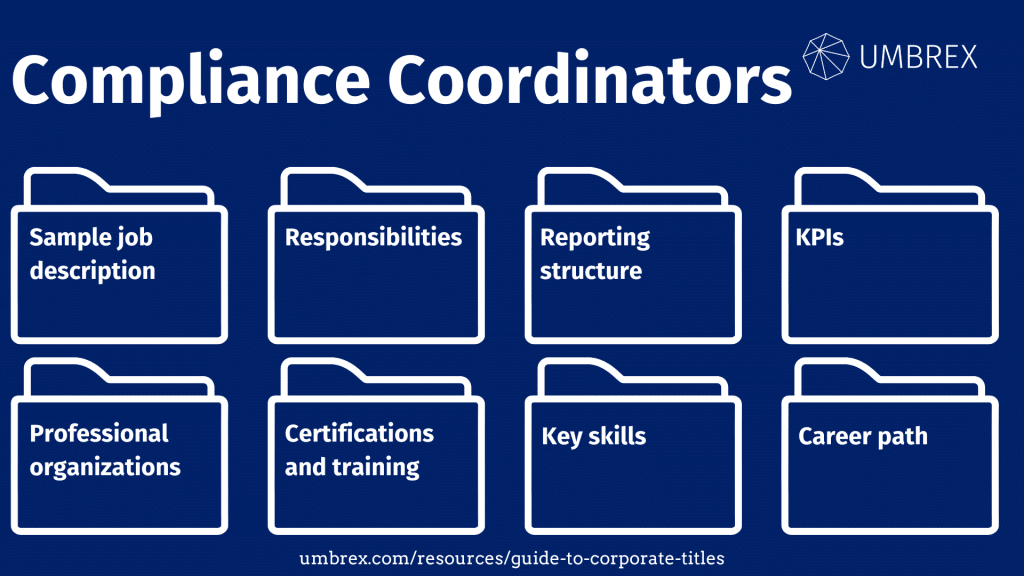
Reporting Structure
- Reports to: Compliance Manager or Chief Compliance Officer (CCO)
- Direct Reports: None (individual contributor role)
Roles and Responsibilities
The roles and responsibilities of a Compliance Coordinator can vary depending on the size and structure of the company but generally include the following:
Regulatory Documentation and Reporting:
- Maintain accurate records of compliance documentation, including regulatory reports, internal audits, and legal filings.
- Prepare and submit required compliance reports to regulatory bodies, ensuring accuracy and timeliness.
- Assist with the preparation and filing of licensing and registration documentation, ensuring that all legal requirements are met.
Audit and Inspection Support:
- Assist in organizing and preparing for internal and external compliance audits, ensuring all necessary documentation is available and up to date.
- Coordinate with other departments to gather information and evidence needed for audits or inspections.
- Track the progress of audits and follow up on post-audit actions to ensure any compliance gaps are addressed promptly.
Policy Implementation and Monitoring:
- Help implement new compliance policies across the organization by communicating with department heads and distributing relevant documentation.
- Monitor ongoing compliance activities, such as employee training and policy adherence, to ensure continued compliance with internal and external regulations.
- Maintain a compliance calendar to track important deadlines and ensure that all regulatory requirements are met on time.
Employee Training and Support:
- Coordinate compliance-related training sessions for employees, ensuring that staff members understand and follow company policies and regulations.
- Serve as a point of contact for employees regarding questions or concerns about compliance policies, offering guidance on how to follow regulatory standards.
- Update training materials as needed to reflect changes in regulations or company policies.
Communication and Liaison:
- Facilitate communication between the compliance department, other internal departments, and external regulatory agencies to ensure all parties are informed of compliance-related issues.
- Assist in drafting memos, emails, and other communication to inform employees of updates to compliance policies and procedures.
Key Skills and Competencies
The following skills and competencies are crucial for a Compliance Coordinator:
- Organizational Skills: Ability to manage multiple tasks, deadlines, and compliance-related documents in an efficient and organized manner.
- Attention to Detail: Keen eye for ensuring that documentation, reports, and filings are accurate and compliant with regulatory standards.
- Communication Skills: Strong written and verbal communication skills to effectively coordinate between internal departments and external stakeholders.
- Problem-Solving: Ability to identify areas of non-compliance and work collaboratively to implement corrective actions.
- Time Management: Excellent time management skills to ensure that all regulatory deadlines and compliance tasks are met without delay.
Career Path
The career path to becoming a Compliance Coordinator involves the following common steps in career progression:
- Typical Starting Roles: Administrative Assistant, Compliance Support Specialist
- Mid-Level Roles: Compliance Analyst, Compliance Auditor, Compliance Manager
- Senior Roles: Compliance Officer, Chief Compliance Officer (CCO)
Typical Key Initiatives
- Regulatory Filing and Documentation: Ensure the timely and accurate submission of all regulatory filings and compliance reports to avoid legal penalties.
- Audit Preparation: Assist in preparing for compliance audits by organizing and maintaining all required documentation and coordinating audit activities.
- Compliance Monitoring: Track the status of compliance initiatives, including policy updates and employee training completion, to ensure ongoing adherence to regulations.
Key Performance Indicators
The performance of a Compliance Coordinator is often measured using a variety of Key Performance Indicators (KPIs) that reflect the effectiveness, efficiency, and strategic alignment of the compliance function. The following are common KPIs used to evaluate a Compliance Coordinator’s performance:
- Documentation Accuracy Rate: Measure the accuracy of compliance-related documentation and regulatory filings, aiming for minimal to no errors.
- Training Completion Rate: Track the percentage of employees who complete required compliance training by the designated deadline.
- On-Time Filing Percentage: Measure the percentage of regulatory reports and filings submitted on time, without delays.
- Audit Readiness: Evaluate the organization’s preparedness for internal and external audits, including the completeness of documentation and timely response to audit requests.
Professional Organizations and Networks
- Society of Corporate Compliance and Ethics (SCCE):
SCCE offers resources, certifications, and training opportunities for compliance professionals at all levels.
Website: SCCE - Regulatory Affairs Professionals Society (RAPS):
RAPS focuses on regulatory compliance and offers training and certification programs for professionals working in highly regulated industries.
Website: RAPS - International Association of Privacy Professionals (IAPP):
IAPP provides resources for professionals working in data privacy compliance, particularly useful for coordinators dealing with data protection regulations.
Website: IAPP
Certifications and Training
To excel in the role of Compliance Coordinator, individuals can benefit from a variety of certifications and specialized training programs that enhance their skills and knowledge. Here are some key certifications and training programs beneficial for Compliance Coordinators:
- Certified Compliance & Ethics Professional (CCEP):
This certification, offered by SCCE, helps compliance professionals understand regulatory requirements, compliance program implementation, and ethical practices. - Certified Regulatory Compliance Manager (CRCM):
Offered by the American Bankers Association (ABA), this certification focuses on regulatory compliance in the financial sector, providing valuable knowledge for those working in finance or banking. - Certified Information Privacy Professional (CIPP):
Provided by IAPP, this certification is ideal for compliance coordinators focusing on privacy and data protection regulations, particularly in industries handling sensitive customer data.
Sample Job Description
Title: Compliance Coordinator
Reports To: Compliance Manager or Chief Compliance Officer (CCO)
Location: [Company Location]
Company: [Company Name]
Job Summary:
The Compliance Coordinator is responsible for supporting the compliance department by organizing compliance activities, maintaining regulatory documentation, and assisting with internal audits. This role requires strong organizational skills, attention to detail, and the ability to communicate effectively with various stakeholders. The Compliance Coordinator will ensure that the company’s compliance efforts are aligned with industry regulations and internal policies.
Key Responsibilities:
- Maintain accurate and up-to-date records of compliance documentation, including reports and audit findings.
- Assist in the preparation and submission of regulatory filings, ensuring all deadlines are met.
- Coordinate compliance-related training sessions for employees and maintain records of training completion.
- Support compliance audits by gathering necessary documentation and ensuring that all information is readily available for review.
- Monitor and track compliance activities, ensuring the organization remains compliant with regulatory standards.
Qualifications:
- Bachelor’s degree in Business Administration, Law, or a related field.
- 2-3 years of experience in a compliance, administrative, or regulatory role.
- Strong organizational and time management skills, with the ability to handle multiple tasks simultaneously.
- Familiarity with compliance regulations and industry standards.
- Excellent communication and interpersonal skills.
Benefits:
- Competitive salary and performance-based bonuses.
- Health, dental, and vision insurance.
- Retirement savings plan with company match.
- Paid time off and professional development opportunities.
Application Process:
Interested candidates are invited to submit their resume and a cover letter detailing their qualifications and experience to [contact information or application link]. Please include “Compliance Coordinator Application” in the subject line.
[Company Name] is an equal opportunity employer. We celebrate diversity and are committed to creating an inclusive environment for all employees.
Executive Leadership
- Chief Executive Officer
- Chief Financial Officer
- Chief Operating Officer
- Chief Marketing Officer
- Chief Technology Officer
- Chief Human Resources Officer
- Chief Product Officer
- Chief Supply Chain Officer
- Chief Procurement Officer
- Chief Digital Officer
- Chief AI Officer
- Chief Information Officer
- Chief Accounting Officer
- Heads of Business Units or Divisions
Finance
- Vice President of Finance
- Director of Finance
- Director of Accounting
- Assistant Treasurer
- Accounting Managers
- Cash Managers
- Director of Financial Planning and Analysis
- Finance Managers and Analysts
- Financial Controller
- Financial Reporting Managers
- Head of Investor Relations
- Internal Audit Director
- Internal Audit Manager
- Senior Internal Auditors
- Internal Auditors
- IT Auditors
- Investment Managers
- Investor Relations Managers
- Payroll Managers
- Senior Accountants
- Senior Financial Analysts
- Tax Manager
- Treasurer
- Treasury Analysts
- Treasury Operations Managers
Operations
- Vice President of Operations
- Director of Operations
- Director of Customer Service
- Director of Manufacturing
- Director of Quality Assurance
- Operations Managers
- Production Managers
- Call Center Managers
- Customer Service Managers
- Continuous Improvement Managers
- Customer Experience Managers
- Plant or Facility Managers
- Quality Control Managers
- Project Managers
- Maintenance Managers
- Manufacturing Engineers
- Facilities Managers
- Safety Managers
- Quality Assurance Managers
- Quality Engineers
- Quality Control Inspectors
- Quality Assurance Analysts
- Customer Support Specialists
Product Management
Marketing
- Brand Managers
- Communications Specialists
- Competitive Intelligence Analysts
- Consumer Insights Managers
- Content Writers
- Content Managers
- Corporate Communications Managers
- Creative Directors
- Data Analysts
- Digital Marketing Managers
- Director of Brand Management
- Director of Digital Marketing
- Director of Market Research
- Director of Marketing
- Director of Public Relations
- Email Marketing Managers
- Event Coordinators
- Event Planners
- Graphic Designers
- Market Research Managers
- Marketing Analysts
- Marketing Communications Managers
- Marketing Coordinators
- Marketing Managers
- Media Relations Managers
- Social Media Managers
- Public Relations Managers
- Paid Media Managers
- Research Coordinators
- SEO Managers
- Social Media Specialists
- Survey Specialists
- Vice President of Digital Marketing
- Vice President of Marketing
Sales
Supply Chain & Logistics
Human Resources
- Vice President of Talent Acquisition
- Compensation and Benefits Managers
- Director of Human Resources
- Director of Employee Relations
- Director of Learning and Development
- Director of Compensation and Benefits
- Director of Diversity, Equity, and Inclusion
- Human Resources Manager
- Talent Acquisition Managers
- Training and Development Managers
- Employee Relations Specialists
- HR Generalists
- HR Coordinators
- HR Business Partners
Legal
Technology/IT
- Application Security Engineers
- Business Analysts
- Cloud Engineers
- DevOps Managers
- Director of Applications Development
- Director of Cybersecurity
- Director of Data Analytics
- Director of Digital Platforms
- Director of Digital Strategy
- Director of E-Commerce
- Director of Information Security
- Director of IT Infrastructure
- Director of IT Operations
- Director of Research and Development
- Director of Software Development
- Engineering Directors
- Incident Response Managers
- IT Infrastructure Managers
- IT Managers for Digital Projects
- IT Project Coordinators
- IT Project Managers
- IT Support Managers
- Lead Scientist
- Lead Software Engineer
- Network Administrators
- Network Engineers
- R&D Managers
- Software Development Managers
- System Administrators
- Systems Analysts
- System Architects
- Technology Manager
- UX/UI Design Lead
- UX/UI Designers
- Vice President of Engineering