
1. Person or firm who created the framework
The ADAPT Model was developed by Michael Jarrett, a professor at INSEAD, a leading business school.
2. Description of the framework
The ADAPT Model is a change management framework designed to guide organizations through the process of transformation. It consists of five stages:
- Awareness: Recognizing the need for change and understanding its implications.
- Desire: Building the desire to participate in and support the change.
- Action: Taking the necessary steps to implement the change.
- Perseverance: Sustaining the change and overcoming obstacles.
- Transformation: Achieving the desired transformation and embedding the change into the organization’s culture.
Each stage of the model addresses both the rational and emotional aspects of change, ensuring a holistic approach to managing transitions.
3. The framework's "secret sauce"
The distinctive feature of the ADAPT Model is its comprehensive focus on both the rational and emotional aspects of change. It recognizes that successful change requires not only logical planning and execution but also emotional engagement and perseverance. This dual focus helps to ensure that change is both implemented and sustained effectively.
4. Situations for which the framework is particularly well suited
- Organizational transformations
- Cultural change initiatives
- Implementation of new technologies or systems
- Process improvements or reengineering projects
- Any change that requires significant behavioral adjustments from employees
5. Practical instructions for using this framework
Step 1: Awareness
- Identify the Need for Change:
- Conduct a thorough analysis to identify the drivers of change, such as market trends, competitive pressures, or internal inefficiencies.
- Use data and evidence to build a compelling case for why change is necessary.
- Communicate the Rationale:
- Develop a clear and compelling message that explains the need for change and its potential benefits.
- Use multiple communication channels to reach all stakeholders and ensure the message is understood.
- Engage Stakeholders:
- Involve key stakeholders early in the process to gain their support and input.
- Address any concerns or questions they may have to build trust and commitment.
Step 2: Desire
- Build Motivation and Commitment:
- Highlight the personal benefits of the change for employees, such as career growth, job satisfaction, or improved working conditions.
- Use storytelling and real-life examples to illustrate the positive impact of the change.
- Create a Sense of Urgency:
- Emphasize the risks of not changing and the potential consequences for the organization and its employees.
- Use data and case studies to reinforce the urgency of the change.
- Involve Employees in the Change Process:
- Create opportunities for employees to participate in shaping the change, such as focus groups, workshops, or feedback sessions.
- Empower employees to take ownership of the change and contribute their ideas and solutions.
Step 3: Action
- Develop a Detailed Change Plan:
- Outline the specific steps required to implement the change, including timelines, resources, and responsibilities.
- Break the change into manageable phases or milestones to facilitate progress and maintain momentum.
- Provide Training and Resources:
- Offer training programs to equip employees with the skills and knowledge needed to adapt to the change.
- Provide the necessary resources, such as tools, technologies, or support services, to facilitate the transition.
- Communicate Progress Regularly:
- Keep employees informed about the progress of the change initiative through regular updates and communications.
- Celebrate small wins and milestones to build confidence and maintain enthusiasm.
Step 4: Perseverance
- Monitor Progress and Address Challenges:
- Continuously monitor the implementation of the change to identify any obstacles or resistance.
- Take proactive steps to address challenges and provide additional support where needed.
- Encourage Resilience and Adaptability:
- Foster a culture of resilience and adaptability by encouraging employees to embrace change and learn from setbacks.
- Provide coaching and mentoring to help employees navigate challenges and develop problem-solving skills.
- Sustain Engagement and Motivation:
- Keep the momentum going by maintaining open lines of communication and providing regular feedback.
- Recognize and reward individuals and teams who demonstrate commitment and perseverance.
Step 5: Transformation
- Embed the Change into Organizational Culture:
- Integrate the new behaviors, practices, and processes into the organization’s culture.
- Use policies, procedures, and performance metrics to reinforce the change and ensure it is sustained.
- Celebrate Success and Learn from Experience:
- Recognize and celebrate the successful completion of the change initiative.
- Conduct a post-implementation review to capture lessons learned and identify opportunities for continuous improvement.
- Ensure Continuous Improvement:
- Establish mechanisms for ongoing feedback and continuous improvement to keep the organization agile and responsive to future changes.
- Encourage a culture of innovation and adaptability to sustain the transformation.
6. Further Reading
- “Changeability: Why some companies are ready for change – and others aren’t” by Michael Jarrett
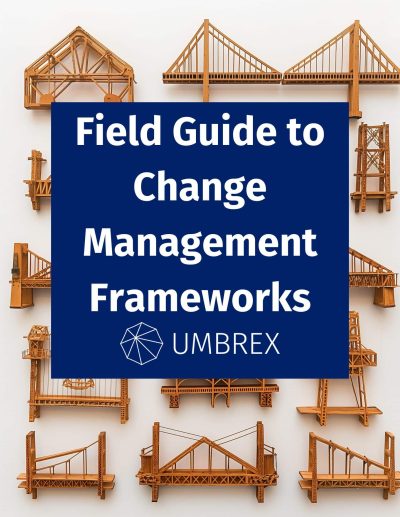
Download the complete Field Guide to Change Managment Frameworks
List of Frameworks:
Table of Contents
- 4D Model of Appreciative Inquiry
- ACMP’s Standard for Change Management
- ADAPT Model
- ADKAR Model
- Agile Change Management
- AIM Change Management Methodology
- Balanced Scorecard
- Beer and Nohria’s E & O Theory
- Bridges’ Transition Model
- Burke-Litwin Model
- Business Process Reengineering
- Capability Maturity Model Integration
- Carnall’s Change Management Model
- Change Journey Map
- Change Kaleidoscope
- Change Leader’s Roadmap
- Congruence Model
- Cultural Web Model
- DICE Framework
- Disruptive Innovation Model
- Double Loop Learning
- Enterprise Agility Model
- Five Dysfunctions of a Team
- Fogg Behavior Model
- Formula for Change
- Four Frames of Change
- Herzberg’s Motivation-Hygiene Theory
- Hoshin Kanri Process
- Innovation Diffusion Theory
- Kanban Change Management
- Kotter’s 8-Step Change Model
- Kubler-Ross Change Curve
- Learning Organization
- Lewin’s Change Management Model
- Management by Objectives
- McKinsey 7-S Model
- McKinsey Four-part Influence Model
- Momentum Model
- Nadler-Tushman Congruence Model
- Nudge Theory
- Organizational Capacity for Change
- Organizational Network Analysis
- Pathfinder Model
- Positive Deviance
- Power/Interest Grid
- Prosci’s Change Management Process
- Resistance Management Framework
- Scenario Planning
- Schein’s Change Model
- Seven Levels of Change
- Six Sigma Change Acceleration Process
- Six Sources of Influence
- Stacey Matrix
- Stakeholder Analysis Matrix
- Star Model
- Strategic Change Matrix
- Switch Framework
- System Dynamics Model
- Theory U
- Three Box Solution
- Three Horizons Framework
- Tipping Point Leadership
- Trans-theoretical Model of Behavioral Change
- Transformational Leadership Model
- Virginia Satir Change Model